This checklist is for anyone building a comfortable setup for divination journaling, whether you record card pulls, dreams, intuitive impressions, or reflections from a reading. The goal is to choose supplies that support a regular practice without making the journal feel like a project you have to perfect.

Turn your quiet moments into listening time
- Thousands of audiobooks, podcasts and originals
- Listen on your phone, tablet or Echo — also offline
- Cancel anytime
The sections follow the main parts of that setup: first the journal itself, then writing and decorating tools, followed by ways to add structure and mark useful pages. Some entries include a named pick; others offer selection advice because no specific product was provided.
Use the checklist to match each item to your habits and your journal’s paper and format. Start with what helps you write consistently, then add creative tools only if you expect to use them. Check nib size, page space, and portability before choosing supplies.
Divination Journal
A journal is the foundation of the practice, so choose one that makes it easy to return to your notes. Before settling on a format, consider what you want to record: a brief prompt and response, a card spread, a dream, or a longer reflection. The right layout gives those entries enough room without making each session feel like a writing assignment. Look for a binding and cover you are comfortable carrying and opening regularly.
A common mistake is choosing a journal for its appearance without considering how its pages will work with your tools. If you plan to use a fountain pen, check how the paper handles ink; if you expect to add colored pencil or tape, allow enough space for those layers. Page size also affects how a spread or drawing fits. For a portable routine, a compact journal may be easier to bring along, while a larger format can leave more room for detailed layouts. Paper compatibility matters most when several supplies will share the same pages.
Keep the system simple: a date, the question or prompt, your notes, and a short reflection can be enough. Choose a journal you can use without needing to decorate every entry.
What to look for:
- Paper that suits your preferred pens and pencils
- A page size that fits your typical entries or spreads
- Binding that opens comfortably for writing
- A format that is easy to carry if you journal on the go
- Enough room for notes without requiring elaborate layouts
Fountain Pen
A dependable writing instrument can make repeated entries feel more inviting. The Montblanc Meisterstück Classique Fountain Pen, Black, Fine Nib is the named pick for this slot. A fine nib may suit compact handwriting and detailed notes, but the feel on the page depends on the paper and the writer’s hand. If you tend to write quickly or press firmly, consider whether a fountain pen fits your natural style before making it your everyday tool.
One frequent buying mistake is focusing on the pen alone and overlooking ink behavior on the journal paper. Fountain pen ink can show through or spread on some pages, so test it on a spare sheet or an inconspicuous page before filling a journal with entries. Also consider whether you want to maintain a fountain pen as part of your routine. Keep suitable ink and a place to store the pen safely, and avoid leaving it uncapped while you pause to reflect. Nib and paper should be considered together.
For compatibility, check the journal’s paper and try the fine nib with your usual letter size. If the writing feels cramped or the ink marks the reverse side, use a different notebook or reserve the pen for select entries. A comfortable, legible record matters more than matching a particular aesthetic.
What to look for:
- A fine nib if you prefer compact, detailed handwriting
- Journal paper that handles fountain pen ink well
- A comfortable grip for the length of your entries
- A storage routine that keeps the pen protected
- A test page to check show-through and ink behavior
Montblanc Meisterstück Classique Fountain Pen, Black, Fine Nib
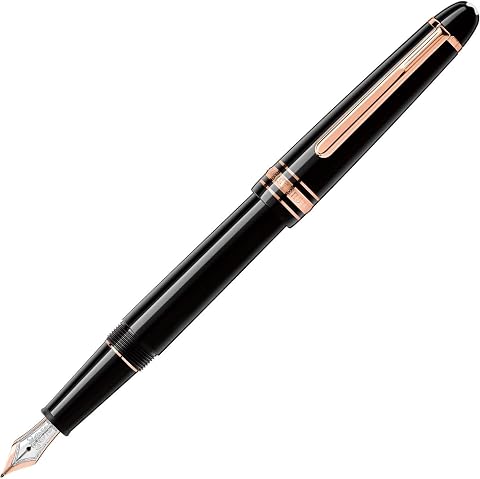
This Montblanc Meisterstück Classique fountain pen has a black precious resin body with rose gold-coated fittings and a 14K rose gold nib. It is refillable and has a fine nib, contoured grip, and snap closure.
Pros:
- 14K rose gold fine nib
- Black precious resin body with rose gold-coated fittings
- Refillable design
- Contoured grip
Cons:
- Snap closure may be less secure than a screw cap
Best for: Writers who want a fine-nib fountain pen for journal entries
Not ideal for: Those who prefer a low-maintenance writing tool
Bottom line: Pair the fine nib with paper that keeps your notes legible on both sides.
Colored Pencils
Colored pencils can help distinguish themes, mark recurring symbols, or add simple visual structure to a reading. The KALOUR 550 Colored Pencils Set with Zipper Case is the named pick. A broad set gives you many colors to choose from, while the case helps keep the pencils together between sessions. Consider whether you enjoy using color in your notes; a large assortment is most useful when you will actually reach for different shades.
A common mistake is adding color before deciding what it means in your journal. A small, consistent key—such as assigning colors to categories you choose—can make entries easier to scan later. Avoid relying on subtle shade differences if your notes need to remain clear in different lighting or on photocopied pages. Press lightly at first, since heavy pencil marks can affect how other tools work over the same area. Light layering leaves room for revisions and annotations.
Check how the pencils feel on your journal paper and whether the page has enough space for both writing and color. If you use a fountain pen, let the ink dry before coloring near it, and test a sample page for smudging or indentation. The zipper case is useful when keeping supplies together matters, but make sure the set’s format fits your storage and journaling routine.
What to look for:
- Colors that support a simple, repeatable visual key
- A case that keeps pencils organized between sessions
- Pencil marks that remain clear on your journal paper
- Enough page space for both writing and color
- Light pressure that won’t crowd later notes
KALOUR 550 Colored Pencils Set with Zipper Case

This art set includes 520 unique colored pencils, including metallic and neon shades, with soft wax-based cores for smooth color application and blending. It also comes with drawing and blending pencils, erasers, sharpeners, a color swatch card, and a portable case with seven compartments and two carrying options.
Pros:
- Wide selection of unique colors, including metallic and neon shades
- Soft cores support smooth application, blending, and layering
- Includes useful drawing and coloring accessories
- Portable case offers organized storage and two carrying options
Cons:
- The large set may be bulky to carry
- The description does not provide details about pencil dimensions or case measurements
Best for: Journalers who use color to organize or decorate entries
Not ideal for: Minimalists who rarely use colored pencils
Bottom line: Use a simple color key and test the pencils on your journal paper first.
Washi Tape
Washi tape can divide sections, frame a prompt, or mark a page without requiring a detailed drawing. The named pick is Washi Tape Set, 40 Rolls Rainbow Colored Masking Tape for Crafts and D. With a set of rolls, you can choose among colors for tabs, borders, and small accents. Think about whether tape will serve a practical role in your journal or mainly be decorative; either can work, but knowing your use helps keep pages readable.
A common mistake is placing tape over text or using it to build a layout before deciding where the entry will go. Plan the page first, then add tape where it can guide the eye without reducing writing space. Adhesion and removal can vary across paper surfaces, so test a small piece on a less important page. If you want tape to hold a flap or layered insert, check whether it stays in place with that use; decorative tape may not suit every job. Paper testing helps avoid surprises.
For fit, consider the width of the rolls against your journal’s margins and how much space you want to reserve for notes. Use short pieces as visual markers, and leave room for dates and writing. If your journal is portable, store a few chosen rolls or pre-cut pieces rather than carrying the whole set, if that suits your routine.
What to look for:
- Roll widths that fit your journal margins
- Colors that make sections easy to distinguish
- Adhesion that works on your journal paper
- A small test piece before decorating important pages
- Placement that leaves writing space unobstructed
Washi Tape Set, 40 Rolls Rainbow Colored Masking Tape for Crafts and Decor

This set includes 40 rainbow-colored washi tape rolls in 5mm and 15mm widths, totaling 300 meters of decorative tape. Made from high-quality washi paper, the tapes are easy to tear, repositionable, and perfect for journaling, scrapbooking, gift wrapping, and various DIY projects.
Pros:
- Vibrant rainbow colors suitable for various crafts
- Easy to tear and reposition without residue
- Includes a stylish gift box for storage or gifting
- Versatile for journaling, scrapbooking, and decorating
Cons:
- Limited to decorative purposes, not suitable for heavy-duty applications
- Some users may find the adhesive less sticky over time
- Colors may fade with prolonged exposure to sunlight
Best for: Readers who use visual accents to organize journal pages
Not ideal for: Those who want completely plain pages
Bottom line: Test tape on your paper and place it where it supports the entry.
Journal Stencils
Stencils can make repeated shapes and layouts easier to draw, especially when you want a consistent frame for prompts or reflections. The named pick is Teling 66 PCS Journal Stencils Planner, Bullet Drawing Templates Set. A multi-piece set offers a range of templates, but the most useful pieces are the ones that fit your page size and the layouts you actually repeat. Think about whether you want structure for headings, symbols, or planning boxes before reaching for a stencil.
One buying mistake is assuming that more templates automatically make journaling easier. A large selection can be cumbersome if your routine only needs a few shapes. Try a template against the journal page before tracing, and check that it leaves comfortable room for handwriting. Also consider what tool you will trace with: a pencil is easy to adjust, while a pen mark may be harder to change. Page fit and legibility matter more than using every design.
To use stencils alongside other supplies, sketch the layout lightly and add color or tape after the main writing areas are clear. If you use a fountain pen, keep ink away from the stencil edge until it is dry to reduce smearing. Store the pieces flat or together so the templates you use most are easy to find. A few repeatable layouts can give entries structure while still leaving room for spontaneous notes.
What to look for:
- Templates sized to fit your journal pages
- Shapes that support layouts you will reuse
- Clear writing space inside or around each design
- A tracing tool that suits your paper and preferred finish
- Storage that keeps frequently used pieces easy to find
Teling 66 PCS Journal Stencils Planner, Bullet Drawing Templates Set

This set includes 66 reusable plastic journal stencils, a white A6 grid pocket, and a 5.9-inch steel ruler, designed for crafting, journaling, and decorating. Made of durable PET and steel, these templates are safe, washable, and ideal for DIY projects, habit tracking, and creative journaling.
Pros:
- Reusable and washable for long-term use
- Includes a variety of templates for creative journaling and crafts
- Translucent design allows easy tracing and alignment
- Comes with storage rings for organization
Cons:
- Manual measurement may result in slight size variations
- Color may vary slightly due to screen differences
- Limited to basic templates; may not suit advanced design needs
Best for: Journalers who like consistent prompts and page structure
Not ideal for: Those who prefer free-form entries without drawn layouts
Bottom line: Choose a few templates that fit your pages and leave room to write.
Page Tabs
Page tabs make it easier to return to readings or reflections you want to revisit. Before choosing them, decide what you will mark: a particular spread, a recurring topic, or an entry you want to compare later. A small, consistent system can be more useful than marking every page. For example, reserve distinct tab styles for categories that matter to your practice, then add a short note in the journal explaining the key.
A common mistake is placing tabs where they obscure nearby writing or make the journal difficult to close. Check the page edges and cover before attaching anything, especially if your journal is compact. Removable tabs can be handy when categories change, but test adhesion and removal on the paper first. If you use washi tape as a marker, fold a small portion over the edge only if the journal can still close comfortably. Clear labels help you find entries without creating visual clutter.
Consider the journal’s thickness and how many marked pages you expect to revisit. Keep labels short, and avoid assigning more categories than you can remember. If you prefer not to attach anything to the pages, write an index or use dates and page numbers instead. The best method is one you can maintain consistently as your collection of notes grows.
What to look for:
- A marking system with a few clear categories
- Tabs that do not cover text or interfere with closing
- Adhesion that is gentle on the journal paper
- Labels that remain easy to read at a glance
- An index option if you prefer not to attach markers
Build your setup in a writing-first order: choose a journal that fits your routine, then add a pen that works with its paper. Colored pencils, tape, stencils, and page markers can follow if they solve a real need in your entries. This order keeps the essentials easy to identify and helps you avoid collecting tools that do not support your practice.
Your journal does not need an elaborate system to be meaningful. Start with a simple entry format, notice which supplies you reach for, and adjust as your habits develop. A steady, personal practice is easier to maintain when the tools feel comfortable and the pages remain your own.