TL;DR
A crystal healing kit is a set of stones, sometimes sold with a guide or pouch, for spiritual practice, meditation, or display. People may use crystals as reminders or focal points, but there is no reliable scientific evidence that they diagnose, prevent, or treat illness. Check what a kit contains, how the seller identifies and sources its stones, and how each stone should be handled.
A little velvet pouch can hold a handful of stones, a printed guide, and a whole set of expectations. If you are looking at crystal healing kits, it helps to know what you are actually buying: a collection of crystals for spiritual practice, meditation, or display, with no standard recipe and no demonstrated medical power.

Turn your quiet moments into listening time
- Thousands of audiobooks, podcasts and originals
- Listen on your phone, tablet or Echo — also offline
- Cancel anytime
People give crystals personal meaning in many ways. You might hold one while meditating, keep it on your desk as a reminder to pause, or arrange several on a shelf because their colors and textures make a room feel calmer. Those experiences can matter to you without proving that a stone changes your health.
This guide walks through common kit contents, everyday uses, evidence, buying questions, and care. You will come away with practical key facts for deciding whether a kit fits your beliefs, budget, and home—and how to avoid treating a spiritual object as a substitute for medical care.
Kit contents vary; check the stone names, sizes, accessories, and instructions in the specific listing.
People may use crystals for meditation, display, or intention-setting, but these practices do not establish medical effects.
There is no reliable scientific evidence that crystals diagnose, prevent, or treat medical conditions; do not replace professional care.
Ask sellers about mineral identity, treatment, sourcing, care, and returns instead of relying on broad marketing claims.
Check stone-specific care guidance, keep small pieces away from children and pets, and never ingest crystals or use them in homemade elixirs.
What You’ll Usually Find Inside a Crystal Healing Kit
A crystal healing kit is a collection of stones sold for spiritual or wellness practices, sometimes packaged with a guide, pouch, or display accessories. There is no universal list of required contents, so read the product description instead of assuming every “calm” or “chakra” kit contains the same materials.
A starter set might include amethyst, rose quartz, and clear quartz, each described by the seller with a particular spiritual meaning. Another box may add black tourmaline, a small cloth bag, and a card suggesting ways to use the stones. One seller’s “confidence” set could contain four polished tumbles; another’s could arrive as rough chunks with a booklet. The theme on the label tells you how that seller frames the set, not what every kit must include.
Size matters, too. A stone that looks palm-sized in a close-up photograph may be only a small tumble, so check dimensions or weight when the listing provides them. If you are buying a gift, imagine opening the box at a kitchen table: would the recipient know what each piece is, and would the guide explain care in plain language?
Some shops call their product a collection of crystals, a meditation set, or a spiritual gift box. Those names can overlap, but none by itself confirms mineral identity or quality. Treat the contents list as the starting point, then check whether the stones are identified individually and whether the seller says if they are natural or treated.
Products Worth Considering

LEVOIT Vital 200S-P Smart Air Purifier for Large Rooms, White

Withings Body Smart Wi-Fi and Bluetooth Body Composition Scale

Hyperice Hypervolt Go 3 Percussion Massage Gun
As an affiliate, we earn on qualifying purchases.
Simple Ways to Make a Kit Part of Your Personal Practice
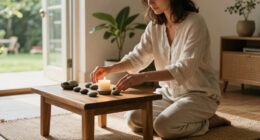
You can use a crystal kit as a focus for a personal ritual: choose a stone, give yourself a few quiet minutes, and use its texture, color, or meaning as a reminder of an intention. People commonly meditate with a stone, carry one, place it in a room, or arrange it on an altar. These are spiritual or reflective practices, not established treatments.
- Choose a simple purpose. For example, you might want a reminder to take a breath before opening work email.
- Pick a stone you can comfortably handle. Perhaps you like the cool, smooth feel of a small quartz tumble.
- Make a short ritual. Sit for two minutes, hold the stone, and name the intention you want to remember.
- Choose a safe place for it. Put it on a desk or shelf where small children and pets cannot reach it.
Imagine Maya placing rose quartz beside her notebook before a difficult family conversation. Its pink surface does not guarantee a peaceful outcome; it gives her a visible prompt to slow down and speak with care. For someone else, a stone may simply be a beautiful object with a story attached.
There is no required method or special result. If a ritual feels meaningful to you, keep it modest and comfortable. You can set an intention without believing every sales claim, and you can enjoy the look of a stone without assigning it a spiritual role.
What Science Can—and Can’t—Say About Crystal Healing
Crystal healing kits are not proven medical treatments: reliable scientific evidence does not show that crystals diagnose, prevent, or treat medical conditions. Their meanings may belong to spiritual or cultural belief systems, and a person may find a ritual personally comforting, but that is different from evidence that a stone changes a disease or replaces care.
For example, someone who keeps amethyst near a bed may feel that the bedtime ritual helps them settle. The room may be quieter, the screen may be put away, or the repeated routine itself may feel soothing. Those details can shape the person’s experience, but they do not establish that amethyst treats insomnia.
Be careful when a product listing promises to cure pain, balance a medical condition, or protect you from illness. “Healing” and “energy” can describe a seller’s spiritual framing rather than a verified property of the mineral. If you have a health concern, speak with a qualified health professional; do not stop prescribed medicine or delay an appointment because a kit makes a strong promise.
A crystal can be meaningful without being medicine. You can use an object as a prompt for reflection while keeping medical decisions with qualified health professionals.
That distinction leaves room for personal belief and clear boundaries. A stone may mark a moment of prayer or meditation, much as a candle or keepsake might. What it cannot do, based on reliable evidence, is serve as a diagnosis or a proven substitute for treatment.
Questions to Ask Before You Spend Money on a Kit
A good kit for you is one with clearly listed stones, fair details, and instructions you can understand. Before buying, check the actual contents, approximate sizes, natural or treated status if disclosed, sourcing information, price, and return policy. A gift-ready box may look lovely, but packaging does not tell you what is inside.
| What to check | Why it helps | Useful question |
|---|---|---|
| Stone names and sizes | Photos can make small pieces look larger | Are dimensions or weights listed? |
| Identity and treatment | Names alone may not establish what a stone is | Does the seller explain identification or treatment? |
| Sourcing | Environmental and labor conditions can vary | Can the seller describe where the stones came from? |
| Care and returns | Some minerals are fragile or react badly to cleaning | Are care instructions and return terms clear? |
Take a listing that says “ethically sourced, high-vibration stones” but gives no mine, supplier, or care details. The language may sound reassuring, but broad marketing words alone do not verify sourcing or mineral identity. You can ask the seller for specifics, compare listings, or choose a simpler product with honest limits.
Prices can also bundle extras. A small guide and pouch may be useful if you are new to the practice; a decorative box may matter if the kit is a present. Decide what you value before paying more. A modest set with clear descriptions can be a better fit than a large bundle whose contents and origins remain vague.
How to Care for Stones Without Damaging Them
Crystal care depends on the specific mineral and finish; water, sunlight, salt, or household cleaners can damage some stones. If the kit includes care advice, check that it names the stone and method. When a seller gives only a general instruction to soak or “charge” every crystal, pause and look for reliable mineral-specific guidance before following it.
Picture a small display on a sunny windowsill: it looks lovely in the morning, but a stone that fades in prolonged sunlight may lose its color over time. A separate stone might be water-sensitive or fragile, so even a quick rinse could be a poor choice. A soft, dry cloth is often a sensible first option for dust, but it is still wise to check guidance for a particular mineral before cleaning it.
Some people use moonlight, sound, or a quiet intention as part of a cleansing ritual. Those methods can be personal or spiritual choices; you do not need to expose a stone to water or salt to make the ritual feel meaningful. If the method involves materials or conditions, consider whether they could harm the stone or the surface where you place it.
Keep small pieces away from young children and pets, who may swallow them or choke. Do not eat crystals, grind them into food, or make crystal-infused water. A sealed bottle with a stone outside it can offer a decorative alternative if you like the look, but drinking water should not come into contact with minerals unless a qualified safety source confirms it is appropriate.
A More Thoughtful Way to Choose Your First Set
Your first kit can be simple: choose stones you enjoy looking at, check their names and care needs, and decide how you plan to use them. You do not need a large altar or a dozen pieces to start. A few clearly described stones are easier to learn about and store than a bulky set bought because a listing promised dramatic change.
For instance, if you want a meditation prompt, a single smooth stone that fits in your palm may be more practical than a box of rough pieces. If you want a colorful shelf display, compare shapes, sizes, and finishes instead. A friend buying a birthday gift might choose a modest set with a straightforward guide and a return policy, so the recipient can decide what feels right.
Online marketplaces and wellness shops have made themed kits easy to find, often with gift packaging and social-media-ready guides. That visibility does not tell you whether a particular seller has verified sourcing or whether a product’s claims hold up. Current sales figures and trends also change, so avoid treating a seller’s “best-selling” badge as evidence of quality or benefit.
Try these filters before checking out: Do I like these stones? Can I identify what I’m buying? Is the price comfortable? Are care and safety details clear? If the answers are yes, the kit may suit your interests. If the listing leans heavily on guaranteed health outcomes or refuses basic questions about contents, keep looking.
Frequently Asked Questions
What is a crystal healing kit?
A crystal healing kit is a set of stones sold for spiritual practice, meditation, or display, sometimes with a guide or pouch. There is no standard list of required contents, so check the product description.
Do crystal kits work?
Some people find stones meaningful or use them as prompts for reflection. Reliable scientific evidence does not show that crystals have medical healing powers, so they should not replace diagnosis or treatment.
Which crystals are usually included?
Common examples include amethyst, rose quartz, clear quartz, and black tourmaline, though kits differ by seller. Read the listing for the exact stones and their sizes.
How should I use the crystals?
You might hold a stone during meditation, carry it as a reminder, place it in a room, or arrange it on an altar. There is no single required method; choose a safe, comfortable practice that fits your beliefs.
How do I cleanse or recharge a crystal?
Methods vary by tradition, and some stones can be damaged by water, sunlight, salt, or cleaners. Check care guidance for the specific mineral before using any method.
Are crystal kits safe?
They are generally handled or displayed as objects, but small pieces can pose choking risks and some stones may be fragile or unsuitable for contact with water. Keep them away from young children and pets, and do not ingest crystals or make crystal-infused water.
Can crystals replace therapy or medicine?
No. Crystals are not a substitute for diagnosis or evidence-based treatment. Talk with a qualified health professional about medical or mental health concerns, and do not stop prescribed care because of a product claim.
Conclusion
Choose a crystal kit for the stones, ritual, or display you actually want—not for a promise that it can heal an illness. Check the contents, ask sensible questions about sourcing and care, and keep health decisions with qualified professionals.
A small stone on your desk can be a lovely reminder to pause. Let it be a reminder, not a prescription.