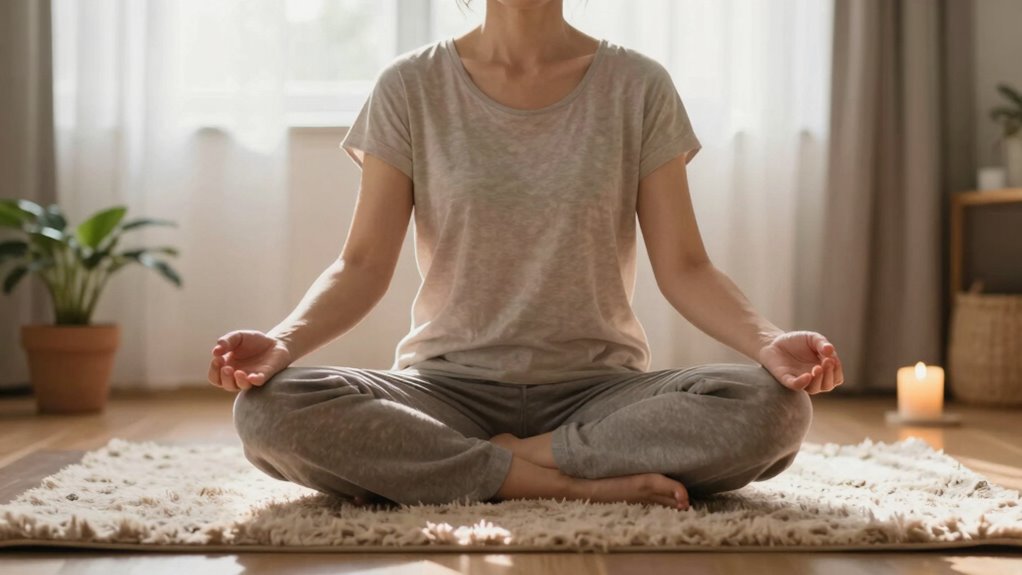

To feel more present in your body using orienting, start by finding a comfortable position and taking deep breaths to relax. Focus your attention on your surroundings and physical sensations like textures, contact points, or limb movements. Gently explore specific body parts without judgment, noticing how your body feels in the moment. Making this a regular practice helps strengthen your awareness and keeps you grounded. Keep exploring, and you’ll discover simple ways to stay connected to your body throughout your day.
Key Takeaways
- Find a comfortable position, breathe deeply, and scan your environment to establish awareness.
- Gently explore sensations in specific body parts to anchor your attention.
- Name objects or sounds aloud to heighten mindfulness and grounding.
- Practice daily to strengthen your ability to stay present and reduce disconnection.
- Focus on physical contact points, textures, and movement to reconnect with your body.
Have you ever felt disconnected from your body, as if your mind was elsewhere? That distant, floating sensation can make you feel detached from your own experience, leaving you longing for a sense of grounding. One effective way to bridge that gap is through orienting techniques, a simple yet powerful method to increase your presence. By consciously directing your attention to your surroundings and body, you engage in mindfulness practices and body awareness techniques that anchor you firmly in the present moment.
To start, find a comfortable position, either sitting or standing, and take a few deep breaths. As you breathe, begin to scan your environment, noting what’s around you. Focus your attention on physical sensations—listen to sounds, feel the texture of objects nearby, or notice the temperature of the air on your skin. This act of orienting helps your mind shift away from wandering thoughts and into the here and now. It’s a deliberate act of grounding that reconnects you with your body and surroundings.
Begin by relaxing, taking deep breaths, and tuning into your surroundings to ground yourself in the present moment.
Next, direct your attention inward by tuning into specific body parts. Use body awareness techniques to gently explore sensations without judgment. For example, notice the contact points where your body touches the chair or the ground. Feel the weight of your limbs, the movement of your chest as you breathe, or the texture of your clothing against your skin. These simple observations serve as anchors, pulling your awareness back into your body whenever your mind drifts. Practicing this regularly enhances your ability to stay present and cultivates a sense of calm and stability. Developing body awareness can help you recognize physical signals that indicate your emotional state, fostering greater self-understanding. Incorporating mindfulness practices into your daily routine further strengthens your ability to maintain focus and stay grounded throughout the day.
Incorporating mindfulness practices into your daily routine amplifies the benefits of orienting. Set aside a few minutes each day to practice intentional focus on your body and environment. As you do, intentionally acknowledge your surroundings—perhaps by naming objects or sounds aloud or internally. This act of orienting not only heightens your awareness but also trains your brain to stay engaged with the present moment instead of getting lost in worries or distractions.
Over time, these techniques become second nature, and feeling disconnected becomes less frequent. You’ll find yourself more attuned to your body’s signals, emotions, and the world around you. The key is consistency—gentle, mindful attention that gradually rewires your awareness. When you make a habit of using orienting to feel more present, you create a steady foundation of mindfulness that supports emotional balance, clarity, and a deeper connection to your experience.

40 Somatic Therapy Exercise Cards – Mindfulness and Coping Skills Cards for Anxiety and Stress Relief | Emotional Healing, Grounding and Meditation Tool for Body Awareness | Perfect Self-Care Gift
✨TRANSFORM YOUR SELF-LOVE AND AWARENESS JOURNEY: Each card presents a thoughtfully crafted exercise that integrates somatic therapy techniques…
As an affiliate, we earn on qualifying purchases.
As an affiliate, we earn on qualifying purchases.
Frequently Asked Questions
Can Orienting Help With Anxiety or Panic Attacks?
Yes, orienting can help with anxiety or panic attacks by grounding you in the present moment. When you use mindfulness grounding techniques like focusing on your surroundings or practicing breathing exercises, you redirect your attention away from overwhelming thoughts. This helps reduce panic symptoms and calms your nervous system. Regularly practicing orienting makes it easier to stay centered during stressful moments, easing anxiety and promoting a sense of safety.
How Often Should I Practice Orienting Techniques?
You should practice orienting techniques daily, especially if you’re seeking to deepen your mindfulness meditation and improve body awareness. Regular practice helps you build resilience against stress and anxiety, making it easier to stay present. Consistency is key—start with just a few minutes each day, then gradually increase. The more often you engage, the more natural it becomes to anchor yourself in your body whenever you need to feel grounded and present.
Is Orienting Effective for Everyone?
Orienting can be effective for many, but it might not work for everyone. If you practice mindfulness meditation and incorporate breathing exercises, you’ll likely notice increased presence and calmness. These techniques help you tune into your body and surroundings, fostering a sense of grounding. While some individuals may need additional approaches, consistent practice of orienting, combined with mindfulness, can substantially enhance your overall sense of presence and reduce stress.
What Tools or Aids Can Enhance Orienting Practice?
Like a lighthouse guiding you through fog, tools like sensory grounding and mindfulness meditation can elevate your orienting practice. Use textured objects or calming scents to anchor your senses, enhancing awareness. Guided meditation apps or soothing music also serve as aids, helping you stay present. These tools act as navigational beacons, deepening your connection with your body and making the practice more effective and enriching.
How Long Does It Take to Feel the Benefits of Orienting?
You might start noticing benefits from orienting within a few minutes to a few weeks, depending on your practice consistency. Combining it with mindfulness meditation and breathing exercises can speed up your awareness and presence. As you regularly practice, you’ll likely feel more grounded, calmer, and better able to stay present in your body. Keep patient and consistent, and you’ll gradually experience these positive effects deepen over time.

Mydethun 3 Section Spiky Sensory Stim Tool, Discreet Focus Tool for ADHD & Autism with Roller and Spinner, Silent Grounding Fidget for Adults, with Keychain, (1, Black)
Unique Sensory Experience for Busy Minds Designed for anyone who enjoys a tactile outlet during long days, this…
As an affiliate, we earn on qualifying purchases.
As an affiliate, we earn on qualifying purchases.
Conclusion
By practicing orienting, you can ground yourself and become more present in your body. This simple technique can help reduce stress and increase awareness, making everyday moments more vivid. Did you know that studies show mindfulness practices like orienting can decrease cortisol levels by up to 30%? So, next time you feel disconnected, take a moment to orient yourself—your body and mind will thank you for it. Stay present, and embrace the calm that follows.

Breathing Pal Mini 'Yoyo' – Mindfulness Breathing Light, Guided Visual Meditation Breathing Light, Anxiety Relief Items for Calm Down Corner/Meditation/Sleep Aid for Adult/Kid
3 GUIDED BREATHING MODES WITH LIGHT CUES: Practice mindfulness with three effective techniques: 4-7-8 for anxiety relief, 5-5…
As an affiliate, we earn on qualifying purchases.
As an affiliate, we earn on qualifying purchases.

The Mindfulness Journal: Daily Practices, Writing Prompts, and Reflections for Living in the Present Moment
As an affiliate, we earn on qualifying purchases.
As an affiliate, we earn on qualifying purchases.