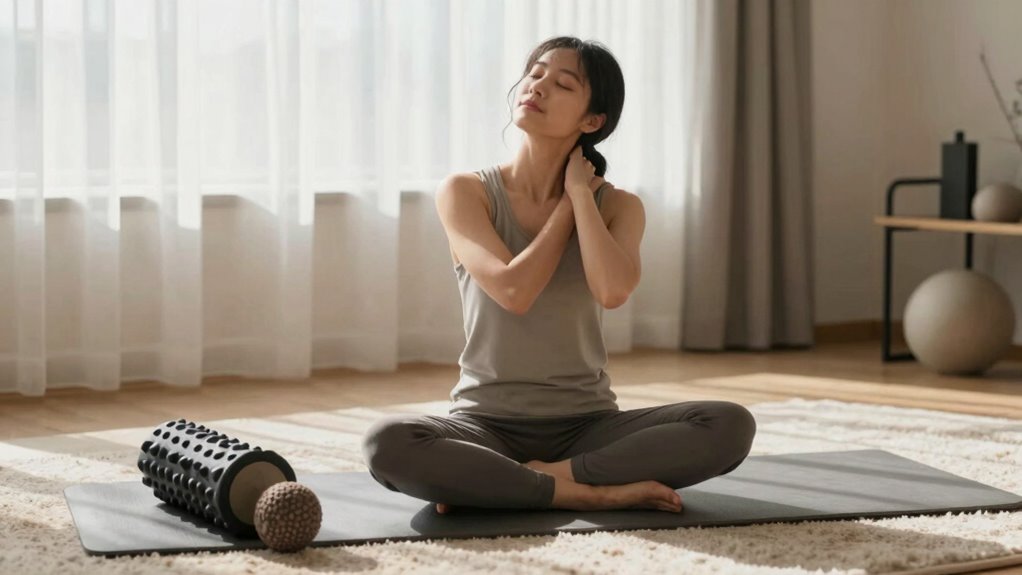

To feel less scattered, try practicing breath awareness by focusing on your inhale and exhale without controlling your breath, which calms your nervous system. Pair this with grounding techniques, like pressing your feet firmly on the ground or touching your hands to your legs, to reconnect with your physical space. Using visual metaphors, such as creating mental boundaries, can sharpen your focus. Keep exploring these practices to discover more ways to center yourself when chaos strikes.

Turn your quiet moments into listening time
- Thousands of audiobooks, podcasts and originals
- Listen on your phone, tablet or Echo — also offline
- Cancel anytime
Key Takeaways
- Practice breath awareness to anchor attention and activate the relaxation response during moments of mental chaos.
- Use grounding techniques, such as pressing hands into legs or feeling your feet on the ground, to reconnect with physical space.
- Combine deep breathing with physical contact to enhance focus and quickly shift from scattered thoughts to calmness.
- Employ visual and sensory metaphors, like contrast ratios, to create mental boundaries and improve mental clarity.
- Develop body awareness to stay present, deepen mindfulness, and foster overall calmness amid feelings of being scattered.
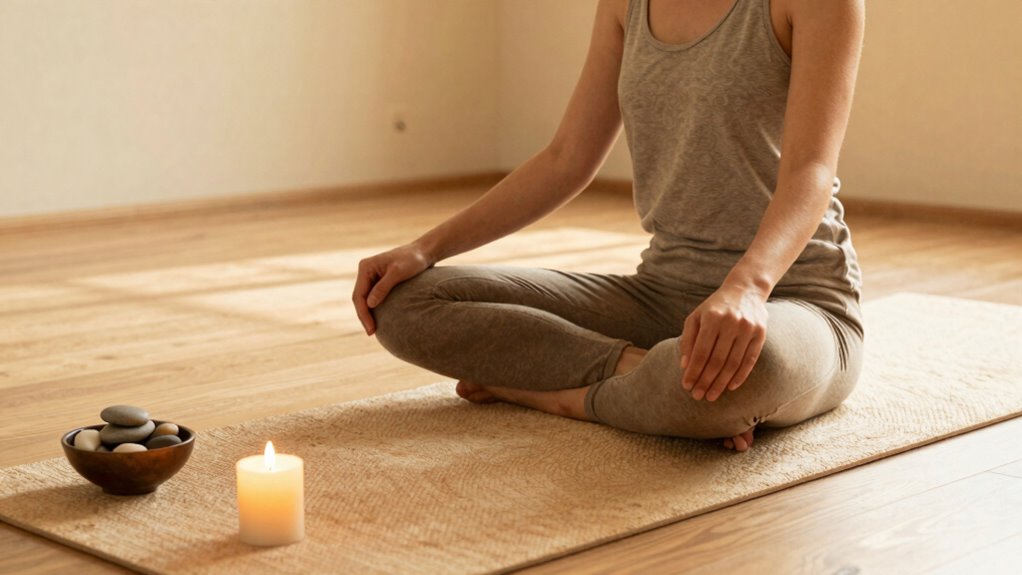
When you’re feeling scattered and overwhelmed, somatic exercises can help ground you in the present moment. These practices focus on reconnecting your body and mind, making it easier to regain focus and calm your racing thoughts. One of the most effective tools in this process is breath awareness. By paying close attention to your breathing, you activate your parasympathetic nervous system, which promotes relaxation and reduces stress. Take a moment to notice your inhale and exhale—observe the rise and fall of your chest or abdomen without trying to control your breath. This simple act anchors you in the here and now, helping you detach from anxious or distracting thoughts.
Breath awareness calms the mind by activating your body’s relaxation response.
Grounding techniques are another essential aspect of somatic exercises when you’re feeling scattered. These techniques help you reconnect with your physical space and present sensations, anchoring your awareness in your body rather than your worries or distractions. A straightforward grounding method involves feeling your feet flat on the ground. Focus on the contact points—the weight of your feet, the pressure against the floor. If you’re sitting, press your hands into your thighs or touch your palms to your legs. This tactile connection pulls your attention away from mental clutter and directs it to physical sensations. Incorporating mindfulness practices can deepen the effectiveness of these grounding exercises by enhancing your awareness of bodily sensations. Additionally, understanding how visual contrast improves clarity can serve as a metaphor for creating mental boundaries that sharpen focus during grounding exercises.
Incorporating breath awareness with grounding techniques amplifies their calming effect. For example, you can practice deep breathing while firmly planting your feet or hands on a surface. As you inhale, imagine drawing in calmness; as you exhale, release tension and scattered thoughts. Repeat this cycle, slowly and deliberately, until you notice a shift in your mental state. Over time, this practice can become a quick and reliable way to reorient yourself when your mind feels chaotic. Additionally, understanding how high contrast ratios improve visual clarity can serve as a metaphor for creating clearer mental boundaries during grounding exercises, enhancing their effectiveness. Recognizing the importance of body awareness can further support your ability to stay present and centered during these practices.
breath awareness meditation cushion
As an affiliate, we earn on qualifying purchases.
As an affiliate, we earn on qualifying purchases.
Frequently Asked Questions
Can Somatic Exercises Improve Focus Instantly?
Yes, somatic exercises can improve focus instantly by strengthening your mind-body connection. When you perform gentle movements or awareness techniques, you activate your parasympathetic nervous system, leading to instant relaxation. This calm state clears mental clutter, helping you feel more centered and focused. Regular practice enhances this effect, but even a quick session can bring immediate relief and sharpen your concentration, making it easier to stay present and attentive.
Are Somatic Exercises Suitable for Children?
Research shows that incorporating movement benefits child development markedly. Yes, somatic exercises are suitable for children, especially when using age-appropriate techniques. You can help your child improve focus, reduce anxiety, and foster emotional regulation by encouraging gentle, playful movements tailored to their age. These exercises support healthy growth and self-awareness, making them a valuable tool for nurturing your child’s overall well-being and development.
How Often Should I Practice Somatic Exercises?
You should practice somatic exercises daily or at least several times a week to strengthen your mind-body connection and reduce stress. Consistency is key, so set aside dedicated time—even 10 to 15 minutes can make a difference. Regular practice helps you stay grounded, manage scattered feelings, and improve overall well-being. Listen to your body and adjust the frequency to what feels sustainable for you.
Do Somatic Exercises Replace Therapy or Medication?
Somatic exercises don’t replace therapy or medication, but they strengthen your mind-body connection and support emotional regulation. These practices can help you become more aware of your physical sensations, allowing you to manage stress and emotional responses better. While they’re a helpful complement, they shouldn’t substitute professional treatment when needed. Use somatic exercises alongside therapy or medication to optimize your overall mental health and emotional well-being.
Can Somatic Exercises Help With Anxiety?
Yes, somatic exercises can help with anxiety by strengthening your mind-body connection and supporting emotional regulation. When you practice techniques like deep breathing, gentle movement, or body awareness, you become more attuned to physical sensations and emotional cues. This awareness helps you manage stress more effectively, calm your nervous system, and reduce anxious feelings, empowering you to respond more calmly and mindfully to challenging situations.
As an affiliate, we earn on qualifying purchases.
Conclusion
By incorporating these somatic exercises into your daily routine, you’ll feel so grounded and centered that even a tornado couldn’t shake your calm! You’ll be like a rock in a raging river, unwavering and focused amidst chaos. Say goodbye to feeling scattered—these practices can transform your mind and body into a fortress of tranquility. Just a few minutes a day, and you’ll be so present, you might start thinking you’re invincible!
mindfulness body scan meditation set
As an affiliate, we earn on qualifying purchases.
As an affiliate, we earn on qualifying purchases.
As an affiliate, we earn on qualifying purchases.
Fall Picks
fall essentials
As an affiliate, we earn on qualifying purchases.