
TL;DR

Turn your quiet moments into listening time
- Thousands of audiobooks, podcasts and originals
- Listen on your phone, tablet or Echo — also offline
- Cancel anytime
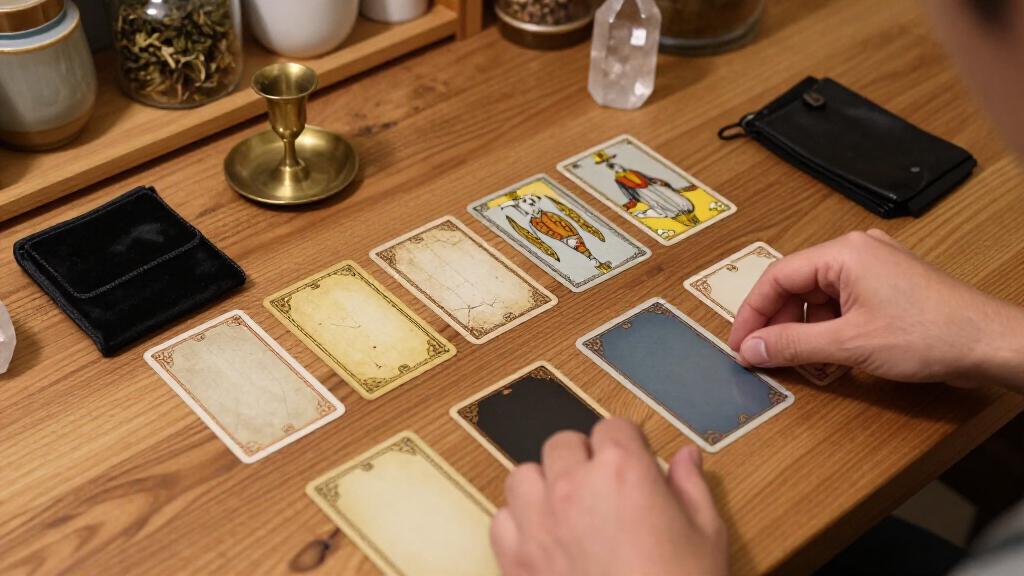
Tarot, a card system originating in 15th-century Italy, has survived roughly 500 years by repeatedly changing roles — from aristocratic card game to divination tool to pop-culture staple. Current online interest in its history is spiking, though no specific event driving the attention has been confirmed.
Online interest in the 500-year history of tarot is spiking, trend-signal data show, drawing fresh attention to a card system that has shifted repeatedly in purpose — from an Italian aristocratic card game to a divination practice to a recurring fixture of popular culture. No specific event, publication, or announcement driving the surge has been confirmed, and the trigger for the current attention remains unclear.
Tarot’s documented history begins in 15th-century Italy, where hand-painted decks such as the Visconti-Sforza cards — commissioned by wealthy Milanese families — were used primarily for a trick-taking card game rather than fortune-telling, according to museum collections including the Yale Beinecke Rare Book Library, which holds Visconti-Sforza deck fragments. That game, tarocchi, spread through Italian and later French court society, as described in the British Museum’s card-history collections. The use of tarot cards for divination is a much later development, generally dated to the late 18th century, when French occultists such as Antoine Court de Gébelin began associating the cards with hidden knowledge — a chronology documented by historians including Dame Frances Yates in her studies of the Western esoteric tradition and more recently by Michael Dummett in ‘The Game of Tarot’ (1980).
The deck most familiar to modern readers, the Rider-Waite-Smith tarot, was published in 1909 by the Rider Company, illustrated by Pamela Colman Smith under the direction of A. E. Waite — a format choice that helped standardize how the cards were interpreted, as noted by the School of Divination curator and Whitney Museum archives on Smith’s illustrations. In the 20th and 21st centuries, tarot moved through waves of popular adoption, from the postwar occult revival to the 1990s New Age boom to a documented resurgence in the late 2010s and 2020s, when tarot imagery and practitioners became widely visible on social media platforms and in mainstream retail; this resurgence was tracked in reporting by The New York Times and market analyses published by Publishers Weekly on divination-book sales.
The current trend signal indicates renewed attention specifically to tarot’s longevity and historical arc — the question of how the practice survived — rather than to any single deck release, celebrity endorsement, or cultural controversy. The metadata underlying the signal identifies only the topic (‘spirituality’) and the headline framing; it does not name a triggering event.
Why a Five-Century Survival Story Resonates
Tarot’s endurance matters because it is a rare case of a cultural artifact surviving five centuries of complete purpose changes. Few recreational or spiritual practices have migrated across as many contexts: courtly entertainment, occult philosophy, psychoanalytic symbolism, and finally mass-market self-reflection. Historians of religion and popular culture — including Wouter Hanegraaff, professor of history of hermetic philosophy at the University of Amsterdam, in ‘Esotericism and the Academy’ (2012) — have long treated tarot as a case study in how practices adapt rather than disappear.
The current interest also reflects broader patterns in spirituality. The late-2010s tarot revival coincided with documented declines in traditional religious affiliation in several Western countries — as measured by Pew Research Center surveys on religious identity — and growth in individualized spiritual practices, particularly among younger adults. Whether the present spike in attention to tarot’s history signals a new wave of practice, academic interest, or simple media curiosity is not established by the available data.
For readers, the significance is straightforward: tarot’s survival is a lens on how meaning gets attached, detached, and reattached to objects over time — and the current attention suggests that conversation is active again.
The arc most historians describe runs roughly as follows. Tarot decks appeared in northern Italy in the 1440s–1450s as luxury items for elite families, documented in surviving court records and deck fragments held by institutions such as the Pierpont Morgan Library in New York. The card game spread across Europe over the following two centuries, a spread traced in Michael Dummett’s ‘The Game of Tarot’ (1980), the standard scholarly reference on the game’s history. Occult writers in late-1700s France, notably Antoine Court de Gébelin and later Éliphas Lévi, reinterpreted the cards as carriers of ancient wisdom — a claim for which no historical evidence exists, per mainstream historians of esotericism, but one that permanently changed how tarot was used.
The 1909 Rider-Waite-Smith deck, illustrated by Pamela Colman Smith under the direction of Arthur Edward Waite, became the visual template for most modern decks. The 1960s–70s counterculture, the 1990s New Age market, and the 2010s social-media era each added new audiences and new decks, including commercially themed editions from major publishers and entertainment brands.
This long context explains why headlines frame the story as survival: tarot repeatedly faced obsolescence — as a game superseded by standard playing cards, as an occult practice marginalized by mainstream religion and science — and repeatedly found a new role instead.
What the Trend Signal Cannot Show
The trigger for the current interest spike is unconfirmed. The available source material consists of trend metadata only — a topic label and a headline — and does not identify any new book, exhibition, documentary, lawsuit, viral post, or market report tied to the attention.
Several plausible explanations exist — a new popular history of tarot, an anniversary tied to early decks, seasonal spiritual-content cycles, or algorithmic amplification of spirituality topics — but none of these is verified here. It is also unclear whether the spike reflects new practitioners, historical curiosity, or media coverage of the tarot market. Readers should treat any specific cause cited elsewhere as unconfirmed unless tied to a named, attributable source.
Watching Whether the Spike Persists
The next indicator to watch is whether the attention converts into durable coverage: new histories or documentaries on tarot’s origins, museum exhibitions of antique decks, or reported market data from publishers and retailers. Sustained interest over months would suggest a genuine cultural moment; a rapid fade would point to a short-term trend artifact.
Academic and museum channels — which have periodically staged exhibitions of Renaissance tarot decks, such as the Pierpont Morgan Library’s holdings of early Italian cards — are the likeliest places for verifiable developments on the historical side. On the commercial side, publisher announcements of new decks or licensed editions would signal continued mainstream demand. As of now, no such development is confirmed, and the story remains a trend observation rather than a specific news event.
Key Questions
Was tarot originally used for fortune-telling?
No. Historical evidence — including scholarship such as Michael Dummett’s ‘The Game of Tarot’ (1980) — shows tarot began in 15th-century Italy as a card game for wealthy families. Its use for divination is generally dated to the late 18th century in France.
Why is there renewed interest in tarot’s history right now?
Trend data show a spike in attention to tarot’s 500-year survival, but the specific trigger is unconfirmed. No event, publication, or announcement has been identified as the cause.
What is the most influential tarot deck?
The Rider-Waite-Smith deck, published in 1909, is widely regarded as the visual and interpretive template for most modern tarot decks.
Is tarot connected to ancient Egypt, as some occult writers claimed?
No historical evidence supports ancient Egyptian origins. That idea came from 18th-century French occultists such as Antoine Court de Gébelin and has been rejected by historians, though it helped popularize tarot divination.
Does the current trend mean more people are practicing tarot?
That is unclear. The spike relates to coverage of tarot’s history. Whether it reflects new practitioners, historical curiosity, or media interest cannot be determined from the available data.
Source: rss
Fall Picks
fall essentials
As an affiliate, we earn on qualifying purchases.