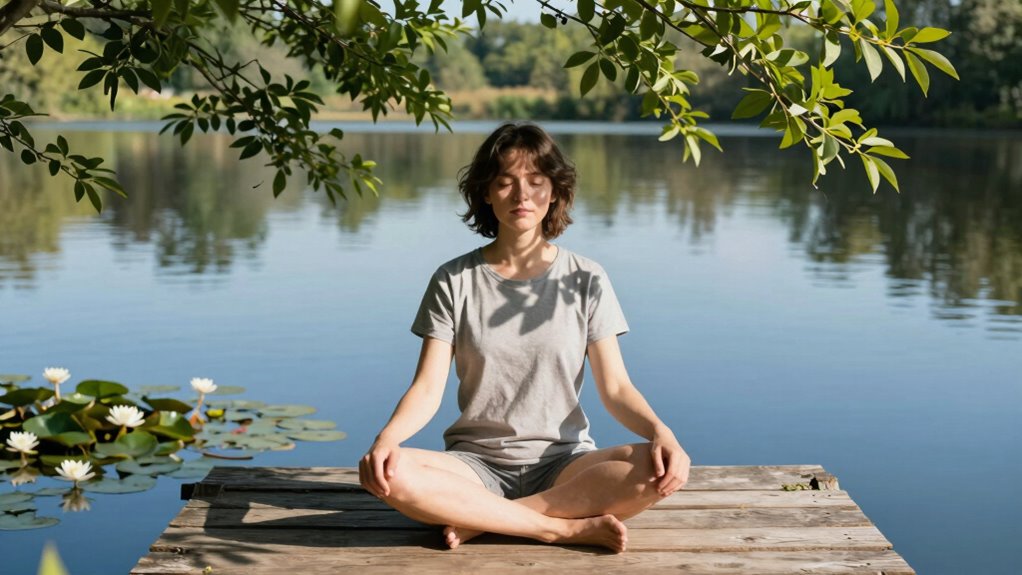

If you dislike formal meditation, you can still embrace mindful living by integrating awareness into your daily routines. Focus on simple activities like mindful eating, slow breathing, or being present during routine chores. These techniques don’t require extra time or strict rules, making them easy to fit into busy schedules. By practicing these small, flexible steps, you’ll find calm and clarity. Keep exploring, and you’ll discover more ways to cultivate mindfulness your way.

Turn your quiet moments into listening time
- Thousands of audiobooks, podcasts and originals
- Listen on your phone, tablet or Echo — also offline
- Cancel anytime
Key Takeaways
- Integrate mindfulness into daily routines, like eating or walking, instead of formal meditation sessions.
- Use quick breathing exercises during breaks to stay present without lengthy commitments.
- Practice open awareness through free-floating techniques, focusing on surroundings rather than structured meditation.
- Incorporate mindfulness into social activities, such as enjoying moments at social settings or lighthearted distractions.
- Emphasize consistency in simple practices over rigid meditation routines for sustainable stress reduction.

Many people hesitate to try traditional meditation because they find it too structured or time-consuming, but mindful living offers a flexible alternative that fits into everyday life. You can incorporate mindfulness into simple activities without sitting in silence for long periods. One effective way to do this is through breathing exercises. Instead of feeling pressured to clear your mind completely, focus on your breath. Take slow, deep inhales through your nose, feeling your chest expand. Then, exhale slowly through your mouth, noticing the release of tension. Repeating this a few times helps anchor you in the present moment, reducing stress and increasing awareness. Breathing exercises are portable, quick, and require no special equipment, making them perfect for busy mornings, stressful afternoons, or winding down at night. Additionally, practicing Free Floating techniques can help you stay grounded throughout the day without the need for formal sessions. These techniques often involve maintaining a gentle open awareness of your surroundings, which can enhance your overall mindfulness practice. Incorporating HRV awareness during these moments can further improve your resilience to stress and support your recovery. Understanding biological responses related to stress can deepen your appreciation for these practices and motivate consistent application. Interestingly, some studies have shown that the presence of pinball machines in social settings can serve as a form of lighthearted distraction, helping to alleviate tension and foster social bonding, which can indirectly support mental well-being. Another practical approach is mindful eating. Rather than rushing through meals or eating distractedly in front of screens, pay attention to the sensory experience of eating. When you sit down to eat, take a moment to observe the colors, textures, and smells of your food. Chew slowly, savoring each bite, and notice the flavors developing on your tongue. This practice not only enhances your enjoyment but also helps you recognize true hunger signals, preventing overeating. Mindful eating transforms a routine activity into a chance to practice presence and gratitude, making mealtime a nourishing experience for both body and mind.
Practice quick breathing exercises anytime to stay present, reduce stress, and enhance awareness effortlessly.
Incorporating these small, deliberate actions into your daily routine means you don’t have to carve out extra time or follow strict rules. You might find yourself doing breathing exercises during a break at work or practicing mindful eating during dinner. The key is consistency, not perfection. Over time, these practices can become second nature, quietly reshaping your relationship with everyday moments. You’ll notice increased calmness, better focus, and a greater sense of connection to what’s happening around you.
Mindful living isn’t about achieving a perfect state of calm; it’s about cultivating awareness in your daily activities. By focusing on your breath or paying close attention to your meals, you make mindfulness accessible and sustainable. These small shifts can lead to significant improvements in your overall well-being, all without the pressure of traditional meditation routines. Instead, you create a flexible, personalized approach that fits seamlessly into your life, helping you stay present and centered amid daily chaos.
portable breathing exercise tools
As an affiliate, we earn on qualifying purchases.
As an affiliate, we earn on qualifying purchases.
Frequently Asked Questions
Can Mindfulness Improve Daily Stress Without Meditation?
Yes, mindfulness can improve your daily stress without meditation. You can practice mindful eating, paying full attention to your food’s taste and texture, or engage in mindful walking, focusing on each step and your surroundings. These simple activities help you stay present, reduce stress, and increase awareness. By incorporating mindfulness into everyday routines, you create a calm, centered mindset without needing formal meditation sessions.
Are There Quick Ways to Practice Mindfulness During Busy Days?
Yes, you can practice mindfulness quickly during busy days. Try breathing exercises to center yourself—take slow, deep breaths whenever you feel overwhelmed. Incorporate mindful walking during short breaks; focus on each step, sensation, and the environment around you. These simple, active approaches help you stay present without formal meditation, making it easier to manage stress and stay grounded amid a hectic schedule.
How Can I Stay Mindful in Noisy or Chaotic Environments?
When chaos erupts around you, coincidences can be your cue to stay grounded. Focus on sensory grounding by noticing the textures, sounds, or smells nearby. Practice environmental awareness by intentionally observing your surroundings without judgment. These quick shifts help anchor you amidst noise, turning chaos into a cue for mindfulness. Embracing these techniques makes it easier to remain present, even in the loudest, busiest environments.
Is Mindfulness Effective for Managing Chronic Pain or Illness?
Mindfulness can be effective for managing chronic pain or illness by strengthening your mind-body connection and altering pain perception. When you practice mindful awareness, you learn to observe pain without judgment, reducing its emotional impact. This can help you feel more in control and less overwhelmed. Instead of fighting pain, you accept it, which often lessens its intensity and improves your overall quality of life.
Do I Need Special Tools or Apps to Practice Mindful Living?
You don’t need special tools or apps to practice mindful living. Focus on simple activities like mindful journaling or sensory awareness. You can carry a journal to jot down thoughts or spend time noticing smells, sounds, and textures around you. These practices help you stay present without formal meditation. All you need is your attention and willingness to engage fully with your surroundings, making mindfulness accessible anytime, anywhere.
As an affiliate, we earn on qualifying purchases.
Conclusion
So, next time life feels overwhelming, remember—mindful living isn’t about sitting still or perfecting a routine. It’s about finding those small moments that truly ground you. But what if the secret to lasting peace lies just beyond your comfort zone? The answer might surprise you, waiting quietly in the everyday chaos. Are you ready to discover how effortless mindfulness can truly be? The journey’s just beginning—will you take the first step?
open awareness meditation accessories
As an affiliate, we earn on qualifying purchases.
As an affiliate, we earn on qualifying purchases.
As an affiliate, we earn on qualifying purchases.
Fall Picks
fall essentials
As an affiliate, we earn on qualifying purchases.