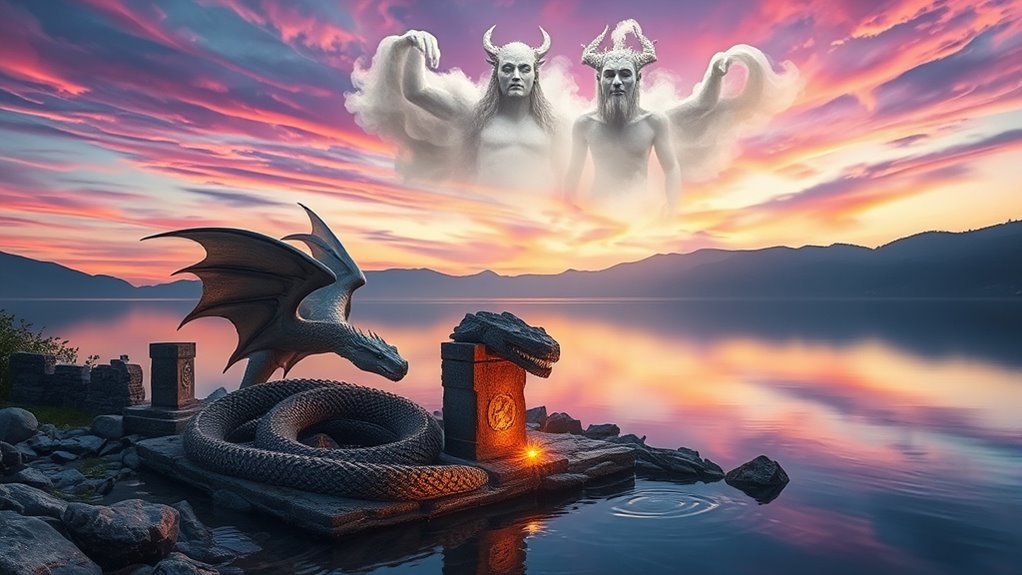

Across cultures and history, dreams are seen as portals to divine and supernatural domains, filled with mythical beings and symbols that carry hidden messages. Mythologies depict dream creatures as messengers, guardians, or tests, revealing truths about yourself and spiritual growth. Symbols like water or flying represent emotions or freedom, while legendary beings embody transformation or wisdom. Exploring these stories can help you understand the deeper meanings of your dreams—discover more about what these mystical figures may reveal to you.
Key Takeaways
- Many cultures view dreams as messages from divine or supernatural beings, often conveyed through mythic dream creatures.
- Mythologies feature dream spirits and beings who serve as messengers, guardians, or testers within the dream realm.
- Dream creatures symbolize universal themes like transformation, wisdom, or divine guidance, reflecting archetypes across legends.
- Stories of mythical dream beings highlight their roles in revealing hidden truths and aiding spiritual growth.
- Interpreting dream myths enhances understanding of personal journeys and the deeper meanings behind dream symbols.
Dreams have long fascinated humanity, serving as mysterious portals to the divine, the subconscious, and the supernatural. Throughout history, cultures have sought to interpret these nightly visions, believing they hold messages from higher powers or reveal hidden truths. Central to this understanding is the study of dream symbolism, where certain images or themes are thought to carry specific meanings. For instance, dreaming of water may symbolize emotion or the subconscious, while flying could represent freedom or spiritual elevation. But beyond these symbolic elements, many cultures have also associated dreams with mythical dream creatures—beings that embody the mysteries or lessons of the dream domain.
These mythical dream creatures often appear in stories and legends as messengers or guardians. In Greek mythology, the oneiroi—dream spirits—are said to visit mortals in their sleep, sometimes taking the form of winged figures or animals. These entities could deliver prophetic dreams or warnings, acting as intermediaries between gods and humans. Similarly, in Norse legends, the land of dreams is inhabited by beings like the mare, a creature that rides victims in their sleep, causing nightmares. Such stories reflect the idea that dream creatures are not just figments of imagination but powerful symbols that influence waking life. They serve as archetypes, embodying fears, hopes, or divine messages that manifest during our subconscious journeys.
In many traditions, these mythical dream creatures are seen as guides or tests. For example, in some Indigenous stories from North America, dream animals—like bears, wolves, or eagles—appear in visions to impart wisdom, strength, and direction. These animals symbolize qualities that you’re meant to embody or lessons you need to learn. You might dream of a dragon, a phoenix, or a unicorn, each representing transformation, renewal, or purity. Recognizing these creatures in your dreams can be a way for your subconscious to communicate powerful truths, encouraging self-discovery or spiritual growth. Additionally, understanding the symbolic significance of these creatures can deepen your interpretation of dreams and reveal insights about your personal journey.
The mythologies surrounding these dream beings underscore the universal belief that dreams are more than mere nighttime fantasies—they are meaningful encounters with forces beyond the ordinary. Whether as symbols in your personal dream symbolism or as mythical creatures from ancient legends, these entities remind you that your dreams are a rich tapestry of stories waiting to be understood. They invite you to explore the depths of your psyche, where myth and reality intertwine, and to interpret the messages hidden within the mythic dream beings that appear in your slumber.
Frequently Asked Questions
How Do Different Cultures Interpret Dream Symbolism?
Different cultures interpret dream symbolism uniquely, shaping their understanding of dream interpretation. You might see a snake as a symbol of transformation in some cultures, while others view it as a sign of danger or deceit. Cultural symbolism influences how you interpret your dreams, guiding you to insights rooted in your community’s myths and legends. Recognizing these differences helps you appreciate diverse perspectives and deepen your connection to the symbolic language of dreams.
Are There Specific Gods Associated With Dreaming Across Civilizations?
Like a key unfastening secret chambers, gods associated with dreaming vary across civilizations. You might think of Hypnos in Greek mythology as a divine dreamer who gently induces sleep, or Somnus in Roman tales. In Egyptian lore, Osiris oversees dream incubation, guiding divine dreamers through visions. These deities serve as protectors and facilitators of dreams, helping you explore the subconscious domain and communicate with divine forces through your dreams.
Can Dreams Predict Future Events According to Mythologies?
In many mythologies, dreams can predict future events through practices like dream incubation, where you focus on a question before sleep. Prophetic visions often reveal messages from gods or spirits, guiding your fate or warning you of danger. These stories suggest that dreams aren’t just random; they’re a gateway to divine insight, helping you understand what’s to come and influencing your actions based on these sacred messages.
What Role Do Dreams Play in Ancient Spiritual Rituals?
Did you know over 70% of ancient cultures used dreams in spiritual rituals? You play a role in sacred dream sites where dream incubation occurs, seeking divine guidance or healing. These rituals often involve fasting, offerings, or meditation, aiming to influence dreams. Dreams serve as a bridge to the divine, helping you access hidden knowledge or communicate with spirits, making them essential in many spiritual practices throughout history.
How Do Mythological Stories Explain Recurring Dreams?
You might see recurring dreams as messages from the divine, explained through mythological symbolism. In many stories, gods or spirits send symbols that require dream interpretation to uncover hidden meanings. These mythological stories suggest that recurring dreams are significant signs, guiding you or revealing deeper truths. By understanding the mythological symbolism behind these dreams, you can interpret their messages more accurately, gaining insights into your subconscious and life’s spiritual journey.
Conclusion
Remember, exploring the mythology of dreams reveals that even if you think your dreams are just random images, they’re rich with ancient stories and symbols. You might feel they’re meaningless, but they carry messages from your subconscious and centuries of legend. Embrace your dreams—whether they seem strange or simple—because they connect you to a deeper world of myths and wisdom, waiting to be uncovered. Your dreams aren’t just stories; they’re your personal legends.