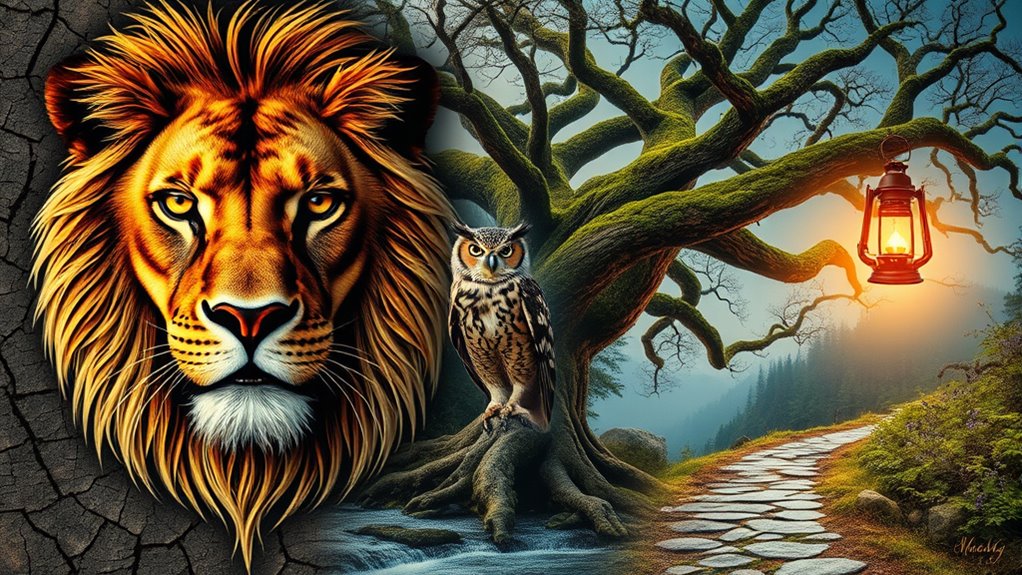

Your subconscious often uses archetypal symbols like water, fire, forests, animals, and snakes to reveal deep insights about your emotions, fears, and growth. These symbols reflect universal themes of renewal, transformation, mystery, and danger rooted in cultural and personal experiences. Recognizing these images helps you understand recurring patterns, inner truths, and collective stories that shape your life. Keep exploring these symbols, and you’ll uncover even more about your subconscious’s powerful language.
Key Takeaways
- Archetypal symbols like water, fire, and forests represent universal themes such as transformation, emotional states, and mystery in the subconscious.
- These symbols often vary in meaning across cultures, reflecting personal and collective interpretations.
- Recognizing recurring symbols can reveal core beliefs, fears, and emotional patterns in an individual’s subconscious.
- Symbols like snakes or journeys evoke themes of rebirth, growth, and self-discovery within the subconscious mind.
- Understanding archetypal symbols enhances self-awareness and connects personal experiences to collective human stories.

Archetypal symbols are universal images and themes that appear across cultures and throughout history, revealing shared human experiences and beliefs. You might notice these symbols surfacing in your dreams, serving as vivid representations of your subconscious mind’s deepest thoughts and emotions. Dream symbolism often draws from a well of archetypes that resonate across different societies, yet their interpretations can vary depending on cultural variations. For example, dreaming of a snake might symbolize transformation and healing in one culture, while representing danger or deceit in another. These differences highlight how cultural context influences the meaning of archetypal symbols, making them both personal and collective at the same time.
Archetypal symbols reveal shared human experiences, but their meanings vary across cultures and personal contexts.
When you encounter symbols in your dreams, it’s essential to reflect on their cultural background to fully understand what they might be telling you. In some cultures, water in dreams signifies purification and renewal, whereas in others, it might symbolize chaos or emotional overwhelm. Recognizing these cultural variations helps you decode the messages embedded in your dreams more accurately. Your subconscious uses these symbols because they tap into universal themes—such as growth, fear, or rebirth—that everyone can relate to, regardless of cultural differences. But the way these themes manifest can differ, giving each person a unique lens through which to interpret their inner world.
As you become more aware of archetypal symbols in your dreams, you begin to see how your personal experiences and cultural background shape their meaning. For instance, a journey through a forest might evoke feelings of mystery and discovery in one person, while another might interpret it as feeling lost or trapped. These nuances deepen your understanding of your inner landscape, helping you recognize patterns and recurring themes that reveal your core beliefs and fears. Additionally, understanding the role of symbolism in art and mythology can enhance your interpretation of dream images and deepen your self-awareness. By paying attention to dream symbolism and considering cultural variations, you can access a richer, more nuanced understanding of yourself and your subconscious.
Ultimately, archetypal symbols are powerful tools for self-awareness. They connect your personal story to the collective human experience, showing that your emotions, fears, and aspirations are part of a larger tapestry. Whether they appear in dreams, myths, or art, these symbols speak a language that transcends individual differences. When you learn to interpret them with sensitivity to cultural variations, you gain a deeper insight into your psyche and a greater appreciation for the shared symbols that unite us all. Recognizing these archetypes allows you to access your inner wisdom and navigate life with a clearer sense of purpose and understanding.
Frequently Asked Questions
How Do Archetypal Symbols Influence Daily Decision-Making?
Your daily decisions are often shaped by subconscious patterns and symbols you might not realize. Dream analysis reveals these archetypal symbols, which influence your perceptions and choices. When you notice recurring themes or images, you’re tapping into your subconscious mind, guiding your actions intuitively. Recognizing these symbols helps you understand your motivations better, empowering you to make more conscious decisions aligned with your true self.
Can Cultural Differences Alter the Interpretation of Symbols?
You might think symbols have universal meanings, but cultural symbolism shows they don’t. Interpretation diversity means a symbol’s significance varies across cultures, influencing how you perceive and react to it. While a dove symbolizes peace in some cultures, it may represent mourning in others. So, cultural differences can greatly alter your interpretation of symbols, reminding you to take into account context and cultural background before assigning meaning.
Are There Ways to Consciously Recognize Archetypal Symbols?
To consciously recognize archetypal symbols, you need to develop symbol recognition through mindful observation of your dreams, art, and daily experiences. Practice conscious awareness by reflecting on recurring images or themes that stand out to you. Journaling can help identify these symbols, making it easier to understand their personal significance. Over time, this awareness deepens, allowing you to interpret the subconscious messages these archetypes carry, enriching your self-awareness.
Do Childhood Experiences Shape the Symbols We Resonate With?
Imagine your childhood memories as a garden, each experience planting seeds in your subconscious imprint. These early moments shape the symbols you resonate with, like familiar trees or flowers in your inner landscape. Yes, childhood experiences influence the archetypal symbols your subconscious uses, creating a personal language rooted in those formative years. Over time, recognizing these connections helps you understand why certain symbols feel deeply meaningful and guiding in your life.
How Can Understanding These Symbols Improve Self-Awareness?
Understanding how symbols influence you can profoundly boost your self-awareness. By practicing symbol recognition, you identify recurring themes and patterns in your thoughts and dreams. This awareness helps you uncover subconscious beliefs and emotions, leading to personal growth. As you recognize these symbols, you gain clarity about your motivations and fears, which enhances your self-awareness. This process empowers you to make conscious choices and develop a deeper understanding of yourself.
Conclusion
Understanding these archetypal symbols helps uncover your subconscious mind’s deepest desires and fears. Did you know that studies show 90% of people worldwide resonate with common symbols like the mother or hero? Recognizing these symbols in your dreams and daily life allows you to tap into your true self and navigate life more consciously. Embrace these archetypes, and you’ll gain powerful insight into your subconscious, guiding you toward personal growth and self-awareness.