
TL;DR

Turn your quiet moments into listening time
- Thousands of audiobooks, podcasts and originals
- Listen on your phone, tablet or Echo — also offline
- Cancel anytime
Tarot originally began as a courtly card game in 15th-century Europe. Over centuries, it evolved into a tool for divination, a transition driven by cultural and social changes. This story examines how and why this transformation occurred.
Tarot, once a popular courtly card game in 15th-century Europe, has become widely associated today with divination and spiritual guidance. This transformation over centuries highlights changing cultural perceptions of the cards and their purpose, making it a significant subject for understanding shifts in societal beliefs and practices.
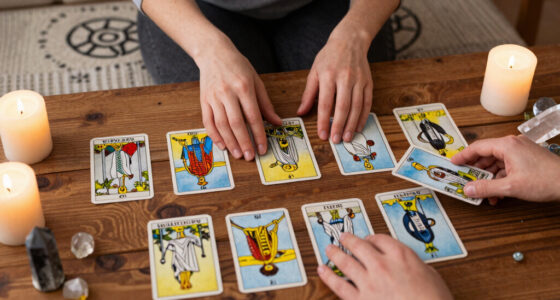
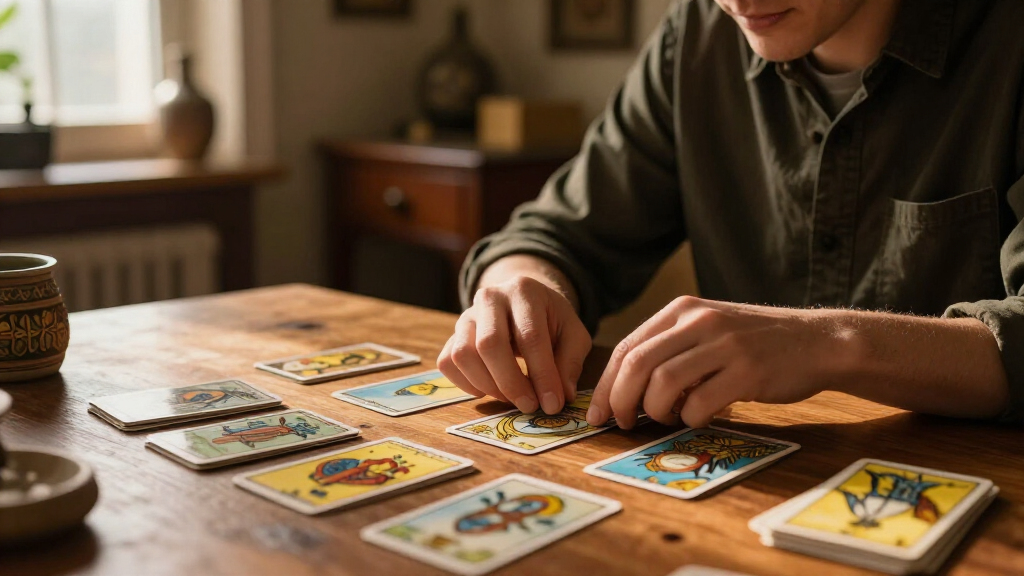
Historical records confirm that tarot cards originated in Italy and France in the 15th century as a form of entertainment among aristocratic circles. These early decks, known as ‘tarocchi,’ were used primarily for playing a game similar to modern bridge. It was not until the 18th century that tarot began to be linked with mysticism and the occult, particularly in France and England.
By the late 18th and early 19th centuries, tarot cards started to be associated with mystical and spiritual practices, largely driven by esoteric groups such as the French occultist Jean-Baptiste Alliette (Etteilla) and the Hermetic Order of the Golden Dawn. These groups promoted tarot as a tool for divination, spiritual insight, and self-discovery, shifting its use from entertainment to spiritual practice.
Scholars and historians note that this transition was influenced by broader cultural trends, including the rise of interest in mysticism, astrology, and the occult during the Enlightenment and Romantic periods. The symbolic imagery of tarot decks was adapted to fit these spiritual narratives, further cementing its role as a divinatory instrument.
Cultural and Spiritual Impacts of Tarot’s Evolution
The shift of tarot from a courtly game to a tool for divination reflects broader societal changes, including the rise of individual spirituality and the democratization of mystical practices. Today, tarot’s popularity in mainstream culture demonstrates how historical symbols can be repurposed to fit contemporary spiritual and self-help movements, impacting how people seek meaning and guidance.
Understanding this history also sheds light on how cultural artifacts can undergo transformation, serving different social functions across eras. For many, tarot remains a bridge between entertainment, spirituality, and personal insight, illustrating the fluidity of cultural symbols over time.
As an affiliate, we earn on qualifying purchases.
Origins of Tarot and Its Early Use in Europe
Tarot cards emerged in 15th-century Italy and France, initially used for playing a game called ‘tarocchi.’ These decks featured allegorical imagery and were owned by aristocratic families. Their use was primarily recreational, with no initial connection to mysticism or divination.
It was only in the 18th century that tarot decks began to be linked with mystical and esoteric traditions. French occultists and spiritualists started interpreting the imagery symbolically, associating the cards with hidden knowledge and spiritual insight. This period marked the beginning of tarot’s transformation into a divinatory tool.
“Tarot’s origins as a courtly game are well-documented, but its later association with mysticism was a gradual cultural shift driven by esoteric groups seeking to find deeper meaning in the cards.”
— Dr. Lisa Miller, historian of European culture
As an affiliate, we earn on qualifying purchases.
Unclear Aspects of Tarot’s Transition to Divination
While historians agree on the general timeline of tarot’s evolution, the specific motivations and cultural influences that prompted its shift from a game to a spiritual tool are still debated. The extent to which different social classes adopted tarot for mystical purposes remains uncertain, and the precise timeline of its popularization in various regions varies among sources.
As an affiliate, we earn on qualifying purchases.
Future of Tarot in Popular Culture and Spirituality
As interest in spirituality and self-help continues to grow, tarot’s role as a divination tool is likely to expand further into mainstream culture. Researchers and cultural analysts expect ongoing reinterpretations of tarot imagery and practices, possibly blending traditional symbolism with modern psychological and therapeutic approaches. Further scholarly work may clarify the nuances of its historical transformation.
As an affiliate, we earn on qualifying purchases.
Key Questions
When did tarot first become associated with divination?
Although tarot decks originated in the 15th century as a card game, their association with divination began in the late 18th century, driven by esoteric groups and mystical reinterpretations.
Why did tarot shift from entertainment to spiritual practice?
This shift was influenced by the rise of mystical and occult movements during the Enlightenment and Romantic periods, which sought symbolic and spiritual meaning in the cards.
Are all tarot decks used for divination today?
No, while most modern decks are designed for spiritual and divinatory purposes, some decks are created solely for artistic or recreational use, without mystical associations.
How did tarot become popular in modern culture?
Its popularity surged in the 20th and 21st centuries through books, media, and the self-help movement, making it a common tool for personal insight and entertainment.
Source: rss
Fall Picks
fall essentials
As an affiliate, we earn on qualifying purchases.