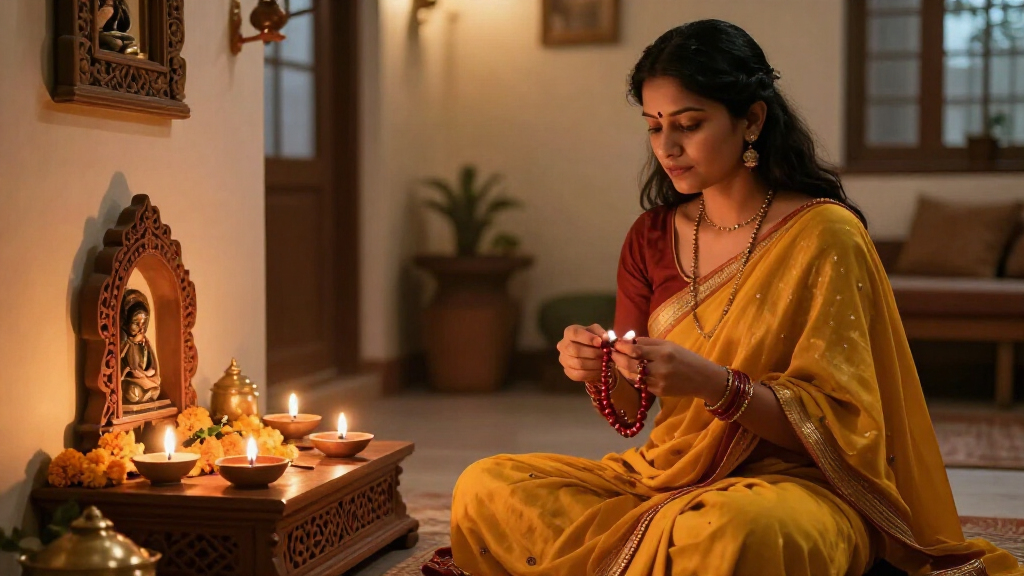
Choosing Diwali prayer beads is less about finding one universally best mala and more about matching its material, length, and wear style to your prayer routine. I rank the IS4A Red Rosewood Japa Mala first for its hand-knotted 108+1 layout and familiar 8 mm bead size; the IS4A Tulsi Wood Mala is my pick for shoppers who specifically want Tulsi; and the Natural Wood Wrap Mala suits anyone who values a strand that can also be worn as a multi-wrap bracelet.

Turn your quiet moments into listening time
- Thousands of audiobooks, podcasts and originals
- Listen on your phone, tablet or Echo — also offline
- Cancel anytime
The main tradeoff is between a traditional counting strand and a more flexible everyday accessory. Four options have 108 beads plus a guru bead, while the cypress strand is described as having 108 beads without an additional guru bead. Materials also differ: Tulsi, red sandalwood, red rosewood, and green cypress each offer a distinct choice, but the supplied descriptions do not establish that one is spiritually superior. I focus on practical details, including hand-knotting, reported dimensions, fastening, and uncertainties in the listings, so you can choose a mala that fits how you observe Diwali and pray throughout the year.
Key Takeaways
- The IS4A Red Rosewood Mala leads for a familiar 108+1 count and hand-knotted 8 mm beads, though its description conflicts about whether the wood is rosewood or sandalwood.
- The IS4A Tulsi Mala is the clearest pick when Tulsi is your preferred material; its stated 33-inch length is useful context, but it has no clasp.
- The red sandalwood option pairs a 108+1 count with a listed henna-like fragrance, but the listing gives fewer construction and sizing details than the two IS4A strands.
- The second Tulsi option is described as hand-knotted and 108+1, yet its 18-inch-wide measurement and unclear ball fastening make fit harder to judge.
- The green cypress mala is the only option described as a multi-wrap bracelet or necklace, but it has 108 beads rather than a stated 108+1 count and uses stretch cord.
| IS4A 8mm Red Rosewood Japa Mala Necklace, 108+1 Hand-Knotted Beads |  | Best Overall | Material: Red rosewood; description also refers to sandalwood | Bead diameter: 8 mm | Bead count: 108 beads plus 1 guru bead | VIEW LATEST PRICE | See Our Full Breakdown |
| IS4A Tulsi Wood Japa Mala Necklace, 109 Hand-Knotted 8 mm Beads |  | Best for Tulsi Preference | Material: Tulsi wood | Bead count: 109 (108+1) | Bead size: 8 mm | VIEW LATEST PRICE | See Our Full Breakdown |
| Red Sandalwood Prayer Beads Mala, 108+1 Beads |  | Best for Red Sandalwood | Material: Wood (red sandalwood) | Bead count: 108+1 | Clasp: No clasp | VIEW LATEST PRICE | See Our Full Breakdown |
| 8 mm Tulsi Wood Japa Mala Necklace, 108+1 Beads |  | Best Hand-Knotted Tulsi Alternative | Material: Tulsi wood | Bead size: 8 mm | Bead count: 108+1 | VIEW LATEST PRICE | See Our Full Breakdown |
| 108-Bead Natural Wood Mala Prayer Beads |  | Best for Multi-Wrap Wear | Material: Natural green cypress wood | Bead count: 108 | Bead size options: 6 mm or 8 mm | VIEW LATEST PRICE | See Our Full Breakdown |
| Diwali prayer bead | Material | Bead count | Construction | Clasp |
|---|---|---|---|---|
| IS4A 8mm Red Rosewood Japa Mal | Red rosewood; description also refers to sandalwood | 108 beads plus 1 guru bead | Hand-knotted | Knot |
| IS4A Tulsi Wood Japa Mala Neck | Tulsi wood | 109 (108+1) | — | — |
| Red Sandalwood Prayer Beads Ma | Wood (red sandalwood) | 108+1 | — | No clasp |
| 8 mm Tulsi Wood Japa Mala Neck | Tulsi wood | 108+1 | Hand-knotted | — |
| 108-Bead Natural Wood Mala Pra | Natural green cypress wood | 108 | Knotted | None |
More Details on Our Top Picks
IS4A 8mm Red Rosewood Japa Mala Necklace, 108+1 Hand-Knotted Beads
I place this IS4A 108+1 mala first because it combines a clearly stated mantra-counting layout with 8 mm hand-knotted beads. For a Diwali prayer routine built around japa, the extra guru bead gives the strand a familiar point at which to pause or turn, while the knots separate the beads as you move through a recitation. Its stated unisex design also makes it an uncomplicated option to consider as a personal strand or spiritual gift.
Compared with the red sandalwood mala, this one offers more construction detail, including hand-knotting and bead diameter. Compared with the Tulsi options, it may suit someone who wants a red-toned wood rather than a specifically Tulsi strand. The central caveat is significant: the supplied description refers to the material as both red rosewood and sandalwood. I would not buy it on a strict material requirement without confirming which wood is actually supplied.
The listing gives no clasp or metal hardware, which fits the simple strand format but may disappoint someone seeking a conventional clasped necklace. I rank it above the alternatives for its clear count and knotting, not because its material description is flawless. If the wood identity matters more than the counting format, the explicitly named Tulsi or red sandalwood options are easier to evaluate.
Pros:- 108 beads plus a guru bead support a familiar counting routine.
- Hand-knotted construction separates the beads along the strand.
- 8 mm bead diameter is stated clearly.
- Unisex design suits personal use or gifting.
Cons:- The material is described inconsistently as rosewood and sandalwood.
- No metal or clasp is listed.
- The listing does not provide a strand length.
Best for: A buyer seeking a hand-knotted 108+1 mala with 8 mm beads for Diwali japa, meditation, or mantra counting, and who can accept an unresolved wood-description inconsistency.
Not ideal for: Anyone who needs verified rosewood or sandalwood, wants a metal clasp, or prefers a product listing with exact strand length.
- Material:Red rosewood; description also refers to sandalwood
- Bead diameter:8 mm
- Bead count:108 beads plus 1 guru bead
- Construction:Hand-knotted
- Metal:No metal
- Clasp:Knot
- Item type:Necklace
- Stated uses:Meditation, mantra recitation, prayer counting, and yoga
Our verdict“I rank it first for its clearly stated 108+1, hand-knotted format, provided the material ambiguity is acceptable.”
IS4A Tulsi Wood Japa Mala Necklace, 109 Hand-Knotted 8 mm Beads
When the material choice is the deciding factor, I prefer this IS4A Tulsi Wood Mala over the rosewood option because the listing names Tulsi consistently. It specifies 109 beads, understood as 108+1, and an 8 mm round-bead size, giving buyers useful information for a traditional counting strand. Its stated 33-inch length is another practical advantage: it gives more guidance about how the strand may hang than several other listings in this group.
That extra length information helps distinguish it from the red sandalwood mala, whose listing does not give a measurement, and from the second Tulsi option, which reports an 18-inch width without explaining how that measurement relates to overall strand length. It is also a more straightforward material choice than the top-ranked IS4A option, whose description conflicts about rosewood versus sandalwood.
The tradeoff is its no-clasp design. That can be entirely suitable for a devotional strand, but it offers no conventional fastening and may be less convenient if you intend to put it on and remove it as everyday jewelry. The listing describes a hand-knotted design among its supplied details, though its specific construction fields are less explicit than the first product’s. I would choose this for a clear Tulsi preference and stated length, not for someone who wants metal, a clasp, or verified fashion-jewelry hardware.
Pros:- Tulsi wood is named directly in the listing.
- The 109-bead count is identified as 108 plus 1.
- 8 mm round beads suit buyers seeking a larger, stated bead size.
- A 33-inch length gives a useful fit reference.
Cons:- There is no clasp or closure.
- The wooden look may not suit buyers seeking metal or gemstone jewelry.
- The listing gives limited detail on the specific knot construction.
Best for: A buyer who specifically wants a Tulsi wood prayer mala, values a stated 33-inch length, and prefers an unclasped devotional strand.
Not ideal for: Someone who needs a clasp, metal components, a gemstone look, or a precise description of fastening and knot placement.
- Material:Tulsi wood
- Bead count:109 (108+1)
- Bead size:8 mm
- Bead shape:Round
- Color:Brown
- Chain length:33 inches
- Closure:No clasp or closure
- Weight:0.02 kg
Our verdict“I recommend this as the clearest Tulsi choice here, especially for buyers who want a stated length more than a clasp.”
Red Sandalwood Prayer Beads Mala, 108+1 Beads
This is the most direct choice for a buyer whose priority is red sandalwood. The listing clearly states a 108+1 bead count and names prayer, mantra recitation, and spiritual rituals as intended uses. It also describes a henna-like fragrance, a sensory detail that may appeal to shoppers who want more than a plain wood appearance. I treat that as a listing claim, not a guarantee that every strand will have a particular scent strength.
Compared with the first IS4A mala, this option avoids the rosewood-versus-sandalwood wording conflict by naming red sandalwood as its material. But it gives less information about bead diameter and knotting, so the IS4A option is easier to assess for handling. Compared with the Tulsi strands, the material is its main point of difference rather than a stated length or a described hand-knotted build.
There is no clasp, and the listing does not provide a strand length or bead size. Those omissions make it harder to predict how it will sit when worn or how the bead scale will feel in hand. I would choose it if red sandalwood and the stated 108+1 count matter most; I would choose the IS4A Tulsi mala if material certainty and a known length are higher priorities. Its less complete specifications keep it below the more fully described options.
Pros:- Red sandalwood is the stated material.
- 108+1 beads support a familiar mantra-counting format.
- The listing describes a henna-like fragrance.
- Prayer, mantra recitation, and spiritual rituals are stated uses.
Cons:- No clasp is listed.
- Bead diameter and strand length are not specified.
- Construction details such as hand-knotting are not provided.
Best for: A buyer who specifically prefers a red sandalwood mala with a 108+1 count and does not need detailed sizing or clasp information.
Not ideal for: Anyone who needs a verified bead diameter, hand-knotting details, a stated strand length, or a clasp.
- Material:Wood (red sandalwood)
- Bead count:108+1
- Clasp:No clasp
- Chain type:Mangal
- Item type:Necklace
- Fragrance:Described as henna-like
- Stated uses:Prayer, mantra recitation, and spiritual rituals
Our verdict“I would choose this for its explicitly named red sandalwood, while accepting that sizing and construction details are sparse.”
8 mm Tulsi Wood Japa Mala Necklace, 108+1 Beads
This second Tulsi option is a useful alternative if you want hand-knotted 8 mm beads and a 108+1 count without choosing the 33-inch IS4A strand. The material and counting layout are stated plainly, and hand-knotting is an explicit part of its description. For someone who values separated beads during japa, that construction detail makes it more compelling than the red sandalwood listing, which does not specify knotting.
The listing is harder to interpret on fit. It says the necklace is 18 inches wide, but does not clarify whether this means a width measurement, a laid-flat dimension, or another product measurement. Its clasp field says “Ball,” while the description says there are no metal components and does not explain how the fastening works. I would not treat “Ball” as proof of a conventional clasp. In comparison, the 33-inch IS4A Tulsi mala gives a more straightforward length reference, while this one gives clearer explicit hand-knotting.
The 27.22 g metal-weight field sits awkwardly beside the statement that it has no metal components, so I would not rely on that field to infer metal hardware. These uncertainties keep it below the clearer Tulsi choice in my ranking. It still makes sense for a buyer prioritizing Tulsi, 8 mm beads, and stated hand-knotting who is comfortable confirming the measurement and fastening details before purchase.
Pros:- Tulsi wood is the stated material.
- 108+1 beads suit traditional prayer or japa counting.
- Hand-knotted construction is specified.
- 8 mm bead size is stated.
Cons:- The listed 18-inch width is not clearly explained as a fit measurement.
- The ball fastening description does not explain how it closes.
- The metal-weight field conflicts with the no-metal description.
Best for: A buyer seeking a hand-knotted 108+1 Tulsi mala with 8 mm beads who is willing to verify how the stated measurement and ball fastening are defined.
Not ideal for: Someone who needs an unambiguous necklace length, a clearly described clasp, or consistent hardware specifications.
- Material:Tulsi wood
- Bead size:8 mm
- Bead count:108+1
- Width:18 inches, measurement context unspecified
- Construction:Hand-knotted
- Metal type:No metal components stated
- Clasp type:Ball; fastening method unclear
- Metal weight field:27.22 g; conflicts with no-metal description
Our verdict“I see this as a solid Tulsi-and-knotting alternative, but the unclear dimensions and fastening make it less straightforward than the 33-inch IS4A mala.”
108-Bead Natural Wood Mala Prayer Beads
This green cypress mala is the lineup’s most versatile wear option: its description says the strand can be worn as a necklace or wrapped four to five times around the wrist as a bracelet. That makes it a different kind of Diwali prayer bead from the conventional 108+1 necklaces above. It has 108 natural wood beads, a reinforced stretch cord, and a choice of 6 mm or 8 mm bead sizes, so buyers can choose a smaller or fuller look while retaining a strand intended for counting.
Compared with the Tulsi and red sandalwood malas, this is the only product explicitly described as a multi-wrap bracelet. The stretch cord may make it easier to put on without a clasp, but it also introduces a fit and durability tradeoff: the listing does not give an adjustable sizing system, and stretch cords can be less reassuring to someone who wants a fixed, traditional strand. It also does not state a guru bead, so I would not assume its counting layout matches the four 108+1 options.
I rank it fifth for a buyer seeking a conventional Diwali japa mala, but that does not make it a poor fit for everyone. It is the strongest choice here for someone who wants wearing flexibility and bead-size options, with prayer or breath counting as part of that use. Skip it if a guru bead, a non-stretch cord, or a specifically Tulsi or sandalwood material is central to your practice.
Pros:- 108 beads support mantra or breath counting.
- Available in 6 mm or 8 mm bead sizes.
- Can be worn as a four-to-five-wrap bracelet or as a necklace.
- Reinforced stretch cord and knotted construction are described.
Cons:- No guru bead is stated, unlike the four 108+1 options.
- There is no clasp.
- Stretch cord may not provide an adjustable or fixed fit.
Best for: A buyer who wants one 108-bead strand for prayer or breath counting that can also be worn as a multi-wrap bracelet or necklace.
Not ideal for: Someone who requires a stated 108+1 layout, guru bead, fixed sizing, non-stretch construction, or Tulsi or sandalwood.
- Material:Natural green cypress wood
- Bead count:108
- Bead size options:6 mm or 8 mm
- Item width:0.35 inches
- Clasp:None
- Cord:Reinforced stretch cord
- Construction:Knotted
- Wear style:Wrap bracelet or necklace
Our verdict“I recommend it for flexible bracelet-and-necklace wear, not for buyers who specifically want a traditional 108+1 guru-bead layout.”
How We Picked
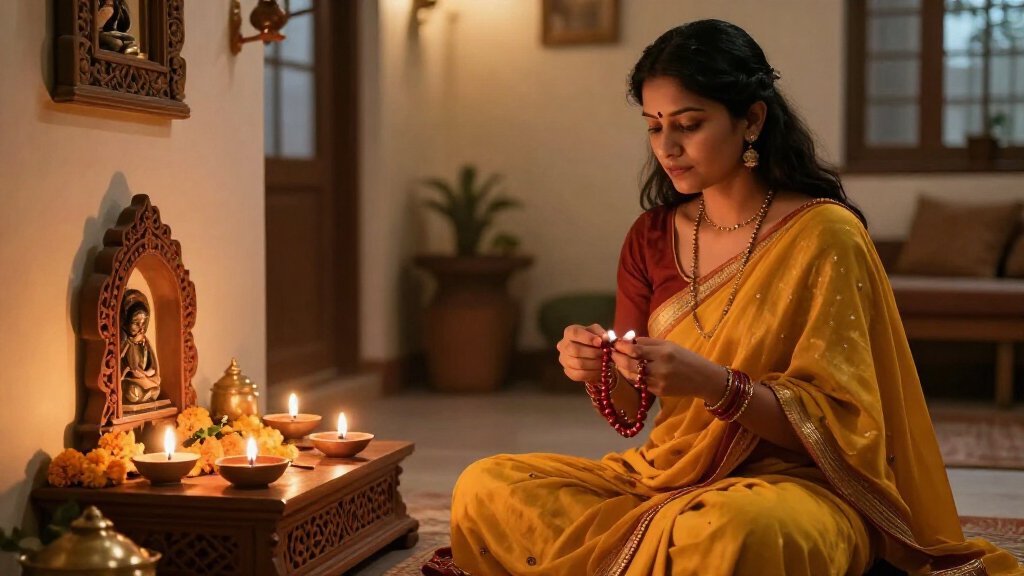
I ranked these options by how clearly their stated features support Diwali prayer, mantra recitation, and practical handling, rather than by decorative appeal alone. A mala intended for counting should give a buyer a clear bead count and a usable strand; material preference, wearability, and construction then help distinguish otherwise similar choices.
Counting details came first. Four listings specify 108 beads plus one guru bead, a layout many buyers seek for japa. The cypress option states 108 beads but does not mention a guru bead, so I treat it as a more flexible counting and wearing choice rather than assume it has the same layout. I also give weight to hand-knotting where the listing explicitly says it is present, since separated beads can make a strand easier to handle and may reduce bead-on-bead friction.
Material clarity mattered. Tulsi is named directly in two listings, red sandalwood in one, and natural green cypress in another. The rosewood listing deserves a qualification because its description uses both rosewood and sandalwood. I do not resolve that inconsistency by guessing. I also avoid treating a wood label or a fragrance claim as proof of religious suitability; buyers may follow their own tradition or personal preference.
Fit and wear options affected placement. The 33-inch Tulsi strand provides a stated length, while the other traditional malas offer less complete sizing information. The cypress strand is distinct because its description says it can wrap four to five times as a bracelet or be worn as a necklace. That flexibility is appealing, but stretch cord and the lack of a stated guru bead make it less directly comparable to a conventional 108+1 prayer strand.
Finally, I considered listing limitations as real tradeoffs. No clasp is not automatically a defect on a prayer mala, but it can matter if you want a conventional jewelry fastening. Vague measurements, an unclear fastening description, or conflicting material information make a product harder to choose with confidence. The ranking rewards clear, relevant information while keeping each pick tied to a different buyer need.
| Diwali prayer bead | Material | Construction | Clasp |
|---|---|---|---|
| IS4A 8mm Red Rosewood Japa Mal | Red rosewood; description also refers to sandalwood | Hand-knotted | Knot |
| IS4A Tulsi Wood Japa Mala Neck | Tulsi wood | — | — |
| Red Sandalwood Prayer Beads Ma | Wood (red sandalwood) | — | No clasp |
| 8 mm Tulsi Wood Japa Mala Neck | Tulsi wood | Hand-knotted | — |
| 108-Bead Natural Wood Mala Pra | Natural green cypress wood | Knotted | None |
Factors to Consider When Choosing Diwali Prayer Beads
I would choose Diwali prayer beads by starting with the practice, then checking whether the strand’s materials and dimensions suit how I plan to handle or wear it. The products here share a devotional purpose, but their counting layouts, woods, construction details, and wear styles are not interchangeable.
Decide Whether You Want 108 or 108+1 Beads
Four listings state a 108+1 format, while the green cypress strand states 108 beads without identifying a guru bead. If your routine relies on a distinct guru bead as a marker for completing or turning a round of recitation, the four 108+1 options give you a clearer match. The IS4A rosewood listing, both Tulsi listings, and red sandalwood listing all describe that count.
The cypress product may still work for mantra or breath counting, as its description expressly names those uses. Its listing simply does not establish that it includes a separate guru bead. I would not infer one from the total or assume every seller uses the same counting convention. If that detail shapes your practice, verify it before choosing.
Choose Material by Preference, Not by Unsupported Claims
The lineup includes Tulsi, red sandalwood, red rosewood, and green cypress. Two products name Tulsi, which makes them the clearest choices for someone who specifically wants that wood. The red sandalwood mala identifies its material directly and mentions a henna-like fragrance. The cypress option stands apart with a green natural-wood description and a stretch-cord wear format.
The first-ranked IS4A listing needs extra care: its title calls the beads red rosewood, but the description also refers to sandalwood. I would ask for clarification if the exact wood is important. Product descriptions cannot establish which material is right for every religious practice, so I would let my own tradition and preference guide that choice rather than assume a particular wood is required for Diwali.
Hand-Knotted Construction and Cord Style
Hand-knotting is explicitly stated for the rosewood IS4A mala and the second Tulsi option; the Tulsi IS4A listing also describes a hand-knotted design in its supplied details. Knots between beads can make individual beads easier to move and help limit direct bead-to-bead contact. The red sandalwood listing does not specify whether it is knotted, so buyers who value that construction should not assume it is present.
The cypress mala uses a reinforced stretch cord and is described as knotted, but this creates a different handling profile from a fixed traditional strand. Stretch may help with multi-wrap wear, while a buyer wanting a set necklace length may prefer a strand with clearer dimensions. None of the options supplies a conventional metal clasp, and a no-clasp strand is common among the products in this comparison; check the individual listing if a secure jewelry fastening is a requirement.
Use Dimensions to Judge Wearability
The 33-inch IS4A Tulsi mala has the most straightforward stated length among the traditional strands. That helps set expectations for how it may hang, though buyers should still compare the dimension with how they like to wear a necklace. The red sandalwood and rosewood listings do not provide a strand length in the supplied details.
The second Tulsi listing says “18 inches wide,” but does not explain what that measurement describes, and its ball-clasp field does not clarify how the strand fastens. The cypress strand gives no fixed necklace length because it is designed to wrap several times or be worn as a necklace. If fit is central, prioritize a listing with dimensions that match the form you intend to wear, and confirm ambiguous measurements before ordering.
Match the Bead Size to How You Count
Three listings specify 8 mm beads: the rosewood IS4A, both Tulsi options, and the cypress strand offers an 8 mm size alongside a 6 mm option. The red sandalwood listing does not state bead diameter. Larger beads may be easier for some people to handle during a counting routine, while smaller beads can create a more compact look; personal comfort matters more than treating one size as universally correct.
If you want to choose between sizes, the cypress product is the only one that explicitly offers both 6 mm and 8 mm. That flexibility comes with its stretch-cord design and unstated guru bead, so I would not select it on size choice alone if a traditional 108+1 layout is essential. For a straightforward 8 mm 108+1 strand, compare the two Tulsi choices and the rosewood listing, with attention to their different material and listing-detail caveats.
Consider Whether the Mala Is for Prayer, Wear, or Gifting
For a strand mainly used in Diwali prayer or mantra recitation, I would prioritize a clear bead count, material, and construction description. The rosewood IS4A offers the most complete combination of count, bead size, and explicit hand-knotting, though the wood conflict needs resolving. The 33-inch Tulsi option is the clearest material-and-length pairing for someone committed to Tulsi.
For someone who also wants a wearable accessory, the green cypress strand has the most distinctive flexibility because it is described as both a necklace and a multi-wrap bracelet. A gift buyer may want a stated length and fewer unresolved product details; here, the IS4A Tulsi listing offers more fit information than most, while the rosewood listing’s material inconsistency is worth flagging. I would choose based on the recipient’s practice and preferred wood rather than treating appearance alone as a guide to religious suitability.
Frequently Asked Questions
Which of these prayer beads is best for a traditional 108+1 counting routine?
The IS4A rosewood, both Tulsi malas, and red sandalwood mala all state a 108+1 count. The rosewood option also specifies 8 mm beads and hand-knotting, while the 33-inch IS4A Tulsi strand adds a clear length reference. The cypress product states 108 beads but does not mention a guru bead, so I would choose one of the 108+1 options if that extra marker matters to your routine.
Which option should I choose if I specifically want Tulsi wood?
Both the IS4A 33-inch Tulsi mala and the 8 mm Tulsi japa mala name Tulsi directly. I would favor the IS4A version if a stated 33-inch length is useful; I would consider the other Tulsi option if explicit hand-knotting is your priority, while checking its unclear 18-inch-wide measurement and ball fastening. Neither listing includes metal components or a conventional clasp as described.
Are any of these beads suitable for wearing as a bracelet?
The green cypress mala is the only product explicitly described as wrapping four to five times around the wrist as a bracelet. It uses reinforced stretch cord and is also described as a necklace, which makes it the most flexible wear choice here. Its stretch fit may not suit everyone, and it does not state a guru bead, so buyers focused on a conventional prayer strand may prefer a 108+1 necklace instead.
Do all five malas have a clasp?
No. The listings generally describe no clasp or no closure, and none clearly establishes a conventional metal clasp. The second Tulsi product has a “Ball” clasp field, but the fastening method is not explained and the listing also says there are no metal components. I would confirm the fastening details directly if a clasp is necessary for how you plan to wear the mala.
What should I check before buying the red rosewood IS4A mala?
The key question is the material description: the product title identifies red rosewood, while the description also calls it sandalwood. If you have a strong preference for one wood, contact the seller or choose a listing that names its material consistently, such as one of the Tulsi options or the red sandalwood mala. The IS4A strand still offers a clearly stated 108+1 count, 8 mm beads, and hand-knotting, but those features do not settle the wood discrepancy.
Conclusion
For a balanced 108+1 prayer strand with 8 mm hand-knotted beads, I would start with the IS4A Red Rosewood Japa Mala, after checking its rosewood-versus-sandalwood wording. If your material preference is Tulsi, the 33-inch IS4A version is my clearest fit-aware pick; choose the other Tulsi mala when explicit hand-knotting matters more and you can verify its unclear dimensions and fastening. The red sandalwood option suits buyers focused on that named wood and a 108+1 count, with fewer sizing details. For a strand that can double as a multi-wrap bracelet, choose the green cypress mala, accepting its stretch cord and lack of a stated guru bead. I would make the final choice around your counting method, preferred wood, and intended way to wear the beads, rather than assuming one material or style is right for every Diwali practice.