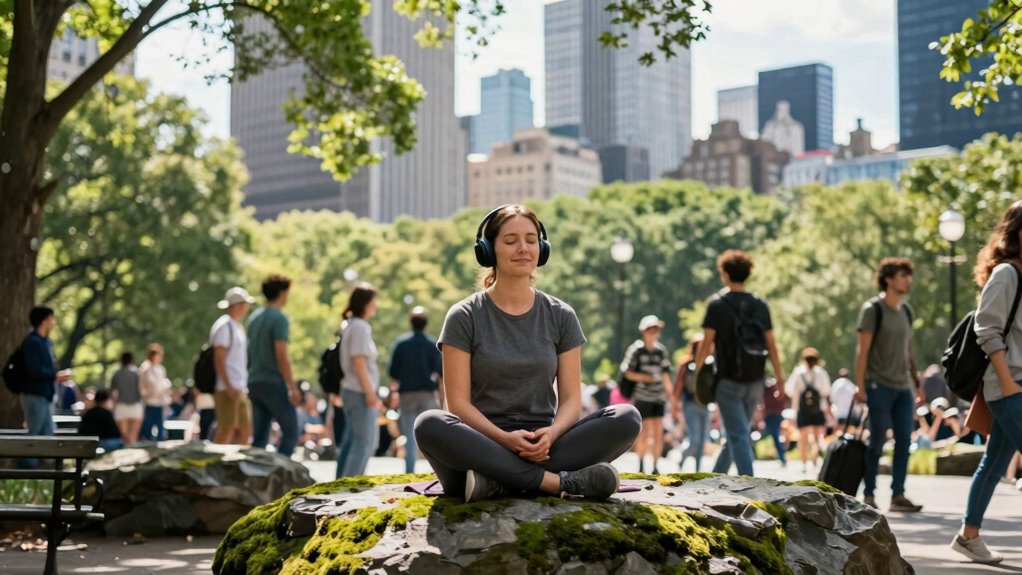

To manage sensory overload in loud environments, practice mindful living by using deep breathing and sensory awareness techniques. Focus on slow, deliberate breaths to send calming signals to your nervous system and create mental space. Observe your sounds and sensations without judgment to build control over your reactions. Incorporating these strategies regularly can help you stay centered and resilient. If you stick with these approaches, you’ll discover even more ways to find calm amidst the noise.

Turn your quiet moments into listening time
- Thousands of audiobooks, podcasts and originals
- Listen on your phone, tablet or Echo — also offline
- Cancel anytime
Key Takeaways
- Practice deep breathing to quickly calm your nervous system during overwhelming loud situations.
- Use sensory awareness to observe stimuli without judgment, creating mental space and reducing stress.
- Incorporate mindfulness techniques to stay present and foster curiosity rather than anxiety in noisy environments.
- Create calming outdoor or personal spaces to anchor yourself and find pockets of quiet amid noise.
- Develop regular sensory and breathing exercises to build resilience and maintain calmness over time.
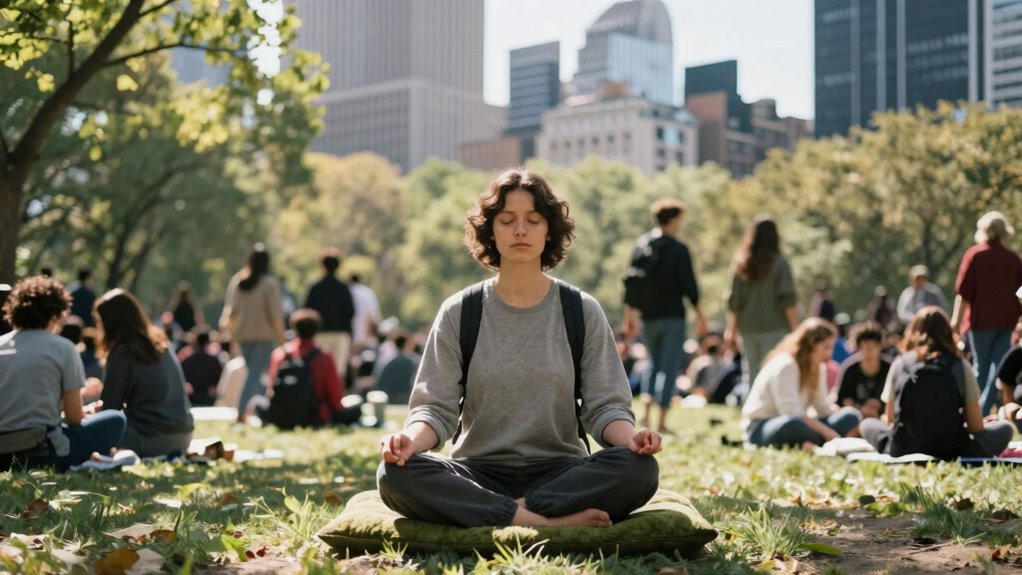
Living as an introvert in a noisy environment can feel overwhelming, but practicing mindful living can help you find calm amid the chaos. When sounds and sights become too much, you can turn inward to regain your sense of balance. One of the most effective tools is deep breathing. By taking slow, deliberate breaths, you send a message to your nervous system that you’re safe. Focus on inhaling deeply through your nose, feeling your lungs expand, then exhaling slowly through your mouth. This simple act can ground you, reduce stress, and create a mental space where noise feels less invasive. It’s a quick reset that can be done anywhere, anytime, especially when the environment feels relentless. Developing practical tools to manage sensory overload can empower you to stay centered in challenging settings. Sensory awareness is another key component of mindful living that helps you navigate loud surroundings. Instead of trying to block out every sound, you learn to observe your sensory experiences without judgment. Pay attention to what you hear, see, and feel in the moment. Notice the hum of conversations, the clatter of dishes, or the flickering lights overhead. Recognize your reactions without reacting impulsively—acknowledging your feelings of discomfort, but not letting them take over. This awareness allows you to create a mental distance from the chaos, helping you feel more in control. Incorporating mindfulness techniques and sensory awareness exercises can further enhance your ability to remain calm. Additionally, understanding your sensory processing can help you develop personalized strategies for different environments. Practicing sensory modulation techniques can also assist in adjusting your responses to various stimuli more effectively. To deepen your understanding of environmental influences, consider how backyard transformation essentials can create calmer, more personalized outdoor spaces that support your well-being. Over time, practicing sensory awareness can make loud environments less overwhelming because you’re training yourself to experience them with curiosity rather than anxiety. You can also incorporate mindful pauses into your day. When you notice yourself feeling overwhelmed, take a moment to close your eyes and focus on your breath. Use deep breathing to anchor yourself, then expand your awareness to your surroundings, identifying specific sounds or sensations. This practice helps you stay present instead of spiraling into stress or frustration. It’s about finding small pockets of calm within the noise, which can make a significant difference in your overall well-being. Finally, remember that practicing mindfulness is a skill that develops over time. The more you intentionally engage with your sensory experiences and use deep breathing, the more resilient you’ll become in loud environments. This isn’t about avoiding noise altogether but about cultivating a mindful approach that allows you to stay centered and calm despite it. With patience and consistency, you’ll find yourself better equipped to handle the sensory overload and preserve your energy for what truly matters to you.
deep breathing exercises for anxiety
As an affiliate, we earn on qualifying purchases.
As an affiliate, we earn on qualifying purchases.
Frequently Asked Questions
How Can Introverts Recharge After Noisy Social Events?
After noisy social events, you can recharge by taking solo retreats or going for nature walks. These activities help you disconnect from the noise, re-center yourself, and restore your energy. Find a quiet spot or immerse yourself in natural surroundings, where you can breathe deeply and regain your calm. Prioritizing these peaceful moments allows you to recover and feel more balanced, ready to face new social situations with renewed strength.
Are There Specific Mindfulness Techniques Suited for Loud Settings?
Yes, there are mindfulness techniques suited for loud settings. You can practice sensory awareness by focusing on specific sounds or sensations around you, which helps ground you amid chaos. Incorporate breath control by taking slow, deep breaths to calm your nervous system. These methods enable you to stay present, reduce overwhelm, and recharge more effectively, even in noisy environments.
How Can I Communicate My Need for Quiet to Others?
Like a knight drawing their sword, you can confidently communicate your need for quiet using assertiveness strategies. Clearly state your boundaries, saying something like, “I need some quiet time now,” without apology. Use confident, calm language to foster understanding. Practice boundary communication regularly, and remember, setting limits isn’t selfish—it’s essential for your well-being. Your clarity will help others respect your needs and create a more peaceful environment.
What Are Quick Coping Strategies for Sudden Loud Noises?
When sudden loud noises hit, use noise cancellation earplugs or headphones to block out the sound quickly. Practice sensory grounding by focusing on your breath or feeling your feet on the ground to stay centered. Taking a few deep breaths helps calm your nervous system. These quick strategies help you regain control and stay present, even in noisy environments, allowing you to manage your reactions more effectively.
How Does Loud Environment Impact Introverts’ Mental Health?
Loud environments can profoundly impact your mental health, especially if you’re noise-sensitive. Studies show that introverts often experience higher stress levels in noisy settings, which can drain your mental resilience. Constant exposure to loud noise may lead to anxiety or fatigue. You need to recognize your limits, practice mindfulness, and create quiet moments to protect your mental well-being, helping you stay balanced and resilient amid chaos.
sensory awareness tools for introverts
As an affiliate, we earn on qualifying purchases.
As an affiliate, we earn on qualifying purchases.
Conclusion
In the midst of a bustling crowd, you find a quiet inner sanctuary, a small, serene lake beneath a stormy sky. By practicing mindful living, you learn to navigate the noise without losing yourself—your breath steady, your mind clear. Even in loud environments, you can create pockets of peace, like stars twinkling in the chaos. Embrace these moments, and let your inner calm shine through the din, guiding you gently back to yourself.
mindfulness noise-canceling headphones
As an affiliate, we earn on qualifying purchases.
As an affiliate, we earn on qualifying purchases.
As an affiliate, we earn on qualifying purchases.
Fall Picks
fall essentials
As an affiliate, we earn on qualifying purchases.