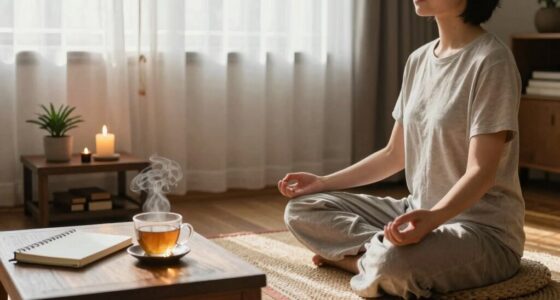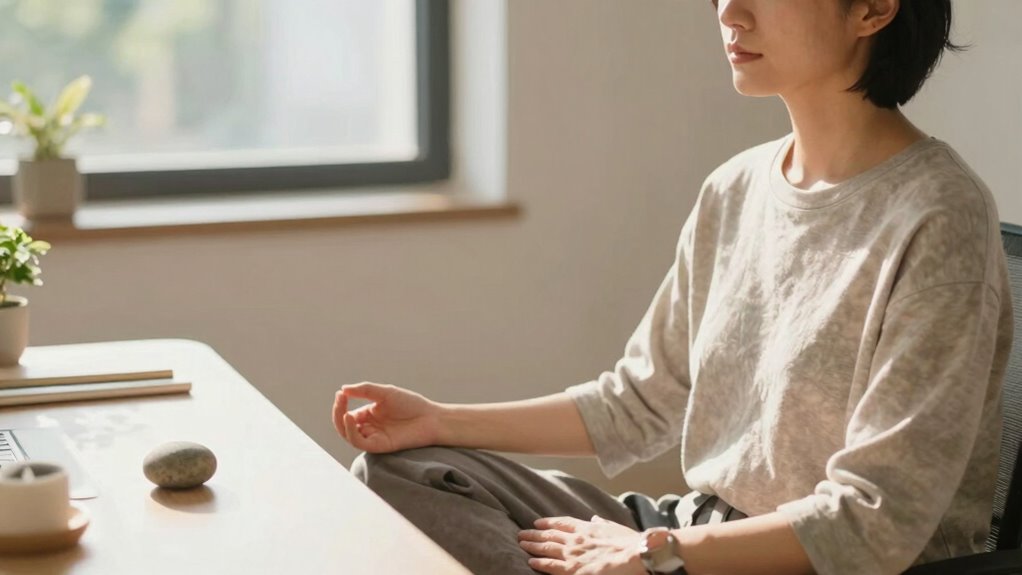

To use breath anchors throughout your day, pause during moments of stress or distraction to take a few deep, intentional breaths. Choose simple patterns like slow inhales and exhales, or repeat calming words to stay grounded. Practice during errands, waiting in line, or at your desk to build habits that help you stay present and calm. Incorporating natural elements or mindful pauses can deepen your practice, and if you keep exploring, you’ll discover even more ways to stay centered.
Key Takeaways
- Practice simple breath patterns during routine activities like waiting in line or at your desk.
- Use calming phrases or slow inhale/exhale techniques to refocus during moments of stress.
- Incorporate deep breathing into daily transitions, such as moving between tasks or meetings.
- Enhance your practice by observing natural surroundings or environmental cues for grounding.
- Consistently develop the habit to improve resilience and maintain emotional balance throughout the day.
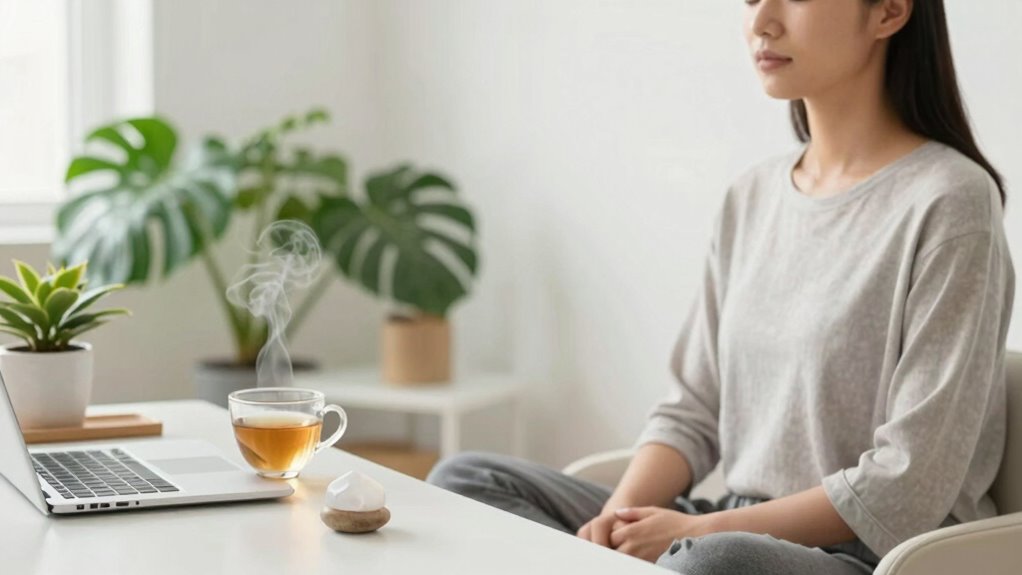
Throughout the day, life’s constant demands can leave you feeling overwhelmed or disconnected. That’s when using breath anchors becomes a powerful tool to ground yourself and regain clarity. Breath anchors are simple techniques rooted in mindfulness practices that help you stay present, even amid chaos. They work by redirecting your focus to your breath, which serves as a natural calming mechanism. As you go about your day, you can use these anchors anytime you notice stress creeping in or your mind starting to race. Whether you’re at work, in a meeting, or caught up in daily chores, taking a moment to anchor yourself with your breath can make a significant difference.
To effectively incorporate breath anchors as part of your stress management techniques, start by choosing a specific breath pattern or phrase that feels natural and easy to remember. It might be a slow inhale followed by a gentle exhale, or silently repeating a calming word like “peace” or “calm” with each breath. The key is consistency—by practicing this regularly, it becomes a reliable way to reset your nervous system. When you feel tension building or notice your thoughts spiraling, pause for a few seconds and focus solely on your chosen breath pattern. This brief shift in attention helps you detach from overwhelming feelings and reconnect with the present moment. Over time, these moments become a habit, allowing you to navigate stressful situations more effectively.
You can also use your breath anchor to cultivate mindfulness during everyday activities. For example, while waiting in line or sitting at your desk, take a deep inhale, hold for a moment, then exhale slowly. Repeat this a few times, paying close attention to how your body feels during each breath. This simple practice not only reduces immediate stress but also trains your mind to stay anchored amid ongoing distractions. It’s a portable, accessible technique that requires no special tools or time commitment—just your awareness and breath. Incorporating natural elements like landscaping can further deepen your connection to the present environment and support your mindfulness practice. Understanding how mindfulness impacts your overall well-being can motivate you to stick with these techniques consistently. Additionally, being aware of heat buffering and other techniques from baking can metaphorically remind you to protect your mental space from external heat or stress. Recognizing the role of time zones in managing your schedule can also help you create dedicated moments for mindfulness throughout your day.
The beauty of breath anchors lies in their versatility. They can be integrated seamlessly into your daily routine, providing quick relief whenever needed. Instead of letting stress or overwhelm take control, you take charge by consciously connecting with your breath. Over time, this practice enhances your overall resilience and emotional balance. Remember, the goal isn’t to eliminate stress but to develop a reliable way to manage it effectively. With consistent use, breathing as an anchor becomes second nature—helping you stay centered, mindful, and in control throughout even the busiest days.

ajdvart Mindfulness Breathing Exercise Poster, Calm Down Corner & Classroom Decor, Breathing Exercise Poster for Therapy Office & Mental Health Wall Art Educational Tool Unframed Canvas 8.5"x11"
- 8.5"x11" Unframed 3 Canvas Poster: High-quality canvas with a soft…
- Help Kids & Adults Practice Mindful Breathing to Calm Anxiety: This mindfulness breathing exercise poster…
- Essential Calm Down Corner & Classroom Emotion Regulation Tool: Ideal for classrooms, therapy rooms,…
As an affiliate, we earn on qualifying purchases.
As an affiliate, we earn on qualifying purchases.
Frequently Asked Questions
Can Breath Anchors Be Used During Stressful Conversations?
Yes, breath anchors can definitely be used during stressful conversations. When you feel overwhelmed, pause and focus on your breath to practice mindful communication. Take slow, deep breaths to steady your emotional regulation, helping you stay present and composed. This simple technique allows you to manage your reactions better, keep the dialogue respectful, and respond thoughtfully instead of reacting impulsively. Breath anchors are a powerful tool in challenging interactions.
How Long Should Each Breath Anchor Session Last?
Each breath anchor session should last about 1 to 3 minutes, allowing you to focus on breath awareness and deepen your mindfulness techniques. You can extend or shorten sessions based on your comfort and schedule. During this time, breathe slowly and intentionally, grounding yourself in the present moment. Regular practice helps you build resilience, reduce stress, and improve overall mindfulness throughout the day.
Are Breath Anchors Effective for Anxiety Outside of Meditation?
You’ll find breath anchors effective for anxiety outside meditation, as demonstrated by Sarah, who used grounding exercises during stressful work meetings. These mindfulness techniques help calm your nervous system quickly and can be applied anytime. When anxiety strikes, focusing on your breath anchor redirects your attention, reducing panic. Incorporating breath anchors into your daily routine makes them a powerful tool for managing stress and promoting emotional balance, even outside formal meditation sessions.
Can Children Use Breath Anchors Safely?
Yes, children can use breath anchors safely when you consider child safety and developmental considerations. You should teach them simple, gentle breathing techniques appropriate for their age, ensuring they understand how to do it comfortably. Always supervise their practice, especially with younger children, to prevent any discomfort or misuse. As they grow, adapt the techniques to match their developmental stage, making sure the process remains safe and effective.
What if I Forget to Use My Breath Anchor During the Day?
If you forget to use your breath anchor during the day, don’t worry. Simply pause for a moment and practice mindful breathing whenever you remember. Re-engage with your anchor techniques by taking slow, deep breaths, focusing on each inhale and exhale. Regularly incorporating these mindfulness practices helps reinforce your habit, making it easier to remember and use your breath anchors consistently, especially during stressful or busy moments.

Mindfulness Tool Set with Guided Visual Meditation Breathing Lamp and 48 Positive Affirmation Cards, 3 in 1 Device with Night Light & Noise Machine, Self-Care Gift for Anxiety Relief and Relaxation
- Self-Care Gift Set: Includes breathing lamp and affirmation cards
- Guided Breathing Lamp: Combines breathing light, night light, noise machine
- Breathing Modes: Features balanced and calm breathing modes
As an affiliate, we earn on qualifying purchases.
As an affiliate, we earn on qualifying purchases.
Conclusion
So, next time you’re caught up in the chaos, remember your breath anchors—they’re the perfect excuse to pause and breathe. Who knew a simple inhale and exhale could be your secret weapon against stress? Ironically, in a world obsessed with multitasking, the real power lies in just taking a moment for yourself. So go ahead, anchor yourself — it’s the easiest, most effective break you’ll ever take.

MirMind 2Pcs Breathing Necklace for Stress Relief-Mindful Exhale Tool Anxiety Reduction, Meditation & Relaxation-Stainless Steel Pendant for Deep Mindfulness Breathing-Portable Calm Aid
- Portable Stress Relief Tool: Encourages mindful breathing anytime, anywhere
- Elegant Dual-Pack: Includes silver and rose gold stainless steel necklaces
- Ideal Gift Set: Comes with premium packaging for gifting
As an affiliate, we earn on qualifying purchases.
As an affiliate, we earn on qualifying purchases.

YeeBeny Breathing lamp Guided 3 Color 478s Meditation for Stress Relief
- Breathing Lamp Function: Reduces stress and improves focus
- High-Quality Silicone: Soft surface with elegant white design
- Ideal Gift Choice: Perfect for family and friends
As an affiliate, we earn on qualifying purchases.
As an affiliate, we earn on qualifying purchases.