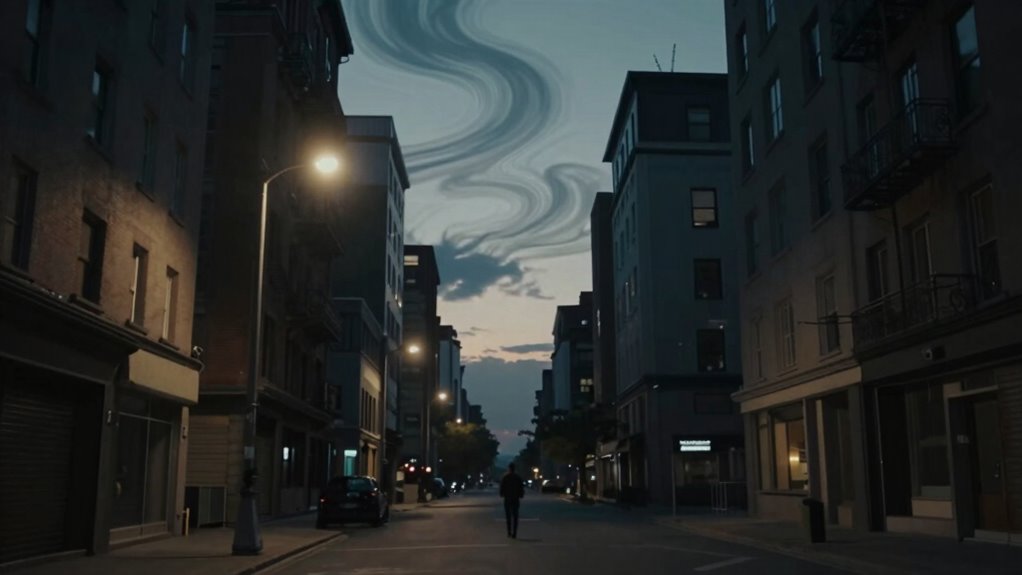

When you visit familiar places in dreams, your brain often distorts or reshapes them, making them feel strange. This happens because your subconscious alters details to process unresolved emotions or hidden themes. These distortions can exaggerate elements or change layouts, blending reality with imagination. As a result, familiar environments become uncanny or surreal, reflecting internal conflicts or feelings. If you keep exploring this, you’ll uncover more about how dreams mirror your inner world.
Key Takeaways
- The brain distorts familiar locations in dreams to process unresolved emotions and subconscious themes.
- Dream memories are reshaped, altering layouts and details, which creates a strange or uncanny feeling.
- Distortions symbolize internal conflicts or feelings like confinement, longing, or insecurity.
- Neural mechanisms during sleep enhance memory malleability, leading to surreal and unfamiliar perceptions.
- The active mental reshaping blurs reality and imagination, making familiar places feel surreal or unsettling.
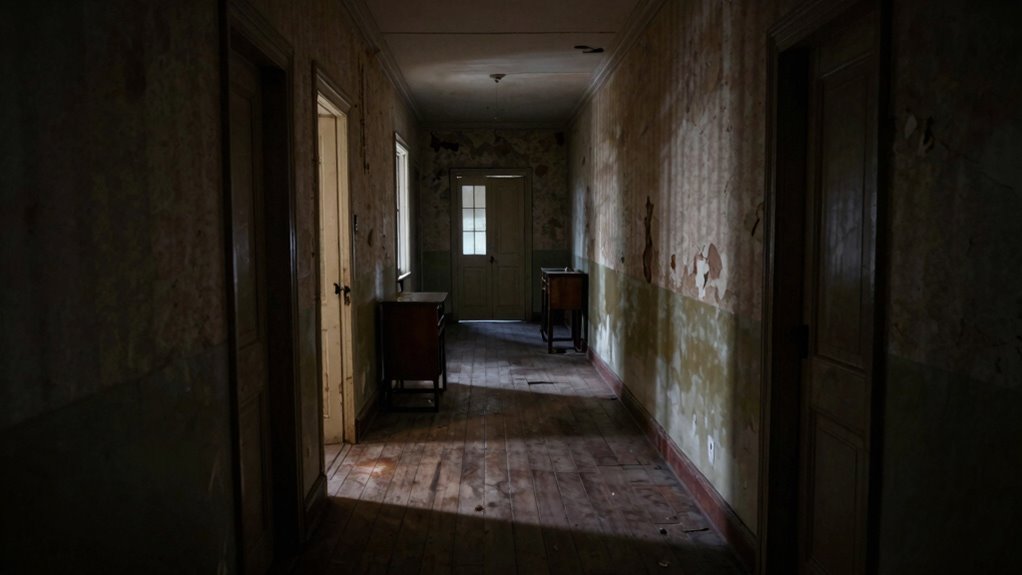
Dreams often bring us back to familiar places, evoking feelings of comfort, nostalgia, or even unease. But when you’re there, in those well-known settings, everything can feel oddly off. That’s because your brain isn’t just replaying memories; it’s playing with dream symbolism, blending fragments of reality with unconscious fears and desires. The familiarity might soothe you, yet the strange distortions that creep in can make the environment feel surreal or unsettling. It’s as if your mind is reshaping the past, twisting familiar scenes into unfamiliar shapes through memory distortion. This process of memory manipulation allows your brain to explore unresolved emotions in a symbolic way. Recent research in cognitive neuroscience suggests that this process involves complex interactions between memory, emotion, and imagination, highlighting how deeply intertwined our subconscious influences are during dreaming. Understanding how neural pathways function during sleep can shed light on why our memories are so malleable in dreams. Additionally, the brain’s capacity for memory distortion demonstrates its adaptability in processing emotional experiences, even during sleep.
When you revisit a childhood home or walk through your old neighborhood in a dream, you might notice that the layout is slightly different, or certain details are exaggerated or missing altogether. This isn’t coincidence. Your brain, in its attempt to process emotions or unresolved issues, alters these memories to serve the narrative of your dream. This manipulation is a form of memory distortion, where the details you recall are reshaped, sometimes subtly, sometimes drastically. As a result, the places that once felt safe or ordinary now seem strange or alien. You might find yourself questioning whether you’re even in the same place you remember. The brain’s ability to distort memories during dreams demonstrates how flexible our mental representations of reality can be, especially when influenced by subconscious factors. This malleability in memory can help in understanding how we interpret emotional conflicts and unresolved issues through dreams.
Dream symbolism plays a significant role here, as familiar locations often stand for larger themes in your subconscious. For example, a childhood home might symbolize security, but in a dream, it could also represent feelings of confinement or longing. The distortions aren’t accidental—they’re symbolic messages your mind is trying to communicate. When a place feels unfamiliar despite its familiarity, it’s a sign that your subconscious is working through complex emotions or conflicts. The dream environment becomes a mirror not just of physical space but of your internal landscape. This symbolic reinterpretation can sometimes reveal hidden aspects of your psyche that you might not consciously recognize.
Familiar places in dreams often symbolize deeper emotions or conflicts, reflecting your internal landscape through subtle distortions.
This interplay between dream symbolism and memory distortion explains why familiar places often feel so strange in dreams. Your mind might stretch, bend, or break the rules of reality to highlight certain feelings or unresolved issues. As you sleep, these familiar scenes morph into something uncanny, blurring the lines between reality and imagination. So, next time you’re wandering through a familiar setting in your dream and it feels bizarre, remember—your brain is not just recalling memories; it’s actively reshaping them to explore your deepest truths.

JUBTIC Dream Journal – Hardcover Dream Notebook, Guided Dream Diary to Record and Track Your Dreams, Interpretations and Thoughts before Sleeping. Ideal Gift for Women, Girls, Men(Beige)
Create A Unique Diary Of Your Dreams: JUBTIC dream journal notebook is filled with prompts and tips to…
As an affiliate, we earn on qualifying purchases.
As an affiliate, we earn on qualifying purchases.
Frequently Asked Questions
Can Familiar Places in Dreams Predict Future Events?
Familiar places in dreams don’t predict future events, but they reveal your subconscious through memory associations and spatial distortions. When you see a familiar location, your mind might blend memories or alter spatial details, creating a strange feeling. These dream experiences reflect your current emotions or thoughts rather than forecasting the future. So, while they seem meaningful, they mainly serve as mirrors of your inner world, not predictions.
Why Do Some Familiar Locations Appear Altered in Dreams?
You step into a familiar place, and suddenly, everything is twisted beyond recognition—like a nightmare in vibrant colors. This happens because your mind distorts memories and creates sensory misalignments, making the environment feel alien. Your brain exaggerates details, blending reality with imagination, so familiar locations appear altered in dreams. It’s a surreal reminder of how your subconscious reinterprets memories, blending familiarity with the uncanny to evoke strong emotions.
Do Cultural Differences Influence How Familiar Places Feel in Dreams?
Yes, cultural differences influence how familiar places feel in your dreams. Your memories are shaped by cultural symbolism, which can distort your perception of these locations. When you dream, memory distortion occurs, blending real details with cultural influences, making familiar places seem strange or altered. This is your brain’s way of processing cultural experiences and personal memories, resulting in dream environments that reflect your unique cultural background.
Can Recurring Familiar Dream Places Indicate Unresolved Subconscious Issues?
Absolutely, recurring familiar places in your dreams can be a sign of unresolved subconscious issues. They act as subconscious symbolism, reflecting feelings or conflicts you haven’t fully addressed. These dreams are like a red flag warning you to explore deeper layers of your mind. Using dream interpretation techniques, you might uncover what’s truly bothering you. Paying attention to these recurring places can help you confront and work through emotional baggage.
How Do Emotional States Affect Perceptions of Familiar Places in Dreams?
Your emotional states directly influence how you perceive familiar places in dreams. Emotional distortion causes perception shifts, making these places seem strange or altered. When you’re anxious, happy, or upset, your mind may distort familiar surroundings, emphasizing certain details or blurring others. This emotional influence can create a surreal or unsettling experience, highlighting the deep connection between your feelings and how your subconscious interprets familiar environments during sleep.

LC-dolida Sleep Headphones, 3D Sleep Mask Bluetooth Wireless Music Eye Mask, Sleeping Headphones for Side Sleepers Sleep Mask with Bluetooth Headphones Ultra-Thin Stereo Speakers Perfect for Sleeping
【Sleep Headphones & Bluetooth Sleep Mask & Sleep Eye Mask 3 in 1】LC-dolida sleep mask with bluetooth headphones…
As an affiliate, we earn on qualifying purchases.
As an affiliate, we earn on qualifying purchases.
Conclusion
So, next time you find yourself wandering through a familiar place in a dream, remember—your mind’s landscape is a shifting mosaic, blending memories and mystery. It’s as if your subconscious has painted your daily scenes in colors that don’t quite match reality, turning comfort into curiosity. Embrace the strangeness, for in these dreamscapes, the familiar becomes a puzzle, inviting you to explore the hidden stories behind the places you thought you knew best.

12,000 Dreams Interpreted: A New Edition for the 21st Century
As an affiliate, we earn on qualifying purchases.
As an affiliate, we earn on qualifying purchases.

Magicteam Sound White Noise Machine with 20 Non Looping Natural Soothing Sounds and Memory Function 32 Levels of Volume Powered by AC or USB and Sleep Sound Timer Therapy for Baby Kids Adults
❤20 Non-Looping Sleep Sounds: White noise ,Brown noise, pink noise, blue noise, fan,brook, rain, ocean,bird and Bonfire,suitable for…
As an affiliate, we earn on qualifying purchases.
As an affiliate, we earn on qualifying purchases.