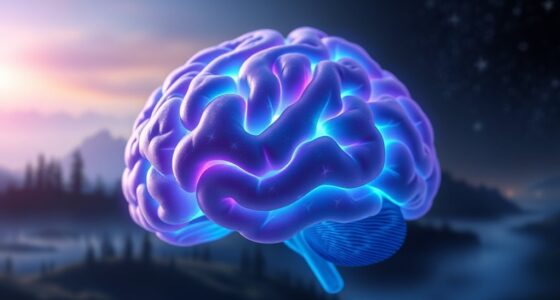

Your dreams are closely linked to your body’s circadian rhythms, which regulate your sleep cycles and internal processes. These rhythms influence when you enter REM sleep, the stage where most dreaming occurs. Disruptions in your biological clock, like jet lag or irregular schedules, can affect dream patterns and quality. Understanding how your circadian system works helps you optimize sleep and experience better dreams. Keep exploring, and you’ll discover more about how your internal clock shapes your nightly experiences.

Turn your quiet moments into listening time
- Thousands of audiobooks, podcasts and originals
- Listen on your phone, tablet or Echo — also offline
- Cancel anytime
Key Takeaways
- Dreams predominantly occur during REM sleep, which is regulated by circadian rhythms aligning sleep stages with internal clocks.
- Circadian rhythms influence the timing, frequency, and vividness of dreams by controlling sleep cycle patterns.
- Disruptions to the circadian clock can lead to irregular sleep and altered dream experiences.
- Light exposure and biological cues help synchronize circadian rhythms, impacting when and how dreams occur.
- Understanding circadian influences can improve sleep quality and the nature of dream recall.
Have you ever wondered why you feel sleepy at night and alert during the day? It all comes down to your body’s internal clock, known as the circadian rhythm. This natural rhythm regulates your sleep-wake cycle, making you feel sleepy when it’s dark and awake when it’s light. But sometimes, this cycle gets disrupted, especially when you travel across time zones. That’s where jet lag comes into play. Jet lag occurs because your internal clock is out of sync with the new local time, causing feelings of fatigue, difficulty concentrating, and even digestive issues. When you experience jet lag, your sleep cycle is thrown off, and it takes time for your body to adjust to the new schedule. During this adjustment period, your brain struggles to produce the right signals for sleep and wakefulness, which is why you might find yourself wide awake in the middle of the night or feeling exhausted during the day.
Your sleep cycle is a fundamental part of your circadian rhythm. It’s a repeating pattern that coordinates various biological processes, including hormone production, body temperature, and alertness levels. Typically, your sleep cycle lasts about 90 minutes and shift through different stages—from light sleep to deep sleep and REM sleep. These stages are tightly regulated by your circadian clock, which signals your body when it’s time to wind down and when it’s time to wake up. When your sleep cycle aligns with the natural light-dark cycle, you tend to sleep well and wake up refreshed. However, factors like shift work, irregular schedules, or travel can disrupt this harmony, leading to poor sleep quality and daytime fatigue. Recognizing the importance of biological rhythms can help you adopt strategies to maintain a healthier sleep pattern.
Understanding the influence of circadian rhythms on sleep and dreams can help you manage disruptions. For example, exposing yourself to natural light during the day can help reset your internal clock faster when you travel or change routines. Conversely, minimizing light exposure at night signals to your brain that it’s time to sleep, reinforcing your sleep cycle. Knowing how your biological rhythms work allows you to optimize your sleep environment for better rest and alertness. It’s a powerful way to improve your overall health and well-being. Recognizing the patterns and factors that influence your circadian rhythm not only helps you combat jet lag but also enhances your sleep quality and daily functioning. Your internal clock is a crucial part of your health—honor it, and it will serve you well.
blue light blocking glasses for sleep
As an affiliate, we earn on qualifying purchases.
As an affiliate, we earn on qualifying purchases.
Frequently Asked Questions
How Do Dreams Vary Across Different Cultures?
You might notice that dreams vary across cultures through cultural symbolism and dream storytelling. In some societies, dreams symbolize spiritual messages or omens, while others see them as personal insights. You could find that storytelling traditions shape how people interpret dreams, emphasizing community, morality, or history. These cultural differences influence not only what people dream about but also how they understand and share their dreams, enriching their cultural identity.
Can Dreams Predict Future Biological or Health Issues?
Dreams can sometimes hint at future health issues through dream analysis, especially if you notice recurring themes or vivid nightmares. While dreams alone don’t predict problems, they can alert you to sleep disorders or emotional stress that may impact your health. Paying attention to your dreams and discussing them with a healthcare professional can help identify underlying issues early, improving your overall well-being.
What Role Do Genetics Play in Circadian Rhythm Patterns?
Genetics play a key role in your circadian rhythm patterns through genetic mutations in circadian genes. These mutations can disrupt your internal clock, leading to irregular sleep cycles or sleep disorders. Your genes influence how your body responds to environmental cues like light and dark, shaping your sleep-wake schedule. Understanding these genetic factors helps explain individual differences in sleep patterns and can guide personalized approaches to improve sleep health.
How Do Age and Gender Influence Circadian-Related Dreams?
You notice that age and gender influence your dreams through hormonal fluctuations and sleep stage variations. As you age, hormonal changes can alter when and how vividly you dream, especially during REM sleep. Gender differences also affect dream content and frequency, often linked to hormonal influences. These factors cause fluctuations in sleep stages, impacting the nature and recall of your dreams, making them unique to your age and gender.
Are There Specific Foods That Affect Our Biological Clocks?
Certain foods can affect your biological clock, especially when you consider food timing and meal composition. Eating heavy or sugary meals late at night can disrupt your circadian rhythms, making it harder for your body to maintain regular sleep patterns. Opt for balanced meals rich in proteins, healthy fats, and complex carbs earlier in the day. Avoid caffeine and alcohol close to bedtime, as they can also disturb your natural sleep-wake cycle.
As an affiliate, we earn on qualifying purchases.
Conclusion
Just like a clock keeps time, your body follows its own rhythm, guiding your dreams and waking hours. Imagine your sleep as a symphony, with each beat aligning perfectly with the sun’s rise and fall. When you respect your circadian rhythms, you’re tuning into nature’s melody, ensuring harmony in your life. Ignoring these cues is like playing out of tune—disrupting your dreams and daily balance. Embrace your biological clock, and let it lead you to better rest.
melatonin supplements for circadian rhythm
As an affiliate, we earn on qualifying purchases.
As an affiliate, we earn on qualifying purchases.
white noise machine for better sleep
As an affiliate, we earn on qualifying purchases.
As an affiliate, we earn on qualifying purchases.
Halloween Picks
halloween
As an affiliate, we earn on qualifying purchases.