
The best beginner astrology birth chart books explain how planets, signs, houses, and aspects work together—not just what each symbol means. I name Astrology for Beginners: Learn to Read Your Birth Chart my best overall choice for a direct introduction, while Birth Chart Astrology Workbook stands out for hands-on practice and Astrology Made Easy for a gentler overview. The main tradeoff is between a quick, approachable read and a more involved guide with exercises or broader coverage. A workbook can help you apply ideas, but it may move more slowly than a straight-through text. Read on for the full breakdown and help choosing a book that fits the way you want to learn.

Turn your quiet moments into listening time
- Thousands of audiobooks, podcasts and originals
- Listen on your phone, tablet or Echo — also offline
- Cancel anytime
Key Takeaways
- A clear learning sequence matters: The strongest starting points explain chart components in a usable order, while titles promising broad coverage may ask beginners to handle more material at once.
- Practice and explanation serve different learners: The Birth Chart Astrology Workbook and Guided Astrology Workbook emphasize active learning; readers who prefer uninterrupted explanations may be better served by a conventional guide.
- Not every beginner title stays narrowly focused on chart reading: Astrology for Yourself and How to Read and Interpret a Birth Chart center on interpreting natal charts, while Astrology for Beginners: A Guide to Understanding Your Birth Chart, Star Sign, and Ideal Relationship Partner adds relationship themes.
- Depth brings a tradeoff: Llewellyn’s Complete Book of Astrology offers a wider scope than a short introductory guide, but a larger subject range can feel like extra work if you only want to read your own chart.
- Self-reflection is not the same as technical instruction: You Were Born for This emphasizes self-acceptance, making it a distinct pick for personal meaning rather than a step-by-step reference for chart mechanics.
| Birth Chart Astrology Workbook: Learn Your Natal Wheel with Planet, House & Aspect Practice Pages for Beginners |  | Best for Hands-On Practice | Format: Workbook | Subject: Astrology | Primary focus: Natal chart interpretation | VIEW LATEST PRICE | See Our Full Breakdown |
| Astrology for Beginners: Learn to Read Your Birth Chart |  | Best Straightforward Starting Point | Subject: Astrology | Primary focus: Reading a birth chart | Intended audience: Beginners | VIEW LATEST PRICE | See Our Full Breakdown |
| Astrology Made Easy: A Guide to Understanding Your Birth Chart | 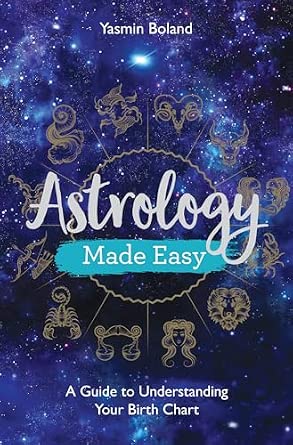 | Best for Self-Discovery | Subject: Astrology | Primary focus: Understanding and interpreting birth charts | Intended audience: Beginners | VIEW LATEST PRICE | See Our Full Breakdown |
| Birth Charts: The Ultimate Guide to Natal Chart Interpretation, Astrology, and Zodiac Signs |  | Best for Broad Topic Coverage | Subject: Astrology | Primary focus: Natal chart interpretation | Additional topics: Astrology and zodiac signs | VIEW LATEST PRICE | See Our Full Breakdown |
| Astrology: Understanding the Birth Chart |  | Best for Building Beyond the Basics | Subject: Astrology | Primary focus: Understanding and interpreting the birth chart | Stated depth: In-depth guide | VIEW LATEST PRICE | See Our Full Breakdown |
| Astrology for Yourself: How to Understand and Interpret Your Own Birth Chart |  | Best for Self-Directed Chart Practice | Format: Book | Subject: Astrology | Focus: Understanding and interpreting a personal birth chart | VIEW LATEST PRICE | See Our Full Breakdown |
| How to Read Your Birth Chart: A Beginner’s Guide to Understanding Planets, Signs, Houses, and Chart Patterns |  | Best for Learning Chart Components | Format: Book | Subject: Astrology | Focus: Reading and understanding birth charts | VIEW LATEST PRICE | See Our Full Breakdown |
| Astrology: Using the Wisdom of the Stars in Your Everyday Life |  | Best for Everyday Astrology Applications | Format: Book | Subject: Astrology | Focus: Applying astrology in everyday life | VIEW LATEST PRICE | See Our Full Breakdown |
| How to Read and Interpret a Birth Chart: Guideposts for Understanding Natal Astrology |  | Best for Readers Ready for More Detailed Interpretation | Format: Book | Subject: Natal astrology | Focus: Reading and interpreting birth charts | VIEW LATEST PRICE | See Our Full Breakdown |
| Astrology Birth Chart for Beginners: Interpreting Your Natal Chart, Houses, and Unlocking the Secrets of the Stars |  | Best for a Beginner-Focused Starting Point | Format: Book | Subject: Astrology | Intended level: Beginners | VIEW LATEST PRICE | See Our Full Breakdown |
| Llewellyn’s Complete Book of Astrology: The Easy Way to Learn Astrology |  | Best Structured Introduction | Book type: Astrology guide | Intended level: Beginner | Primary focus: Learning astrology fundamentals | VIEW LATEST PRICE | See Our Full Breakdown |
| Guided Astrology Workbook: A Step-by-Step Guide for Deep Insight into Your Astrological Signs, Birth Chart, and Life |  | Best for Guided Reflection | Book type: Guided astrology workbook | Intended audience: Beginners and astrology enthusiasts | Approach: Step-by-step guidance | VIEW LATEST PRICE | See Our Full Breakdown |
| Astrology for Beginners: A Guide to Understanding Your Birth Chart, Star Sign, and Ideal Relationship Partner |  | Best for Astrology and Compatibility | Book type: Beginner astrology guide | Intended level: Beginner | Primary topics: Birth charts, star signs, and relationship compatibility | VIEW LATEST PRICE | See Our Full Breakdown |
| You Were Born for This: Astrology for Radical Self-Acceptance |  | Best for Self-Acceptance | Book type: Astrology and personal-growth guide | Primary focus: Radical self-acceptance | Astrology topic: Reading your birth chart | VIEW LATEST PRICE | See Our Full Breakdown |
| beginner astrology birth chart book | Subject | Primary focus |
|---|---|---|
| Birth Chart Astrology Workbook | Astrology | Natal chart interpretation |
| Astrology for Beginners: Learn | Astrology | Reading a birth chart |
| Astrology Made Easy: A Guide t | Astrology | Understanding and interpreting birth charts |
| Birth Charts: The Ultimate Gui | Astrology | Natal chart interpretation |
| Astrology: Understanding the B | Astrology | Understanding and interpreting the birth chart |
| Astrology for Yourself: How to | Astrology | — |
| How to Read Your Birth Chart: | Astrology | — |
| Astrology: Using the Wisdom of | Astrology | — |
| How to Read and Interpret a Bi | Natal astrology | — |
| Astrology Birth Chart for Begi | Astrology | — |
| Llewellyn’s Complete Book of A | — | Learning astrology fundamentals |
| Guided Astrology Workbook: A S | — | — |
| Astrology for Beginners: A Gui | — | — |
| You Were Born for This: Astrol | — | Radical self-acceptance |
More Details on Our Top Picks
Birth Chart Astrology Workbook: Learn Your Natal Wheel with Planet, House & Aspect Practice Pages for Beginners
Practice pages set this workbook apart from the more explanation-led Astrology for Beginners: Learn to Read Your Birth Chart. Rather than relying only on descriptions, it gives new learners a place to work through natal-chart concepts as they study planets, houses, and aspects. That format can help readers turn definitions into interpretation skills, especially if they learn by doing. Its focus on the natal wheel keeps the subject centered on birth-chart reading instead of broad astrology topics. The tradeoff is that the supplied details do not identify the workbook’s teaching sequence, answer guidance, or any companion materials, so buyers cannot tell how much support the exercises provide. I’d choose it for active practice, not as a confirmed all-in-one reference.
Pros:- Practice-page format gives beginners a way to apply concepts rather than only read about them.
- Focuses on natal-chart interpretation.
- Covers planets, houses, and aspects.
- Designed specifically for beginner learners.
Cons:- The available description does not explain how the exercises are structured or supported.
- No information is provided about companion materials or digital access.
Best for: New astrology learners who want exercises for practicing planet, house, and aspect interpretation alongside their birth-chart study.
Not ideal for: Readers who want a clearly documented step-by-step curriculum, answer key, or digital companion, since those details are not provided.
- Format:Workbook
- Subject:Astrology
- Primary focus:Natal chart interpretation
- Topics covered:Planets, houses, and aspects
- Learning activities:Practice pages
- Intended audience:Beginners
Our verdict“Choose this workbook if you learn best by practicing chart concepts on the page; pick Astrology for Beginners: Learn to Read Your Birth Chart for a more guide-centered approach.”
Astrology for Beginners: Learn to Read Your Birth Chart
This book’s clearest advantage is its direct promise: beginner-level instruction for reading a birth chart. Its practical guidance and easy-to-understand explanations make it a straightforward pick for readers who want a general introduction before trying a workbook such as Birth Chart Astrology Workbook. That comparison matters: this title is described as a guide, while the workbook emphasizes practice pages. The available information does not specify particular techniques, examples, or how the material is organized, so I would not assume it offers the same hands-on exercises. Its introductory scope also means it is a poor fit for readers seeking advanced methods. I’d place it ahead of broader, less specifically described options when the priority is a clear entry into chart reading, while treating the missing detail as a reason to check the contents before buying.
Pros:- Explicitly aimed at beginners.
- Focuses on reading a birth chart.
- Description highlights easy-to-understand explanations.
- Includes practical guidance for interpretation.
Cons:- Advanced astrology techniques are outside its stated scope.
- The supplied information does not identify specific exercises, examples, or chapter structure.
Best for: First-time astrology readers who want an introductory guide focused on learning to interpret their own birth chart.
Not ideal for: Readers who already know chart fundamentals or want advanced techniques, detailed practice exercises, or a specified topic-by-topic syllabus.
- Subject:Astrology
- Primary focus:Reading a birth chart
- Intended audience:Beginners
- Approach:Introductory explanations
- Guidance:Practical birth-chart interpretation
- Advanced techniques:Not specified in the description
Our verdict“Pick this for a direct introductory guide to birth-chart reading, but choose Birth Chart Astrology Workbook if you specifically want practice pages.”
Astrology Made Easy: A Guide to Understanding Your Birth Chart
Accessible chart explanations are paired with an explicit self-discovery angle, giving this book a slightly different purpose from Astrology for Beginners: Learn to Read Your Birth Chart. Both are introductory, but this title is described as connecting birth-chart interpretation with personal growth, which may appeal to readers who want to reflect on what their chart means to them. It also offers practical guidance for understanding astrological influences, though the supplied details do not identify a specific chart tool or included worksheet. That makes it less hands-on than Birth Chart Astrology Workbook, whose practice pages are its defining feature. The tradeoff is its introductory scope: readers looking for advanced techniques or a detailed reference will likely need another resource. I’d choose it for accessible interpretation with a reflective purpose, not for technical depth.
Pros:- Described as accessible for beginners.
- Focuses on understanding birth charts.
- Connects astrology with self-discovery and personal growth.
- Offers practical guidance on interpreting astrological influences.
Cons:- The description says it does not include charts or tools.
- Its introductory focus leaves advanced techniques outside the stated scope.
- No specific practice format or chapter structure is provided.
Best for: Beginners who want to connect basic birth-chart interpretation with personal reflection and self-discovery.
Not ideal for: Learners seeking advanced chart techniques, included chart-building tools, or workbook-style exercises.
- Subject:Astrology
- Primary focus:Understanding and interpreting birth charts
- Intended audience:Beginners
- Approach:Accessible introductory guide
- Additional focus:Self-discovery and personal growth
- Included charts or tools:Not included, according to the supplied description
Our verdict“Choose this for approachable chart interpretation with a self-reflection focus; choose Birth Chart Astrology Workbook for more explicit practice activities.”
Birth Charts: The Ultimate Guide to Natal Chart Interpretation, Astrology, and Zodiac Signs
Among these five options, this title has the broadest stated scope: natal-chart interpretation, astrology, and zodiac signs. That range may suit a beginner who wants to explore more than the mechanics of reading one chart, while Astrology: Understanding the Birth Chart is described more narrowly as an in-depth guide to chart interpretation. The wider promise comes with a drawback: the supplied description does not name specific lessons, exercises, or tools, so it is hard to judge how the material moves from basic signs to chart synthesis. Its mention of both beginners and astrology enthusiasts suggests a potentially wider audience, but does not establish the level of detail. I’d consider it for readers who want a broad introduction, while preferring the workbook or a more focused guide when a clearly defined learning method matters most.
Pros:- Covers natal-chart interpretation alongside astrology and zodiac signs.
- Described as suitable for beginners and astrology enthusiasts.
- Offers a broader stated subject range than a chart-only introduction.
Cons:- The supplied details do not identify specific contents or teaching features.
- The breadth of topics makes the depth of birth-chart instruction unclear.
- No exercises, chart tools, or supporting materials are specified.
Best for: Curious beginners who want one introduction spanning natal charts, astrology, and zodiac signs rather than a narrowly focused chart-reading workbook.
Not ideal for: Readers who need a documented step-by-step method, named exercises, or clearly specified beginner lessons before choosing a book.
- Subject:Astrology
- Primary focus:Natal chart interpretation
- Additional topics:Astrology and zodiac signs
- Intended audience:Beginners and astrology enthusiasts
- Stated approach:Guide to interpretation
- Exercises or tools:Not specified in the description
Our verdict“Choose this if broad coverage of charts and zodiac signs matters more than a clearly documented practice method.”
Astrology: Understanding the Birth Chart
This title is described as an in-depth guide to birth-chart interpretation, making it the strongest fit here for beginners who want room to keep learning after the first concepts. Its focus on astrological influences on personality and life events gives the subject more interpretive reach than the explicitly introductory Astrology for Beginners: Learn to Read Your Birth Chart. But “in-depth” does not tell buyers which techniques or learning aids are included; the supplied information names no edition, author, or detailed contents. That uncertainty makes it harder to judge how approachable the material will be for a complete novice. Compared with Astrology Made Easy, it sounds less centered on self-discovery and more on developing chart understanding. I’d shortlist it for readers ready for a substantial guide, while beginners who want a clearly described practice format may prefer the workbook.
Pros:- Described as an in-depth guide to birth-chart interpretation.
- Explains astrological influences on personality and life events.
- Aims to clarify astrological concepts for beginners.
- May suit readers looking to build beyond a basic introduction.
Cons:- The supplied product information does not identify the edition or author.
- Specific techniques, exercises, and chapter structure are not provided.
- Its in-depth positioning may be less approachable than a clearly beginner-focused guide.
Best for: Motivated beginners and early-stage astrology learners who want an in-depth account of birth-chart influences on personality and life events.
Not ideal for: Readers who need a verified beginner sequence, named exercises, or clear edition details before selecting a guide.
- Subject:Astrology
- Primary focus:Understanding and interpreting the birth chart
- Stated depth:In-depth guide
- Topics:Astrological influences on personality and life events
- Intended audience:Beginners and astrology enthusiasts
- Edition and author details:Not provided in the supplied product information
Our verdict“Choose this if you want a more in-depth birth-chart guide and can accept limited information about its structure; choose Astrology for Beginners for a more explicitly introductory starting point.”
Astrology for Yourself: How to Understand and Interpret Your Own Birth Chart
Astrology for Yourself centers the learning process on interpreting your own chart, making it a fitting choice for beginners who learn by connecting concepts to personal questions. Its focus on self-understanding gives it a more reflective purpose than How to Read Your Birth Chart, which is framed around explaining chart components such as planets, signs, and houses. The tradeoff is that the supplied details do not identify specific exercises, chart tools, or advanced methods, so readers should not expect a fully documented practice system or a path into technical astrology. Compared with the more everyday-life focus of Astrology: Using the Wisdom of the Stars in Your Everyday Life, this title is more directly oriented toward reading a natal chart. I’d choose it for a personal starting point, not as a reference for advanced study.
Pros:- Directly focuses on understanding and interpreting a personal birth chart.
- Designed to be accessible to beginners while also appealing to astrology enthusiasts.
- Connects chart interpretation with reflection on personality and life path.
Cons:- The supplied description gives little detail about its teaching structure or specific exercises.
- Advanced astrology techniques are not a stated focus.
- No included charts or tools are listed.
Best for: Beginners who want to interpret their own natal chart as a route to personal reflection and self-understanding.
Not ideal for: Readers seeking advanced techniques, supplied chart materials, or a detailed technical reference with documented tools.
- Format:Book
- Subject:Astrology
- Focus:Understanding and interpreting a personal birth chart
- Intended level:Beginners and astrology enthusiasts
- Stated learning aim:Explore personality and life path through astrology
- Advanced techniques:Limited information provided
- Included charts or tools:None listed
Our verdict“Choose this if you want a beginner-friendly, self-reflective entry into reading your own chart rather than an advanced technical manual.”
How to Read Your Birth Chart: A Beginner’s Guide to Understanding Planets, Signs, Houses, and Chart Patterns
How to Read Your Birth Chart has the clearest component-by-component brief in this group: its named subjects include planets, signs, houses, and chart patterns. That makes it a strong match for readers who want a map of the basic vocabulary before attempting an interpretation. Compared with Astrology for Yourself, which puts personal interpretation at the center, this title sounds more like an introduction to the parts that make up a chart. Its stated limits matter, though: the supplied information does not describe advanced analysis or any included charts and tools, so the reader may need outside material to practice. It also promises clear explanations rather than a particular workbook method. I’d rank it highly for structured orientation, but not for buyers who want extensive technical depth or hands-on resources bundled in.
Pros:- Names key chart components—planets, signs, houses, and patterns—as its teaching focus.
- Intended as an introductory guide for beginners.
- A component-based approach can help readers build chart vocabulary before interpreting a whole chart.
Cons:- Detailed advanced analysis is not a stated feature.
- No included charts or tools are listed.
- The supplied information does not specify exercises or how the topics are sequenced.
Best for: New astrology learners who want an introduction organized around planets, signs, houses, and chart patterns.
Not ideal for: Readers who need advanced natal analysis, practice charts, or supplementary chart-reading tools included with the book.
- Format:Book
- Subject:Astrology
- Focus:Reading and understanding birth charts
- Intended level:Beginners
- Topics named:Planets, signs, houses, and chart patterns
- Advanced analysis:Limited information provided
- Included charts or tools:None listed
Our verdict“Pick this for a clear orientation to the main parts of a natal chart, but look elsewhere if you need advanced analysis or practice materials.”
Astrology: Using the Wisdom of the Stars in Your Everyday Life
Astrology: Using the Wisdom of the Stars in Your Everyday Life is the most lifestyle-oriented option here. Its stated aim is to connect astrology with daily life, self-awareness, and relationships, which may appeal to readers who want ideas they can relate to beyond decoding chart symbols. That emphasis distinguishes it from How to Read Your Birth Chart, whose listed topics point more directly to learning chart components. The tradeoff for birth-chart beginners is a lack of detail about how much natal-chart instruction the book contains; the supplied description does not establish a step-by-step method for interpreting planets, signs, or houses. I’d treat this as an applied companion rather than the most clearly specified chart-reading primer. Choose it for practical reflection, and favor a chart-focused title if learning natal interpretation is your main goal.
Pros:- Connects astrology with everyday life rather than focusing only on chart terminology.
- Aims to support self-awareness.
- Addresses relationships as part of its practical focus.
Cons:- The supplied information does not specify how much birth-chart instruction it contains.
- Content depth and teaching structure are not described.
- No charts, tools, or practice materials are listed.
Best for: Readers who are interested in applying astrological ideas to self-reflection and relationships in everyday life.
Not ideal for: Beginners whose main goal is a clearly structured, step-by-step lesson in interpreting planets, signs, houses, and chart patterns.
- Format:Book
- Subject:Astrology
- Focus:Applying astrology in everyday life
- Stated applications:Self-awareness and relationships
- Approach:Practical insights and advice
- Birth-chart instruction detail:Not specified
- Included charts or tools:None listed
Our verdict“Choose this for practical astrology and reflection, not as your sole guide if you want a clearly outlined natal-chart curriculum.”
How to Read and Interpret a Birth Chart: Guideposts for Understanding Natal Astrology
How to Read and Interpret a Birth Chart is the choice for readers who want the emphasis on interpreting natal astrology, not just learning introductory vocabulary. Its description presents it as a detailed guide to chart reading and astrological symbols, giving it a more interpretive role than How to Read Your Birth Chart, which is explicitly framed for beginners around planets, signs, houses, and patterns. That added depth may suit a learner who already recognizes basic terms, but the product information also warns that the material may feel complex to newcomers. Details about exercises, included charts, or specific interpretive methods are not provided, so I would not assume it functions as a guided workbook. It stands apart as the more ambitious reading option in this set, with approachability and documented practice support as its main tradeoffs.
Pros:- Focuses directly on reading and interpreting natal astrology charts.
- Provides guidance on astrological symbols and their meanings.
- Offers a more detailed interpretive aim than a basic chart-component overview.
Cons:- May be complex for beginners with no prior astrology background.
- The supplied description does not list specific methods, exercises, or chapter structure.
- No additional chart materials or tools are listed.
Best for: Astrology learners who know some natal-chart vocabulary and want a more detailed guide to interpreting chart symbols.
Not ideal for: Complete newcomers who need a gentle, stepwise introduction or buyers who want specified exercises and chart materials.
- Format:Book
- Subject:Natal astrology
- Focus:Reading and interpreting birth charts
- Stated depth:Detailed guidance
- Topics:Astrological symbols and their meanings
- Intended level:May be complex for beginners
- Included charts or tools:None listed
Our verdict“Choose this if you are ready to move beyond basic chart vocabulary, but start with a beginner-framed guide if you are entirely new.”
Astrology Birth Chart for Beginners: Interpreting Your Natal Chart, Houses, and Unlocking the Secrets of the Stars
Astrology Birth Chart for Beginners makes its intended audience and subject plain: it is aimed at newcomers learning about natal charts and houses. That beginner framing gives it a different role from How to Read and Interpret a Birth Chart, which is described as more detailed and potentially complex for new readers. The title also promises personal insight and purpose, so it may appeal to readers who want to connect chart study with self-reflection. Still, the supplied description does not lay out a teaching sequence, particular techniques, or practice resources. Compared with How to Read Your Birth Chart, which explicitly names planets, signs, houses, and chart patterns, this listing provides less detail about its coverage. I’d consider it a straightforward entry point, while treating the specifics of its instruction as uncertain.
Pros:- Explicitly presents itself as a beginner-oriented guide.
- Names natal-chart and house interpretation as central topics.
- Connects astrology study with personal insight and purpose.
Cons:- The supplied description does not detail its teaching method or topic sequence.
- No included charts, tools, or practice exercises are listed.
- Coverage beyond natal charts and houses is not specified.
Best for: Astrology newcomers who want a book explicitly framed around beginner-level natal chart and house interpretation.
Not ideal for: Readers who want a clearly documented curriculum covering planets, signs, chart patterns, or advanced interpretation techniques.
- Format:Book
- Subject:Astrology
- Intended level:Beginners
- Focus:Interpreting natal charts
- Named topic:Houses
- Stated learning aim:Explore personal insight and purpose
- Included charts or tools:None listed
Our verdict“Pick this as an entry-level option if the focus on natal charts and houses fits your goal, but seek a more detailed listing for a defined curriculum.”
Llewellyn’s Complete Book of Astrology: The Easy Way to Learn Astrology
For beginners who want a broad, approachable foundation, this book combines explanations of astrology basics with practical techniques for learning them. That makes it a stronger fit for readers seeking a general introduction than Guided Astrology Workbook, which centers on guided reflection, or Astrology for Beginners: A Guide to Understanding Your Birth Chart, Star Sign, and Ideal Relationship Partner, which also foregrounds compatibility. Its accessible framing can help a new reader build familiarity before choosing a narrower area to study. The tradeoff is that breadth at an introductory level does not replace advanced instruction: readers looking for detailed technical chart interpretation may need another resource. The supplied details also list no online resources, so the learning experience is centered on the book rather than companion materials.
Pros:- Beginner-friendly explanations make core astrology concepts more approachable.
- Broad coverage offers a general foundation rather than focusing on only one application.
- Practical techniques give readers ways to engage with what they learn.
Cons:- Advanced astrology topics are not covered in depth.
- No online resources are included to extend or reinforce the book’s lessons.
Best for: New astrology readers who want a clear, broad introduction and practical learning techniques before moving on to specialized chart study.
Not ideal for: Readers seeking advanced natal-chart methods, extensive technical detail, or online exercises and companion resources.
- Book type:Astrology guide
- Intended level:Beginner
- Primary focus:Learning astrology fundamentals
- Coverage:Fundamental concepts and practical techniques
- Learning approach:Accessible explanations
- Advanced-topic depth:Limited
- Online resources:Not included
Our verdict“Choose this for an accessible, broad starting point; pick Guided Astrology Workbook instead if you want a more reflective, step-by-step workbook format.”
Guided Astrology Workbook: A Step-by-Step Guide for Deep Insight into Your Astrological Signs, Birth Chart, and Life
This pick puts guided interpretation and personal reflection at the center, making it distinct from Llewellyn’s Complete Book of Astrology, which is framed as a broad introduction with practical learning techniques. Its step-by-step approach may suit readers who want to connect astrology concepts with their signs, birth chart, and personal questions rather than only read general explanations. The description also mentions metaphysical readings, which gives it a more interpretive tone than Astrology for Beginners: A Guide to Understanding Your Birth Chart, Star Sign, and Ideal Relationship Partner, with its specific relationship-compatibility angle. The main limitation is that the available information does not spell out the workbook’s exercises or assumed knowledge. Its subjective, reflective approach may not satisfy readers looking for a strictly technical guide to chart calculation and interpretation.
Pros:- Step-by-step framing gives readers a guided path through astrological signs and birth-chart themes.
- Connects chart exploration with personal reflection and life questions.
- Metaphysical readings offer an interpretive dimension beyond basic reference material.
Cons:- The available description does not identify specific exercises, tools, or technical features.
- Some familiarity with astrology may be helpful, which can make it less accessible as a first-ever introduction.
- Interpretive content may feel too subjective for readers seeking a technical, method-focused guide.
Best for: Readers who learn by working through guided prompts and want to use astrology as a reflective tool for exploring their chart and personality.
Not ideal for: Readers who want a clearly specified technical curriculum, objective chart-reading methods, or a book that requires no familiarity with astrology.
- Book type:Guided astrology workbook
- Intended audience:Beginners and astrology enthusiasts
- Approach:Step-by-step guidance
- Primary topics:Astrological signs, birth chart, and life
- Reading style:Guided metaphysical readings
- Primary purpose:Personal insight and reflection
- Technical features listed:None specified
Our verdict“Pick this if guided self-reflection is your priority; choose Llewellyn’s Complete Book of Astrology for a broader fundamentals-first introduction.”
Astrology for Beginners: A Guide to Understanding Your Birth Chart, Star Sign, and Ideal Relationship Partner
Readers curious about both their birth chart and relationship compatibility get a focused introduction here. Unlike Llewellyn’s Complete Book of Astrology, which aims to teach astrology broadly, this guide ties its introductory material to star signs, personal traits, and the idea of an ideal partner. That narrower emphasis can make the subject feel immediately relevant to readers who arrived through relationship questions. It also offers a different starting point from Guided Astrology Workbook: this is presented as an explanatory guide, while that title leans into guided readings and reflection. The tradeoff is limited depth. The description notes no included charts or tools and says advanced topics are not covered, so readers wanting hands-on chart practice or a more detailed technical path may find it a short-lived introduction.
Pros:- Introduces birth-chart concepts in language intended for beginners.
- Links star signs and personal traits to an accessible entry point into astrology.
- Relationship compatibility gives the book a clear focus for readers with that specific interest.
Cons:- The content remains introductory and does not cover advanced astrology in detail.
- No charts or learning tools are included, limiting hands-on practice.
- Its relationship emphasis may be less useful to readers focused on technical natal-chart reading.
Best for: New readers interested in connecting basic birth-chart and star-sign ideas with relationship compatibility and personal traits.
Not ideal for: Learners who want chart diagrams, practice tools, advanced natal interpretation, or a broad technical course in astrology.
- Book type:Beginner astrology guide
- Intended level:Beginner
- Primary topics:Birth charts, star signs, and relationship compatibility
- Personal focus:Traits and astrological profiles
- Learning style:Introductory explanations
- Advanced-topic depth:Limited
- Charts or tools included:None listed
Our verdict“Choose this for a beginner introduction with a compatibility angle; choose Llewellyn’s Complete Book of Astrology for broader fundamentals and practical learning techniques.”
You Were Born for This: Astrology for Radical Self-Acceptance
This is the most personal-growth-oriented choice in this group: it uses birth-chart reading as a route to self-understanding and acceptance, rather than presenting technical chart study as the main goal. That makes it a different kind of beginner pick from Llewellyn’s Complete Book of Astrology, which is described as a broad guide to astrology fundamentals and practical techniques. It also offers a more self-acceptance-focused alternative to Guided Astrology Workbook, whose stated emphasis is step-by-step reflection and metaphysical readings. Readers who want astrology to support a kinder view of themselves may find this framing inviting. The tradeoff is technical depth: the supplied description says it lacks detailed technical astrology information, so it is less suited to someone who wants a methodical, mechanics-first guide to interpreting every part of a natal chart.
Pros:- Connects birth-chart exploration with self-acceptance and personal growth.
- Offers a distinct personal-development angle compared with fundamentals-first astrology guides.
- Includes practical guidance aimed at applying astrology to self-understanding.
Cons:- Does not provide detailed technical astrology information.
- Its self-growth focus may not suit readers who want astrology instruction without personal-development framing.
Best for: Readers who want to use beginner birth-chart concepts for self-understanding and self-acceptance rather than prioritize technical astrology study.
Not ideal for: Readers seeking detailed chart mechanics, advanced interpretation methods, or a technical reference for learning astrology systematically.
- Book type:Astrology and personal-growth guide
- Primary focus:Radical self-acceptance
- Astrology topic:Reading your birth chart
- Intended use:Self-understanding and personal growth
- Learning approach:Practical personal-growth guidance
- Technical astrology detail:Limited
- Author distinction:Written by a New York Times bestselling author
Our verdict“Choose this when self-acceptance is your main reason for exploring astrology; choose Llewellyn’s Complete Book of Astrology for a more fundamentals-focused learning path.”

How We Picked
I compared these books by how well their stated focus matches a beginner’s first goal: learning to read a natal chart. I weighed clarity of the learning path, attention to core chart pieces such as planets, signs, houses, and aspects, and whether the format supports practice or reference. I also looked at scope: a focused guide can be easier to start, while a broader astrology book may be more useful to readers who want room to grow.
The ranking favors accessible instruction that connects chart components to interpretation, with practice-based books placed highly for readers who learn by doing and broader or more specialized titles ranked for the audiences they serve. Titles centered on relationships or self-reflection remain worthwhile, but they rank lower for readers whose main aim is foundational chart reading. Since titles alone cannot confirm every book’s level of detail or teaching approach, I distinguish their apparent roles and advise checking the contents and sample pages before choosing.
| beginner astrology birth chart book | Subject | Primary focus |
|---|---|---|
| Birth Chart Astrology Workbook | Astrology | Natal chart interpretation |
| Astrology for Beginners: Learn | Astrology | Reading a birth chart |
| Astrology Made Easy: A Guide t | Astrology | Understanding and interpreting birth charts |
| Birth Charts: The Ultimate Gui | Astrology | Natal chart interpretation |
| Astrology: Understanding the B | Astrology | Understanding and interpreting the birth chart |
| Astrology for Yourself: How to | Astrology | — |
| How to Read Your Birth Chart: | Astrology | — |
| Astrology: Using the Wisdom of | Astrology | — |
| How to Read and Interpret a Bi | Natal astrology | — |
| Astrology Birth Chart for Begi | Astrology | — |
| Llewellyn’s Complete Book of A | — | Learning astrology fundamentals |
| Guided Astrology Workbook: A S | — | — |
| Astrology for Beginners: A Gui | — | — |
| You Were Born for This: Astrol | — | Radical self-acceptance |
Factors to Consider When Choosing Beginner Astrology Birth Chart Books
Before choosing a title, decide what you want to be able to do after reading it. A book for learning your own chart may not be the best reference for studying chart interpretation more broadly, and a workbook asks for a different kind of attention than a standard guide. These points can help you match the format and scope to your learning habits.
Choose a Learning Format You Will Use
A conventional guide suits readers who like to read an explanation first and return to it later. A workbook is a better fit if writing, labeling, or answering prompts helps you retain unfamiliar terms. Neither format automatically teaches better: exercises can make ideas concrete, but they also take time and may interrupt a fast reading session. Before buying, check whether the book gives enough instruction before asking you to practice. If you are unsure, choose a format that matches how you already learn new subjects rather than assuming an interactive book will keep you engaged.
Look for Connections Between Chart Components
Knowing definitions for planets, signs, and houses is only a starting point; chart reading requires combining them. A common beginner frustration is learning isolated keywords without seeing how a placement changes when its sign or house changes. Look for a contents list or sample pages that show how the book moves from individual symbols toward interpretation. A highly compact guide may be easier to finish, but could leave you wanting examples of synthesis. A more detailed guide can build that bridge, though it may demand more reading before you can interpret a chart with confidence.
Match the Book’s Scope to Your Goal
If your immediate aim is understanding your own natal chart, a focused birth-chart guide may serve you better than a book covering astrology as a whole. Broader coverage can be useful if you want a long-term reference or expect to study additional topics, but extra material can distract from the first learning task. Specialized books also have a place: relationship-oriented material may appeal if compatibility is your main interest, while self-reflection titles prioritize personal meaning. A frequent mistake is buying the broadest-sounding book on the assumption that more subjects always mean better beginner instruction. Start with the outcome you want, then pay for added scope only if you plan to use it.
Check How Much Practice and Reference Support You Need
Some readers want to work through a chart step by step; others need a book they can consult when a symbol or chart feature causes confusion. These needs favor different layouts and teaching choices. Prompts and practice pages can create a useful routine, but a workbook may be less convenient as a quick lookup source. A reference-style guide may be easy to revisit, yet leave you to supply your own exercises. Look at the table of contents and available sample pages for worked examples, summaries, and practice tasks rather than relying on the word “beginner” in a title.
Decide When More Depth Is Worth the Effort
A longer or wider-ranging book makes sense if you want to keep studying after learning the basics, or prefer one volume to several smaller guides. Its cost in attention is real: beginners can lose momentum when too many new ideas arrive before the foundational ones feel familiar. A shorter introduction may be easier to complete, but it can leave gaps that call for a second book. Consider whether you want a first step or a lasting study resource. If you are new to astrology and unsure how far you will go, a clearly structured introductory text is often a safer fit than choosing by page count or ambitious subtitle alone.
Frequently Asked Questions
Should I start with a workbook or a standard birth-chart guide?
Choose a workbook if you learn by filling in prompts, labeling chart components, and applying ideas as you go. A standard guide may suit you better if you want a clear explanation without stopping to complete exercises. Workbooks can turn passive reading into practice, but they require more time and participation. Check that the book teaches each concept before asking you to use it. If you are undecided, a focused guide with examples may be an easier first step, followed by a workbook once you know which topics need practice.
Do I need to know my exact birth time before buying a book?
No; you can learn basic astrology concepts without a precise birth time. However, birth time affects chart details such as the ascendant and house placements, which matter in many natal-chart interpretations. A book can still teach you what those features mean, even if you cannot calculate them accurately for your own chart yet. If personal chart practice is your main goal, check whether you can obtain a reliable birth time and whether the book explains how to work with missing information. Avoid treating uncertain chart details as firm conclusions.
Is a book focused on my own chart enough to learn general chart reading?
It can provide a useful foundation, but learning to interpret your own placements is not identical to reading charts generally. A self-focused method may help you connect concepts to personal experience, while broader instruction may offer more practice applying the same principles across different chart patterns. If you hope to interpret charts for other people, check whether the book goes beyond personal reflection and explains a repeatable method. A focused book is a reasonable start, but you may want a broader reference once the basics make sense.
Should I choose a broad astrology book or one focused on natal charts?
Choose a natal-chart-focused title if your immediate question is how to interpret planets, signs, houses, and chart patterns in a birth chart. A broad astrology book can offer more room for continued study, but its extra subjects may not help you reach that first goal faster. Compare the contents rather than relying on a title that promises complete coverage. If you are still deciding whether astrology will become a long-term interest, a direct introduction can help you learn the basics before committing to a wider study guide.
Can a book teach me to interpret a birth chart without astrology software?
A book can teach the meaning and relationships of chart components, but calculating a chart accurately is a separate task. Many readers use a chart calculator or a printed chart alongside a book so they can focus on interpretation rather than manual calculations. If you want to calculate charts by hand, check whether the book actually teaches that process; not every natal astrology guide does. For a beginner, using a reliable chart source and learning how to read the resulting wheel is often the more practical route. Confirm the birth data used, since incorrect time or location can affect the chart.
Conclusion
For most readers, I recommend Astrology for Beginners: Learn to Read Your Birth Chart as the best overall starting point because its stated focus is direct and accessible. The Birth Chart Astrology Workbook is my best value for learners who want to practice actively, while Llewellyn’s Complete Book of Astrology is the best premium-style choice for readers seeking broader study rather than a narrow introduction. If you want a gentle entry, consider Astrology Made Easy; for hands-on lessons, choose Guided Astrology Workbook. Readers focused on personal acceptance may prefer You Were Born for This, and those chiefly interested in relationships should look at Astrology for Beginners: A Guide to Understanding Your Birth Chart, Star Sign, and Ideal Relationship Partner. Pick the format and scope that fit your first goal, then use the contents or sample pages to confirm the teaching style before you buy.
Fall Picks
fall essentials
As an affiliate, we earn on qualifying purchases.