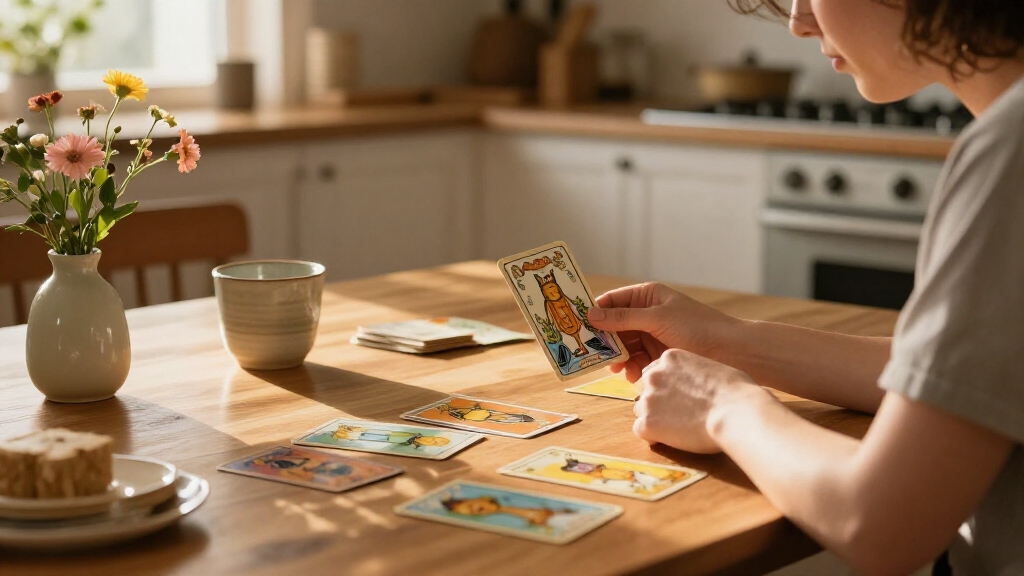
Oracle cards for beginners are easiest to choose when the theme feels approachable and the guidebook gives you a useful starting point. I’d name Moonology Oracle Cards best overall for its focused moon-astrology framework, while Woodland Wardens stands out for nature-inspired imagery and Awakening Intuition for readers who want to practice listening to their own interpretations. The main tradeoff is between clear structure and open-ended reflection: a specific system can guide new readers, while a broader deck leaves more room for personal meaning. Deck size, guidebook detail, and the tone of the messages also shape how comfortable a first reading feels. Read on for the full breakdown and help matching a deck to your style.

Give the gift of listening to someone you love
- Choose a 1-, 3-, 6- or 12-month membership
- They pick the audiobooks they love
- Easy to send by email
Key Takeaways
- Moonology Oracle Cards has the clearest subject framework in this group, which can help beginners connect a reading to moon phases and astrology rather than interpreting a completely open-ended prompt.
- Woodland Wardens pairs a nature-centered theme with a 52-card deck and guidebook, making it a strong fit for readers who prefer animal and plant symbolism over astrology or angel imagery.
- Awakening Intuition is the most natural match for readers who want practice forming their own interpretations, while a guidebook-led deck may feel easier at the very start.
- The lineup spans sharply different tones: Pauseology Hard Truths signals a more direct approach, while Angel’s Wisdom and Love Oracle Cards focus on spiritual or relationship-centered readings.
- A larger card count does not automatically make a deck easier to learn: Spiricrystal has 80 cards, so beginners should weigh variety against the extra material they may need to learn.
| Love Oracle Cards – Answers to Guide You in Solving Life and Love Problems |  | Best for Quick, Broad Life Prompts | Card count: 40 message cards | Themes: Beliefs, love, self, intuition, and career | Included components: 40 message cards and guidebook | VIEW LATEST PRICE | See Our Full Breakdown |
| Alchemy of Awareness Oracle Deck |  | Best for Reflective Beginners | Card count: 65 cards | Included components: 65 cards | Card material: Cardstock | VIEW LATEST PRICE | See Our Full Breakdown |
| The Green Witch’s Oracle Deck: Embrace the Wisdom and Insight of Natural Magic | 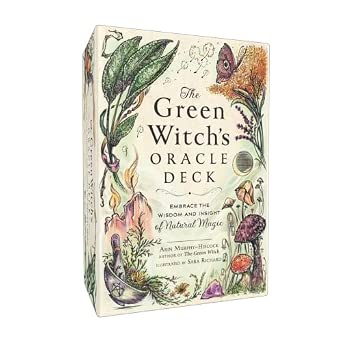 | Best for Green Witchcraft Beginners | Series: Green Witch Witchcraft Series | Theme: Natural magic and the natural world | Product type: Oracle deck | VIEW LATEST PRICE | See Our Full Breakdown |
| GZXINKE Cosmic Oracle Cards – Universe Message Oracle Deck for Beginners, Inner Strength, Spiritual Guidance, and Daily Meditation |  | Best Compact Cosmic-Themed Deck | Deck size: 54 cards | Card size: 2.74 × 4.72 inches | Item dimensions: 4.72 × 2.74 × 0.75 inches | VIEW LATEST PRICE | See Our Full Breakdown |
| Spiricrystal Intuitive Awakening Oracle Deck, 80 Cards |  | Best for Action-Oriented Daily Readings | Deck name: Intuitive Awakening Oracle Cards | Card count: 80 cards | Included components: 80 oracle cards | VIEW LATEST PRICE | See Our Full Breakdown |
| Woodland Wardens: 52-Card Oracle Deck and Guidebook |  | Best for a Nature-Themed Starting Point | Deck size: 52 cards | Included: Guidebook | Product type: Oracle deck | VIEW LATEST PRICE | See Our Full Breakdown |
| Earth Moon Magick Priestess Oracle Deck with Guidebook |  | Best for Ritual and Reflection Prompts | Brand: Earth Moon Magick | Model: The Priestess Oracle | Edition: Premium Keepsake Edition | VIEW LATEST PRICE | See Our Full Breakdown |
| Moonology Oracle Cards: 44-Card Moon Astrology Oracle Deck and Guidebook |  | Best for Moon Astrology Beginners | Card count: 44 | Theme: Moon astrology | Included: Guidebook | VIEW LATEST PRICE | See Our Full Breakdown |
| Awakening Intuition: Oracle Deck and Guidebook (Intuition Card Deck) (Inner World) |  | Best for Developing Intuition | Product type: Oracle deck and guidebook | Guidebook: Described as detailed; supports card interpretation | Artwork: Original artwork on each card | VIEW LATEST PRICE | See Our Full Breakdown |
| Angel’s Wisdom Oracle Cards, 48-Card Deck |  | Best for Quick, Guidebook-Free Readings | Brand: Qcsdckot | Card count: 48 | Material: 400 GSM coated paper | VIEW LATEST PRICE | See Our Full Breakdown |
| Pauseology Hard Truths Oracle Deck, 66 Cards |  | Best for Direct Self-Reflection | Card count: 66 | Card material: 400 GSM cardstock | Card dimensions: 4.25 x 2.75 inches | VIEW LATEST PRICE | See Our Full Breakdown |
| oracle cards for beginner | Card count |
|---|---|
| Love Oracle Cards | 40 message cards |
| Alchemy of Awareness Oracle De | 65 cards |
| The Green Witch’s Oracle Deck: | Not specified in available product data |
| GZXINKE Cosmic Oracle Cards | — |
| Spiricrystal Intuitive Awakeni | 80 cards |
| Woodland Wardens: 52-Card Orac | — |
| Earth Moon Magick Priestess Or | — |
| Moonology Oracle Cards: 44-Car | 44 |
| Awakening Intuition: Oracle De | Not specified in the provided product data |
| Angel’s Wisdom Oracle Cards | 48 |
| Pauseology Hard Truths Oracle | 66 |
More Details on Our Top Picks
Love Oracle Cards – Answers to Guide You in Solving Life and Love Problems
Forty cards across five themes—beliefs, love, self, intuition, and career—give this deck a wider scope than its relationship-focused name suggests. The messages are designed to be read directly from the cards, which can spare a beginner the back-and-forth of a guidebook and make a short daily draw easy. Its portable format also suits readers who want a deck for a bag or desk rather than a dedicated reading space. Compared with the Spiricrystal Intuitive Awakening Oracle Deck, it has fewer cards and does not offer a printed action prompt on every card, so it may provide less structure after a reading. The tradeoff is a simple, intuitive approach that may feel vague to someone who wants detailed explanations or a prescribed method.
Pros:- Five themes extend the deck beyond love readings into career and self-reflection.
- Card messages are intended to be usable without a guidebook.
- Compact design suits travel and everyday carry.
- Illustrated cards offer a visually engaging format for short readings.
Cons:- The 40-card set offers fewer prompts than the 65-card Alchemy of Awareness Oracle Deck or the 80-card Spiricrystal deck.
- Readers who are unsure how to interpret intuitive messages may want more guidance than the cards provide.
Best for: New readers who want brief prompts spanning relationships, career, and personal reflection without relying on a guidebook.
Not ideal for: Beginners who prefer step-by-step interpretations or detailed prompts, since the messages depend on personal intuition and the deck has 40 cards.
- Card count:40 message cards
- Themes:Beliefs, love, self, intuition, and career
- Included components:40 message cards and guidebook
- Material:Cardstock
- Age range:Adult
- Players:1
- Container:Box
- Special feature:Portable
Our verdict“Choose this compact deck for quick, varied reflection prompts, but pick a more structured option if you want explicit interpretation help.”
Alchemy of Awareness Oracle Deck
Printed messages on all 65 cards make this a practical choice for a beginner who wants to draw a card and start reflecting without learning a spread system first. Its contemporary archetypes point toward journaling, shadow work, and personal growth, giving each draw a clear self-inquiry angle rather than a prediction-focused feel. Compared with the Love Oracle Cards, this deck has more cards and a more focused reflective framework; compared with the Spiricrystal Intuitive Awakening Oracle Deck, it does not pair each message with a stated action prompt. That leaves more room for the reader to form their own response, but may also make follow-through less obvious. No rulebook is included, so beginners seeking sample spreads or instructions will need to be comfortable learning by drawing and reflecting.
Pros:- All 65 cards carry intuitive messages, reducing the need to consult a separate guidebook.
- Contemporary archetypes give readings a clear self-reflection focus.
- Journaling and shadow-work themes offer a repeatable way to use the deck.
- Designed for use by both new and experienced readers.
Cons:- No rulebook is included to teach spreads or provide additional interpretation.
- The reflective, shadow-work emphasis may be less suitable for someone seeking light daily inspiration or direct practical answers.
Best for: Adults starting a journaling or self-reflection practice who want on-card messages and themes such as archetypes and shadow work.
Not ideal for: Readers who want a printed guide to spreads, card meanings, or next steps, because the set has no rulebook.
- Card count:65 cards
- Included components:65 cards
- Card material:Cardstock
- Card dimensions:5.15 × 3.5 inches
- Age recommendation:18 years and up
- Players:1–4
- Rulebook:Not included
- Container:Box
Our verdict“Pick this deck if you want on-card prompts for personal reflection and can work without instructional material.”
The Green Witch’s Oracle Deck: Embrace the Wisdom and Insight of Natural Magic
Nature-centered and specific in theme, this deck is the clearest fit here for a beginner drawn to green witchcraft and earth-based spirituality. Its place in the Green Witch Witchcraft Series may appeal to readers who want an oracle deck that fits into a broader area of study rather than a general-purpose prompt set. That focus sets it apart from the GZXINKE Cosmic Oracle Cards, whose space imagery offers a more broadly inspirational starting point, and from the Love Oracle Cards, which cover several everyday themes. The narrower subject can help a curious reader stay focused, but it also limits usefulness for someone seeking relationship, career, or general daily prompts. The available product information does not state the card count, materials, or whether a guidebook is included, making it harder for a first-time buyer to judge how much instruction comes with the deck.
Pros:- A defined natural-magic theme gives green-witchcraft learners a focused entry point.
- Part of the Green Witch Witchcraft Series for readers exploring connected material.
- The subject offers a distinct alternative to broadly themed decks such as GZXINKE Cosmic Oracle Cards.
Cons:- Its witchcraft and nature focus may not suit readers seeking neutral or broad everyday prompts.
- Card count and material details are not provided in the available product data.
- Guidebook inclusion and beginner instructions are not specified.
Best for: Beginners specifically interested in green witchcraft, natural magic, and earth-based spiritual practice.
Not ideal for: Readers looking for a general-purpose beginner deck or clear buying details about card count, materials, and guidebook contents.
- Series:Green Witch Witchcraft Series
- Theme:Natural magic and the natural world
- Product type:Oracle deck
- Card count:Not specified in available product data
- Material:Not specified in available product data
- Guidebook:Not specified in available product data
Our verdict“Choose this deck for a focused introduction to natural magic, not as a broadly applicable first oracle deck.”
GZXINKE Cosmic Oracle Cards – Universe Message Oracle Deck for Beginners, Inner Strength, Spiritual Guidance, and Daily Meditation
Fifty-four space-themed cards give beginners a visual theme to return to for daily meditation, spiritual guidance, and personal reflection. The included beginner-friendly guide is a useful distinction from the Alchemy of Awareness Oracle Deck, which has on-card messages but no rulebook; new readers who want some instruction may find this set easier to start with. Its 2.74 × 4.72-inch cards and listed weight of 0.2 kg also suit readers who value portability. That compact size is a compromise: people who prefer larger cards may find the format less comfortable to handle. Compared with the earth-focused Green Witch’s Oracle Deck, its cosmic imagery makes the theme less tied to a specific practice, though the product details do not give the guide’s exact contents or a fuller explanation of the card meanings.
Pros:- The beginner-friendly guide offers more starting support than decks with no rulebook.
- Fifty-four cards provide more variety than the 40-card Love Oracle Cards.
- Space-themed multicolored artwork gives the deck a consistent visual identity.
- Compact dimensions support travel and small reading spaces.
Cons:- The 2.74 × 4.72-inch cards may feel small to readers who prefer larger cards.
- The product information does not specify the guide’s contents or how much instruction it provides.
- Listed for indoor use, which may not fit readers who want to use cards outdoors.
Best for: Beginners who enjoy space imagery and want a compact deck with a beginner-friendly guide for meditation or daily reflection.
Not ideal for: Readers who want large cards for easier handling or a clearly documented, detailed guidebook.
- Deck size:54 cards
- Card size:2.74 × 4.72 inches
- Item dimensions:4.72 × 2.74 × 0.75 inches
- Item weight:0.2 kg
- Material:Paper
- Theme:Space
- Color:Multicolored
- Players:1
- Usage:Indoor
Our verdict“Pick this deck if cosmic imagery, portability, and some beginner guidance matter more than a larger card format.”
Spiricrystal Intuitive Awakening Oracle Deck, 80 Cards
Eighty cards with a core message and action prompt on each give beginners a clear way to move from a reading to a practical response. That structure makes this a stronger choice for readers who want a next step than the Love Oracle Cards, whose messages rely more on personal intuition, or the Alchemy of Awareness Oracle Deck, which has no rulebook or stated action prompts. It is also described as usable alongside tarot, so readers can add it to an existing practice rather than use it alone. The larger card count offers variety, but the product data does not state card dimensions or material, leaving less information about handling and durability than a buyer may want. Its guidance is for entertainment and self-reflection, not professional advice.
Pros:- The 80-card set offers more prompts than the other listed decks with stated card counts.
- Each card pairs a core message with an action prompt, making readings easier to apply.
- Relationship and emotional-reflection themes support several common personal-reading needs.
- Can be used alone or alongside tarot cards.
Cons:- No guidebook is listed among the included components.
- Card dimensions and material are not specified in the available product data.
- The deck is expressly for entertainment and self-reflection, not professional advice.
Best for: New readers who want frequent daily draws with a printed prompt that suggests a practical response, especially those who also read tarot.
Not ideal for: Buyers seeking a deck with a documented guidebook, detailed card specifications, or guidance for medical, legal, financial, or psychological decisions.
- Deck name:Intuitive Awakening Oracle Cards
- Card count:80 cards
- Included components:80 oracle cards
- Card features:Core message and action prompt printed on each card
- Recommended age:12 years and up
- Manufacturer part number:SYKP80
- Intended use:Entertainment and self-reflection
- Professional advice:Not a substitute for medical, legal, financial, or psychological advice
Our verdict“Choose this deck for varied daily readings with built-in action prompts, while looking elsewhere if you need a guidebook or detailed card specifications.”
Woodland Wardens: 52-Card Oracle Deck and Guidebook
Woodland Wardens offers a straightforward starting structure: 52 cards and an included guidebook. That guidebook may be useful when you are learning how to interpret an oracle deck, while the card count gives you a full deck to work with. Compared with Moonology Oracle Cards, which centers its readings on moon astrology, Woodland Wardens may suit someone looking for a different thematic direction. The available product details, however, do not describe the artwork, card meanings, or guidebook format, so I can’t judge how much support it offers beyond its inclusion. This makes the pick less clearly instructional than Angel’s Wisdom Oracle Cards, whose cards include keywords and messages. Choose Woodland Wardens if its title and guidebook appeal; skip it if you need detailed guidance before buying.
Pros:- Includes a guidebook to accompany readings
- 52-card deck provides a substantial set of cards
- A distinct alternative to the moon astrology focus of Moonology Oracle Cards
Cons:- Available product details do not explain what the guidebook teaches
- Card imagery and interpretation style are not described
- The limited information makes it hard to judge how beginner-friendly the guidance is
Best for: New readers drawn to the Woodland Wardens theme who want a 52-card deck with a guidebook included.
Not ideal for: Beginners who need confirmed details about the guidebook’s instructions, card meanings, or artwork before choosing a deck.
- Deck size:52 cards
- Included:Guidebook
- Product type:Oracle deck
- Theme details:Not specified in the provided product data
- Card dimensions:Not specified in the provided product data
- Materials:Not specified in the provided product data
Our verdict“Choose Woodland Wardens if you want a 52-card deck with a guidebook and its theme appeals, but look elsewhere if you need clearly described beginner instructions.”
Earth Moon Magick Priestess Oracle Deck with Guidebook
The Priestess Oracle gives beginners more than card meanings: its full-color guidebook also includes rituals, affirmations, and reflection prompts. That range can help you turn a card pull into a journaling or altar practice, unlike Angel’s Wisdom Oracle Cards, which puts keywords and messages directly on the cards and has no guidebook. The magnetic keepsake box adds a polished storage option, though it doesn’t tell you how easy the deck is to learn. One notable buying concern is that the product text conflicts on the card count: some details say 50, while the included-components list says 52. Its Ancient Egypt–inspired spiritual and divination theme may also be too specific for readers who want a less overtly esoteric deck. I’d choose it for guided ritual variety, not for certainty about the listed deck size.
Pros:- Full-color guidebook includes meanings and several kinds of practice prompts
- Supports readings, altar work, and personal reflection
- Magnetic keepsake box provides dedicated storage
- 52 cards are listed in the included-components details
Cons:- Product text conflicts on whether the deck has 50 or 52 cards
- The strong divination and spiritual framing may not suit every reader
- The beginner learning method is not described in detail
Best for: Beginners interested in Ancient Egypt–inspired divination who want card meanings alongside rituals, affirmations, and reflection prompts.
Not ideal for: Buyers who need a clearly verified card count or prefer a neutral, non-spiritual theme.
- Brand:Earth Moon Magick
- Model:The Priestess Oracle
- Edition:Premium Keepsake Edition
- Included components:52 oracle cards, full-color guidebook, magnetic keepsake box
- Card count note:Product text also states 50 cards
- Card dimensions:2.75 × 4.75 inches
- Material:Cardboard
- Recommended age:13 years and up
- Usage:Indoor and outdoor
Our verdict“Pick the Priestess Oracle if ritual and reflection prompts matter more to you than a confirmed card count or a broadly neutral theme.”
Moonology Oracle Cards: 44-Card Moon Astrology Oracle Deck and Guidebook
Moonology Oracle Cards is the clearest fit here if you want your first readings anchored in moon astrology. Its 44 cards and accompanying guidebook give you a defined theme to learn, rather than the broader, less specified approach of Woodland Wardens. That focus can make the deck appealing to readers already curious about lunar cycles, but it also narrows its reach: someone who wants general reflection prompts may find the astrology emphasis limiting. The product details confirm a guidebook is included but don’t describe its teaching style, the card imagery, or the reading methods, so I can’t tell how much background knowledge it assumes. Compared with Angel’s Wisdom Oracle Cards, it offers guidebook support rather than printed card keywords. I’d choose it for a lunar focus, not as the most flexible first deck.
Pros:- A clearly defined moon astrology theme
- Includes a guidebook alongside the 44-card deck
- Offers a more focused subject than the broadly described Woodland Wardens
Cons:- The astrology focus may feel narrow to readers seeking general-purpose reflection
- Product details do not describe the guidebook’s instruction or reading methods
- Artwork and card-level prompts are not specified in the provided data
Best for: Beginners who already follow moon phases or astrology and want a themed deck with a guidebook.
Not ideal for: Readers seeking a broad, non-astrological deck or detailed information about how the guidebook teaches card interpretation.
- Card count:44
- Theme:Moon astrology
- Included:Guidebook
- Product type:Oracle deck
- Card dimensions:Not specified in the provided product data
- Materials:Not specified in the provided product data
Our verdict“Choose Moonology if lunar astrology is the subject you want to learn through cards; skip it if you prefer a flexible, less specialized first deck.”
Awakening Intuition: Oracle Deck and Guidebook (Intuition Card Deck) (Inner World)
Awakening Intuition is aimed at readers who want their card practice to build self-trust, not just supply ready-made answers. Its guidebook and reflection prompts are intended to support interpretation, while original artwork gives each card a visual starting point. That makes it a more explicitly self-reflective choice than Moonology Oracle Cards, whose defining lens is moon astrology. It is also less immediately self-explanatory, based on the available details, than Angel’s Wisdom Oracle Cards, which prints keywords and messages on the cards. The product description says the deck has a limited number of cards but does not state the count, leaving buyers without a useful size comparison. Its spiritual and New Age orientation may not suit everyone. I’d pick it when intuition practice is the goal, while checking the deck details if card count matters to you.
Pros:- Guidebook is described as detailed and supports interpretation
- Reflection prompts connect card pulls with personal insight
- Original artwork provides a visual focus for readings
- The stated purpose centers on intuition and self-reflection
Cons:- The exact number of cards is not provided
- Its spiritual and New Age framing may not appeal to every beginner
- Unlike Angel’s Wisdom Oracle Cards, the available details do not say that meanings are printed on each card
Best for: Beginners who want prompts and guidebook support for reflective readings and building confidence in their own intuition.
Not ideal for: Buyers who want the card count and other specifications stated clearly, or who prefer a non-spiritual approach.
- Product type:Oracle deck and guidebook
- Guidebook:Described as detailed; supports card interpretation
- Artwork:Original artwork on each card
- Prompts:Reflection prompts
- Stated focus:Developing and trusting intuition; personal growth
- Card count:Not specified in the provided product data
Our verdict“Choose Awakening Intuition if reflective prompts and intuition-building matter most, but look for fuller specifications if deck size is a deciding factor.”
Angel’s Wisdom Oracle Cards, 48-Card Deck
Angel’s Wisdom Oracle Cards puts keywords and guiding messages on the cards, so a beginner can start reading without a separate guidebook. That makes it the most direct option here for quick pulls, especially compared with Woodland Wardens, which includes a guidebook but has no further guidance details in the supplied product data. The 48-card deck is made from 400 GSM coated paper and comes in a two-piece box, giving it basic stated construction and storage details. The tradeoff is that no guidebook is included: readers who want longer explanations or a structured learning path may prefer the prompt-rich Priestess Oracle or Awakening Intuition. The angelic framing is also a specific spiritual choice, and the product lists indoor use. I’d pick this for accessible card-level messages, not for a book-led study approach.
Pros:- Keywords and guiding messages are printed on the cards
- No separate guidebook is needed to begin simple readings
- 400 GSM coated paper is described as durable
- Two-piece box provides storage
Cons:- No guidebook is included for fuller explanations or structured study
- Angel-themed spiritual content may not fit readers seeking a neutral deck
- Usage is listed as indoor
Best for: Beginners who want short, on-card keywords and messages for self-guided readings without consulting a separate guidebook.
Not ideal for: Readers who want extended explanations, a guidebook-led learning process, or a deck explicitly suited to outdoor use.
- Brand:Qcsdckot
- Card count:48
- Material:400 GSM coated paper
- Package:Two-piece box
- Guidebook:Not included; cards have keywords and guiding messages
- Recommended age:13 years and up
- Item weight:0.22 kg
- Dimensions:5.12 × 3.15 × 1.1 inches
- Usage:Indoor
Our verdict“Choose Angel’s Wisdom for direct, guidebook-free card messages, but pick a guidebook-based deck if you want deeper instruction.”
Pauseology Hard Truths Oracle Deck, 66 Cards
Pauseology Hard Truths takes a more confrontational approach than beginner decks built around gentle guidance. Its 66 cards offer direct messages meant to prompt reflection on unhelpful patterns, so a newcomer who wants clear challenges may find it easier to engage with than a deck that relies on interpreting symbolic imagery. Unlike Woodland Wardens, which includes a guidebook, this deck has no booklet to explain its messages; that keeps the process direct but leaves less support for someone unsure how to begin.
The 400 GSM cardstock, gold foil details, and magnetic box give it a more finished presentation, though those details do not soften its blunt tone. I’d choose it for frank prompts, not for a soothing daily ritual. Its fairy-tale theme and Art Deco style may also feel at odds with buyers seeking a traditional oracle look.
Pros:- Direct messages can make self-reflection feel accessible without learning a complex symbolic system.
- 66 cards offer more prompts than a smaller deck.
- 400 GSM cardstock and gold foil details provide a substantial, decorative feel.
- Magnetic storage box keeps the cards together between readings.
Cons:- No guidebook means beginners must work out their own approach to readings.
- Blunt, hard-hitting messages may feel discouraging rather than supportive.
- The fairy-tale theme and Art Deco style may not suit readers seeking familiar spiritual imagery.
Best for: Adults new to oracle cards who want concise, blunt prompts for examining habits and are comfortable interpreting messages without a guidebook.
Not ideal for: Beginners who want gentle reassurance, step-by-step guidance, or a guidebook explaining how to read each card.
- Card count:66
- Card material:400 GSM cardstock
- Card dimensions:4.25 x 2.75 inches
- Box:Magnetic storage box
- Gold foil:Yes
- Guidebook:Not included
- Theme:Fairy Tale
- Style:Art Deco
- Recommended age:18 years and up
Our verdict“Choose this deck if you want direct prompts and polished storage, but pick a guidebook-inclusive option if you need gentler, more structured beginner support.”
How We Picked
I ranked these decks for beginner usability, not for how many themes or cards they offer. I looked at how clearly each deck signals its subject, whether a guidebook is included in the stated product format, and how readily a new reader can use the cards for focused readings or daily reflection. I also weighed card count as a learning consideration: more cards may offer broader variety, but they can also create more material to absorb.
The order reflects how well a deck’s stated focus can help a first-time buyer choose a reading style, with extra weight on clear entry points and practical guidance. A specialized theme can be a strength when it matches the reader, but it may limit flexibility for someone seeking general prompts. Since the product details provided do not establish guidebook depth, card size, or finish across every deck, I avoid treating those qualities as verified advantages. Each pick has a distinct audience, and a lower ranking may still be the better choice for someone drawn to its specific tone or subject.
Factors to Consider When Choosing Oracle Cards For Beginners
Before choosing a first deck, I’d focus less on claims about spiritual accuracy and more on how you want to use the cards. A deck’s theme, instructions, tone, and physical format all affect whether you’ll reach for it regularly.
Choose a theme you can return to
Oracle decks may center on moon cycles, nature, angels, relationships, personal growth, or direct reflection. A theme gives a new reader a useful lens, but it can also narrow what the deck feels suited to discuss. Ask whether you want a deck for broad daily prompts or one that speaks to a particular part of life. A focused subject can make the first readings easier to frame because you already have a question area in mind. A general theme may fit better if you want to use one deck for many different situations. Avoid buying only for striking artwork if the deck’s subject does not interest you beyond the first look.
Check what the guidebook is meant to do
A guidebook can provide card meanings, spread ideas, or questions for reflection, but the word itself does not tell you how much instruction is included. If you prefer a clear starting point, look for a product description that spells out whether the guide explains individual cards and how to lay them out. Readers who like to make their own associations may prefer brief prompts rather than fixed interpretations. A detailed manual can support learning, though it may make readings feel more like studying than reflection. Do not assume every deck includes a guidebook simply because oracle decks often do. For a first purchase, confirm the included materials and format before deciding.
Match the deck’s tone to your comfort level
Card messages can feel reassuring, spiritual, playful, blunt, or challenging, and that tone matters when you are reading for yourself. Direct language may help someone who wants a prompt that cuts through indecision, but it can feel harsh when a reader is seeking a gentler ritual. Angel-themed or love-centered decks offer a more specific emotional frame, while nature or intuition themes may leave more room for personal reflection. Consider whether you want the cards to comfort, question, or simply prompt you. A deck’s title and description can signal tone, but they cannot guarantee how every card will read. If you are unsure, choose a message style you would be comfortable returning to on an ordinary day.
Treat card count as a learning tradeoff
A larger deck can provide more variety, but it also gives you more card names and meanings to learn. Beginners sometimes assume that a higher card count means better guidance; it may instead mean a longer learning curve. A smaller deck can feel manageable and make repeated use easier, though it may offer fewer distinct prompts. Think about whether you plan to pull one card a day or explore longer readings with several cards. Your routine matters more than a count that looks impressive on a product page. Choose a size that feels inviting enough to use consistently.
Consider how you will read: alone or with others
Some buyers want a quiet personal ritual, while others plan to read cards with friends or use them as conversation starters. For solo reflection, a deck with a subject you connect with can help you form a question and follow your own thoughts. In a group, accessible imagery and plain prompts may make it easier for people unfamiliar with oracle cards to join in. A highly personal or spiritual theme may suit private practice better than casual gatherings. Think about where the deck will live and who will handle it, especially if portability matters. That use case can be a better guide than choosing a deck solely because it promises broad appeal.
Pay for fit, not for assumptions about quality
When comparing decks, prioritize details you can verify: whether a guidebook is included, the number of cards, the stated theme, and the listed physical format. Do not assume a deck is more durable, easier to shuffle, or more richly illustrated unless the product information supports that claim. A specialized deck may be worth choosing when its subject matches your practice, even if a more general deck seems more versatile. A beginner does not need multiple decks to learn; one that invites regular use is a sensible starting point. If tactile details matter to you, check available specifications rather than relying on the title or promotional language. The best fit is the deck whose subject and reading style you will actually want to use.
Frequently Asked Questions
Should my first oracle deck include a guidebook?
A guidebook can make a first deck easier to approach by offering meanings or prompts when you do not yet have a reading routine. It is most useful if the product description confirms that it explains the cards rather than only providing brief general notes. You do not need to follow every interpretation literally; use the text as a starting point and notice what feels relevant to your question. If you enjoy intuitive reading, a deck with fewer instructions may suit you better. Check what is included before buying, since the word “oracle” alone does not promise a particular level of guidance.
Are oracle cards or tarot cards easier for a beginner?
Oracle cards often have a more flexible structure, while tarot generally follows a more established system of card groups and meanings. That flexibility can make oracle cards feel less like memorizing a formal framework, but it also means each deck can work differently. A beginner who likes a clear subject may find a focused oracle deck easier to start with than a very open-ended one. Someone who wants a consistent structure to study may prefer learning tarot instead. Choose based on whether you want freedom to interpret or a more defined system to practice.
Is a deck with more cards better for learning?
Not necessarily. A larger deck can offer more prompts and nuances, but it also gives you more material to become familiar with. If you want a simple daily practice, a smaller set may be easier to revisit and remember. A larger deck may suit someone who likes exploring varied messages or plans to use cards often. Check whether the guidebook helps organize the meanings, since that can matter more than the count alone. Pick the size that supports the kind of practice you are likely to maintain.
Can I use an oracle deck if I do not follow a spiritual practice?
Yes. You can use oracle cards as prompts for journaling, reflection, or conversation without treating them as supernatural instructions. A card can invite you to consider a feeling or question from another angle, much like a writing prompt. Decks with nature or intuition themes may feel comfortable to readers who prefer symbolic reflection, while explicitly spiritual themes may appeal to those who want that framing. You can interpret the cards in a way that fits your own beliefs. If a deck’s language feels too prescriptive, choose one whose tone leaves more room for personal meaning.
What should I do if a card’s message feels uncomfortable or does not fit?
You do not have to treat a card as a command or a prediction. Pause, consider whether its wording raises a useful question, and set it aside if it does not feel relevant. A deck with a blunt tone may suit readers who welcome direct prompts, but that style is not right for everyone. It can help to choose a question before drawing so you have context for the message. If repeated readings leave you feeling pressured rather than reflective, take a break or use a different deck.
Conclusion
For a first deck with a defined learning lens, I’d choose Moonology Oracle Cards as the best overall pick; its moon-and-astrology focus gives readings a clear subject. Woodland Wardens is my best value-style choice for readers drawn to nature symbolism and a stated guidebook, while Alchemy of Awareness is the best premium-style option for someone specifically seeking an awareness-centered theme, though the provided details do not establish premium materials. For beginners who want to build confidence by interpreting cards personally, Awakening Intuition is the most direct match. Choose Love Oracle Cards for relationship-focused questions, GZXINKE Cosmic Oracle Cards for cosmic daily prompts, or Pauseology Hard Truths if you prefer a more direct tone. Your strongest choice is the deck whose theme and message style you will want to return to.