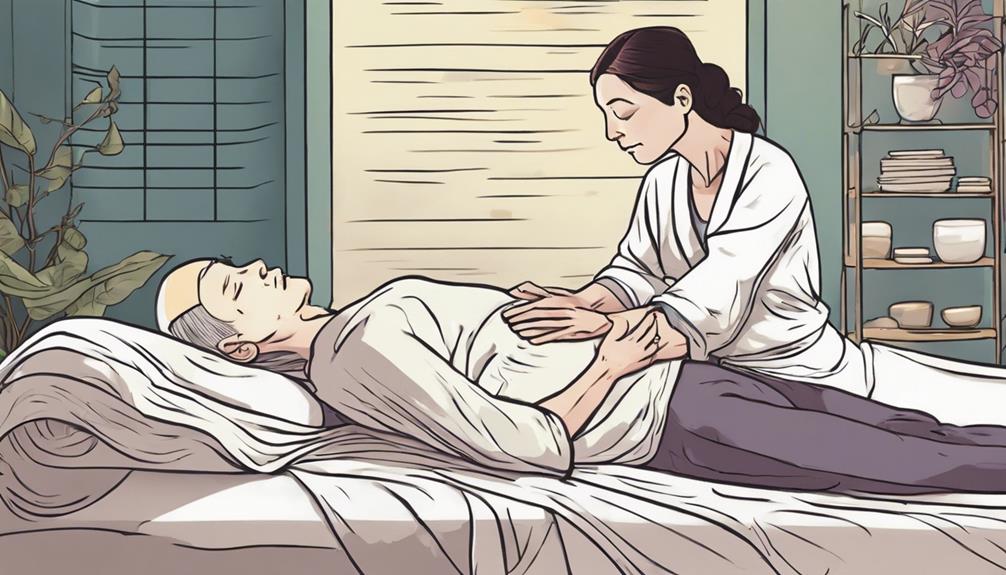
To set up a secure therapeutic space in somatic therapy, focus on creating physical comfort and building trust. Guarantee clients feel safe to express their needs and respect their boundaries. Use grounding techniques and body awareness exercises to help clients stay present without overwhelm. Active listening and non-judgmental support deepen safety, allowing clients to explore sensations safely. If you want to understand how to foster this environment effectively, further insights can guide you in cultivating true security.
Key Takeaways
- Establish physical comfort and a calming environment to promote trust and safety.
- Communicate openly, encouraging clients to voice needs and set boundaries.
- Use grounding and breathing exercises to help clients stay present and prevent overwhelm.
- Respect clients’ limits by pausing or stopping sessions when necessary.
- Build trust gradually, ensuring clients feel secure to explore sensations and process trauma.

Somatic therapy focuses on the connection between your body and mind to promote healing, but safety is essential every step of the way. When you’re engaging in trauma processing through somatic techniques, feeling secure creates a foundation for genuine progress. You might be surprised at how much your body holds onto past experiences, often manifesting as tension, tightness, or discomfort. Building a safe space allows you to explore these sensations without feeling overwhelmed or re-traumatized. It’s crucial that you trust your therapist and feel confident that your boundaries will be respected. This sense of safety encourages your body to relax and become more aware of its signals, paving the way for effective body awareness exercises.
As you begin to focus on trauma processing, you’ll learn to notice how your body responds to different stimuli or memories. This process can bring up difficult emotions or sensations, but if you’re in a secure environment, you can approach these experiences gradually. Your therapist might guide you through gentle grounding techniques or breathing exercises to help you stay present. These tools are designed to anchor you in the moment and prevent your nervous system from becoming overwhelmed. Remember, trauma processing isn’t about pushing through discomfort but understanding and integrating your experiences at a pace that feels safe for you.
Creating a secure therapeutic space involves more than just physical comfort—it’s about establishing trust and clarity. You should feel empowered to communicate your needs, and your therapist should actively listen and respond without judgment. Your body awareness will deepen when you know you’re in control of the process. This might include noticing where you hold tension or how your breathing shifts during different parts of the session. With a safe environment, you can explore these sensations openly, which helps in releasing stored trauma and fostering healing. Incorporating a safe environment can significantly enhance your ability to process difficult emotions and sensations effectively.
Safety also means recognizing your limits and respecting them. It’s okay to pause, ask for a break, or stop altogether if you feel overwhelmed. Your therapist’s role is to support you in creating these boundaries and ensuring you feel supported at every step. Over time, this secure setting enables you to process trauma more effectively, as your body learns to trust that it can experience difficult feelings without danger. This trust is crucial for developing body awareness, allowing you to connect more deeply with yourself and facilitate meaningful healing through somatic therapy.

Somatic Therapy Cards for Nervous System Regulation – Self-Care & Coping Skills Exercise for Mental Health Therapists, Mindfulness & Anxiety Relief Tools, Ideal Mental Health Gifts & Therapy Games
32 Simple & Effective Somatic Therapy Exercises – This set includes 32 carefully designed somatic therapy cards that…
As an affiliate, we earn on qualifying purchases.
As an affiliate, we earn on qualifying purchases.
Frequently Asked Questions
How Do I Know if Somatic Therapy Is Right for Me?
You’ll know somatic therapy is right for you if you’re curious about strengthening your mind-body connection and enhancing emotional awareness. If traditional talk therapies haven’t fully addressed your feelings or physical sensations, this approach can help you tune into your body’s signals and process emotions more effectively. Trust your instincts—if you feel drawn to explore your physical experiences to heal emotional wounds, somatic therapy might be a good fit.
What Should I Do if I Feel Unsafe During a Session?
If you ever feel unsafe during a session, trust your instincts and communicate immediately. Remember, setting clear boundaries helps protect your emotional well-being, so don’t hesitate to voice concerns about trust boundaries or emotional triggers. Your therapist is there to support your safety, and if you still feel uncomfortable, it’s okay to pause or stop the session. Prioritize your feelings and guarantee a secure, respectful environment.
How Can I Prepare Mentally for Somatic Therapy Sessions?
To prepare mentally for somatic therapy sessions, start practicing mindfulness techniques like deep breathing or body scans daily. Use grounding exercises, such as feeling your feet on the floor or holding a comforting object, to stay present. Visualize a safe space beforehand to ease anxiety. Regularly engaging in these practices can help you feel more centered and ready to explore sensations during therapy.
Are There Specific Signs Indicating I Need a More Secure Environment?
You might need a more secure environment if you notice trigger signs like sudden anxiety or overwhelming emotions during sessions. Safety indicators include feeling physically uncomfortable or struggling to stay present. Trust your instincts—if something feels off or unsafe, communicate with your therapist immediately. Ensuring your environment feels secure helps you engage fully in somatic therapy and promotes healing without added stress or triggers.
How Can I Communicate Boundaries Effectively in Therapy?
Did you know that clear communication can substantially enhance your therapy experience? You should use verbal affirmations to express your boundaries confidently and nonverbal cues like posture or eye contact to reinforce them. Be consistent and direct, ensuring your therapist understands what feels safe and what doesn’t. This active approach helps create a secure space where you feel respected and empowered to share openly.

QUOKKA Self-Care & Anxiety Relief – 52 Mindfulness Cards for Stress Reduction and Emotional Balance | Grounding Exercises, Breathing Tools & Relaxation Techniques | Wellness Gift for Calm and Focus
52 MINDFULNESS CARDS FOR CALM & BALANCE: A beautifully designed deck of grounding and breathing exercises to help…
As an affiliate, we earn on qualifying purchases.
As an affiliate, we earn on qualifying purchases.
Conclusion
Creating a safe space in somatic therapy is essential—you’ll foster trust and facilitate healing. Did you know that over 70% of clients report feeling more secure when their physical boundaries are respected? By setting clear safety measures, you help clients feel grounded and empowered to explore their bodies and emotions. Remember, a secure environment isn’t just a comfort—it’s the foundation for transformative growth and genuine progress in therapy.

Being Aware of Being Aware (The Essence of Meditation Series)
As an affiliate, we earn on qualifying purchases.
As an affiliate, we earn on qualifying purchases.
secure therapy space setup items
As an affiliate, we earn on qualifying purchases.
As an affiliate, we earn on qualifying purchases.