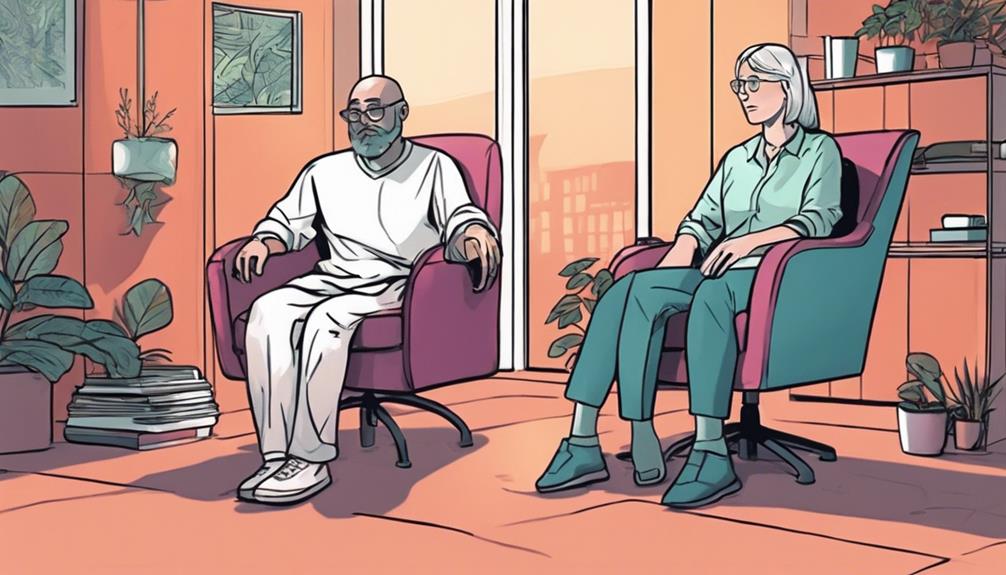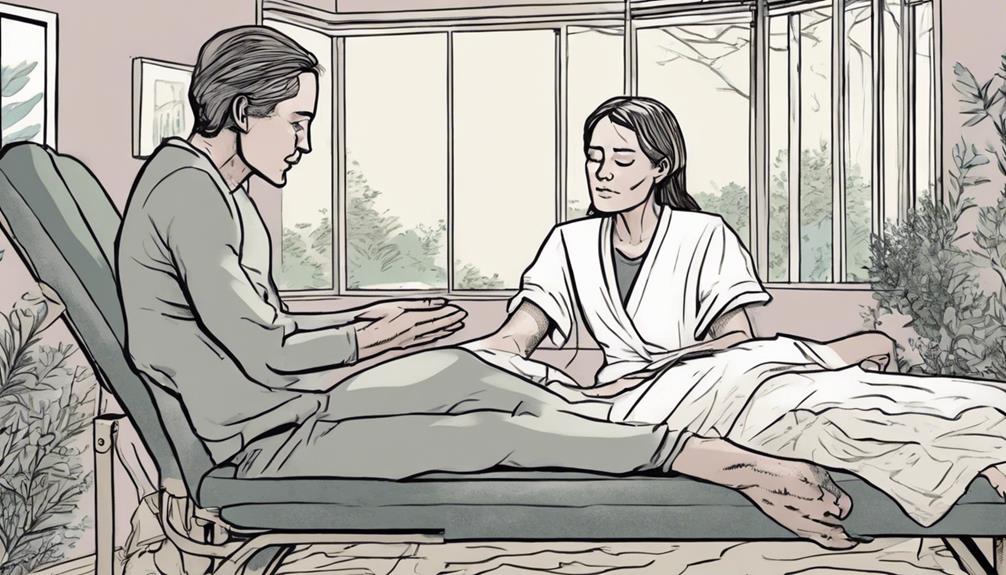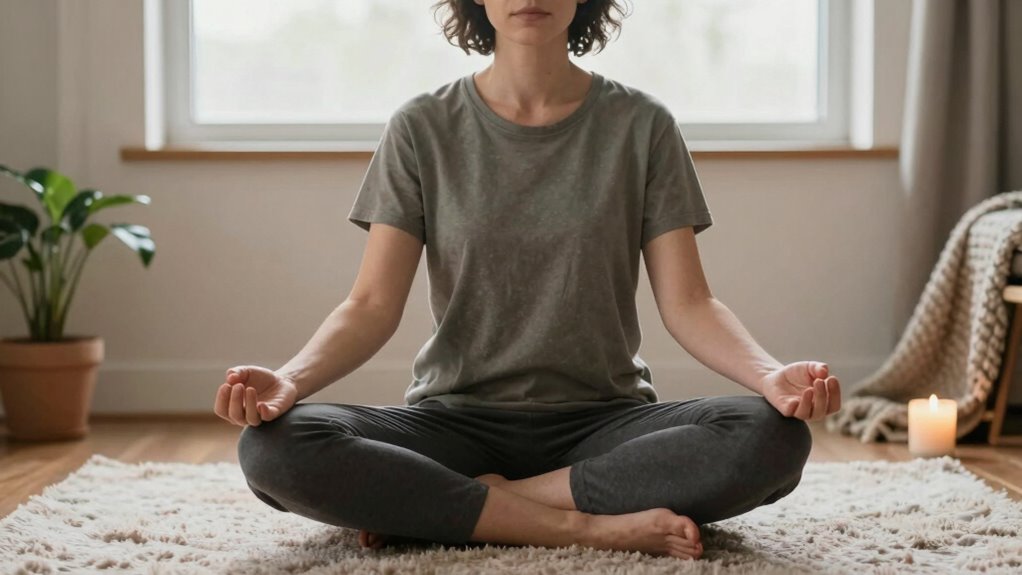

During high stress, you can support yourself somatically by focusing on slow, deliberate breathing to calm your nervous system. Pay attention to physical sensations like tension in your shoulders or jaw, and gently relax those areas. Incorporate gentle movements or adjustments in your posture to promote openness and safety. Creating a calming environment and practicing these habits regularly helps build resilience, so you can better manage stress when it peaks. Keep exploring to learn more how these techniques can support you.

Turn your quiet moments into listening time
- Thousands of audiobooks, podcasts and originals
- Listen on your phone, tablet or Echo — also offline
- Cancel anytime
Key Takeaways
- Engaging in mindful breathing exercises to slow the nervous system and reduce physiological arousal.
- Using body awareness to identify tension and implement gentle movements for tension release.
- Creating calming environments with sensory cues to promote relaxation during stress peaks.
- Adjusting posture to open the chest and promote safety signals to the nervous system.
- Practicing these tools consistently to build resilience and automatic regulation responses.
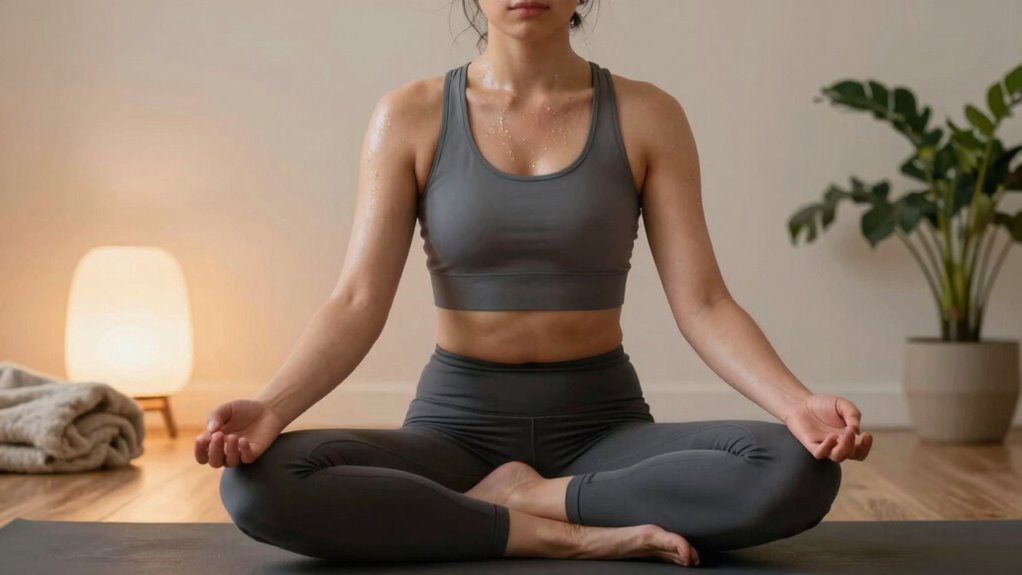
During high-stress moments, your body often reacts instinctively, but you can actively support your nervous system to stay grounded. One of the most effective ways to do this is through mindful breathing. Instead of letting your breath become rapid or shallow, slow it down intentionally. Focus on taking deep, deliberate inhales through your nose, filling your lungs completely. Then, exhale slowly through your mouth or nose, releasing tension with each breath. This practice helps regulate your heart rate and calms your nervous system, making it easier to maintain clarity amid chaos. When you commit to mindful breathing, you create a moment of pause, allowing your mind to shift from reactive to responsive.
Support your nervous system with slow, mindful breathing to stay grounded and respond calmly amid chaos.
Alongside mindful breathing, cultivating body awareness plays a vital role in somatic support. Pay attention to physical sensations without judgment. Notice where you feel tension, tightness, or discomfort. Are your shoulders clenched? Is your jaw tight? Do your hands tremble? By tuning into these sensations, you reconnect with your body’s signals, enabling you to respond more intentionally rather than automatically. For example, if you feel your shoulders rising, consciously relax them. If your stomach feels tight, take a few deep breaths to soften that area. This heightened body awareness brings you into the present moment and reduces the influence of stress hormones that can cloud your judgment. Developing body awareness can also help you recognize early signs of overwhelm, allowing for proactive management. Incorporating techniques from home theatre projector setup, such as creating a calming environment, can further support your relaxation during stressful times. Additionally, understanding stress response mechanisms can empower you to better manage your reactions and build resilience over time. Recognizing how your body naturally responds to stress mechanisms enables you to intervene more effectively and avoid escalation.
In high-stress periods, it’s helpful to incorporate simple movements that support your body’s natural calming responses. Gentle stretching or slow, deliberate movements like neck rolls or shoulder shrugs can release stored tension. These actions, combined with mindful breathing and body awareness, create a somatic rhythm that anchors you. You might also notice your posture and adjust it to promote openness rather than collapse or tension. Standing or sitting upright with your chest open signals to your nervous system that you’re safe, counteracting the fight-or-flight response.
Consistency is key. Regularly practicing mindful breathing and body awareness during peaceful moments strengthens your ability to employ these tools during crises. Over time, they become automatic responses that help you regain control when stress peaks. Remember, supporting your nervous system isn’t about eliminating stress but about building resilience. By actively engaging in these somatic practices, you give yourself a powerful method to stay grounded, even in the most overwhelming situations.
mindful breathing exercise tools
As an affiliate, we earn on qualifying purchases.
As an affiliate, we earn on qualifying purchases.
Frequently Asked Questions
Can Somatic Support Techniques Be Used Alongside Medication?
Yes, you can definitely use somatic support techniques alongside medication. This approach promotes holistic integration, enhancing your emotional regulation and overall well-being. By combining these methods, you’re addressing both biological and emotional aspects of stress, creating a balanced support system. Somatic techniques like breathing exercises or body awareness complement medication, helping you manage high stress more effectively and fostering a deeper sense of calm and resilience.
How Long Does It Take to Notice Benefits From Somatic Practices?
Like planting seeds in a garden, you’ll notice benefits from somatic practices within a few weeks. Your mind-body connection deepens as you develop sensory awareness, helping you respond more calmly to stress. Regular practice gradually rewires your nervous system, making relaxation more accessible. While some feel immediate relief, most notice consistent improvements over time, reinforcing your ability to manage high stress periods effectively.
Is Somatic Support Effective for Chronic Stress or Only Acute Episodes?
Somatic support is effective for both chronic stress and acute episodes because it strengthens your mind-body connection, helping you manage emotional regulation more effectively. When you practice regularly, you become more aware of physical cues that signal stress, allowing you to intervene early. This ongoing awareness and regulation improve resilience over time, making it easier to navigate high-stress periods and reduce overall chronic stress.
Are There Age-Specific Somatic Strategies for Children or Seniors?
Yes, age-specific somatic strategies exist for children and seniors. For children, techniques like gentle breathing, playful movement, and sensory play help them process stress effectively. For seniors, senior-specific strategies such as seated stretching, mindful breathing, and gentle touch promote relaxation and emotional regulation. These age-appropriate techniques tailor support, making it easier for each age group to connect with their bodies, reduce stress, and foster well-being through accessible, targeted somatic practices.
Can Somatic Support Help With Trauma Recovery During High Stress?
Yes, somatic support can substantially aid trauma recovery during high-stress times. By focusing on the mind-body connection, you can better understand and release stored tension. Techniques like deep breathing, grounding, and gentle movement help improve emotional regulation, making it easier to manage overwhelming feelings. This active engagement with your body fosters resilience, allowing you to process trauma more effectively and restore a sense of safety and balance.
body awareness meditation cushion
As an affiliate, we earn on qualifying purchases.
As an affiliate, we earn on qualifying purchases.
Conclusion
During high stress periods, embracing somatic support helps you stay grounded and resilient. Remember, studies show that practicing mindfulness and body awareness can reduce stress levels by up to 30%. By tuning into your body’s signals and incorporating simple techniques like deep breathing or gentle movement, you can navigate challenging times more effectively. Trust in these practices to strengthen your resilience and restore your sense of calm amid chaos. Your body is your greatest ally in weathering stress.
stress relief sensory calming environment
As an affiliate, we earn on qualifying purchases.
As an affiliate, we earn on qualifying purchases.
posture correction support pillow
As an affiliate, we earn on qualifying purchases.
As an affiliate, we earn on qualifying purchases.
Halloween Picks
halloween
As an affiliate, we earn on qualifying purchases.