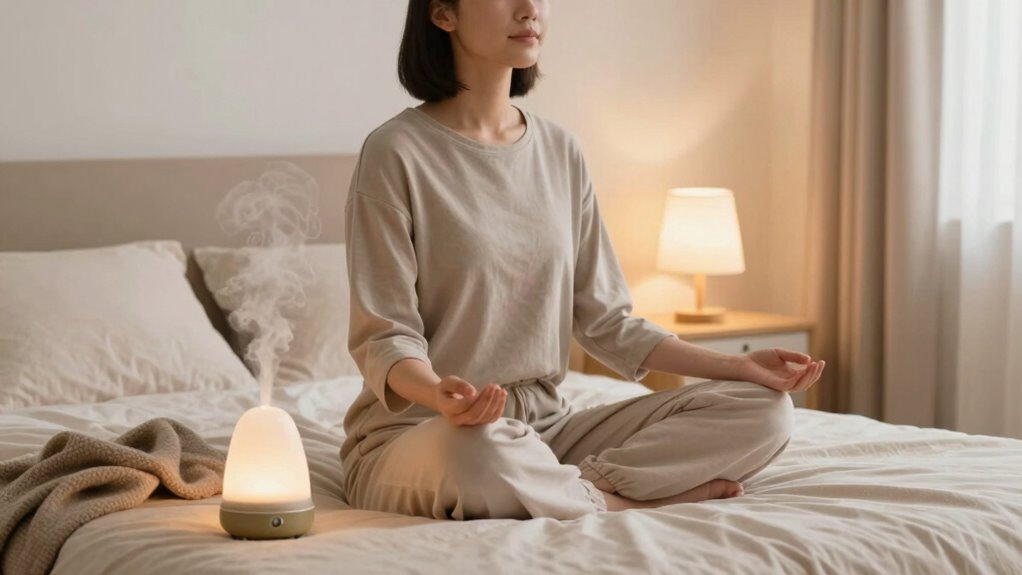
To use simple regulation skills before sleep, start by establishing a consistent bedtime routine that signals your body it’s time to wind down. Incorporate relaxation techniques like deep breathing or progressive muscle relaxation to release physical tension. Practice mindfulness or calming activities such as listening to soothing sounds or journaling to quiet your mind. Avoid screens and opt for calming alternatives like herbal teas or gentle stretches. Keep exploring these strategies to discover more ways to create a peaceful, restful night.
Key Takeaways
- Establish a consistent sleep schedule to signal your body when to wind down.
- Practice deep breathing or progressive muscle relaxation to promote physical calmness.
- Engage in mindfulness or calming activities like reading or journaling before bed.
- Avoid screens at least one hour prior, opting for soothing sounds or gentle stretches instead.
- Create a peaceful environment with comfortable sleepwear and white noise to enhance relaxation.
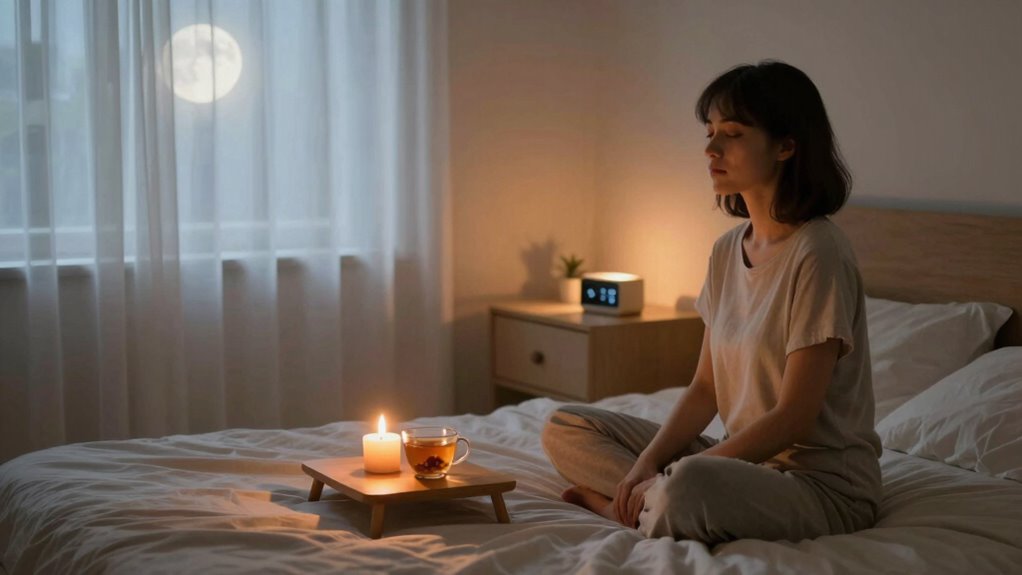
If you’re struggling to fall asleep, incorporating simple regulation skills into your bedtime routine can make a significant difference. Your bedtime routines set the stage for sleep, and adding relaxation techniques can help calm your mind and body. The goal is to create a shift from the busyness of the day to a peaceful, sleep-ready state. Start by establishing a consistent schedule—going to bed and waking up at the same time each day helps regulate your internal clock, making it easier to fall asleep naturally. Once you stick to a routine, your body learns when it’s time to wind down, which reduces sleep onset delays.
Establish a consistent sleep schedule to help your body naturally wind down and improve sleep quality.
Incorporate relaxation techniques into your nightly ritual to further ease into sleep. Deep breathing exercises are simple yet effective; focus on inhaling slowly through your nose, filling your lungs completely, then exhaling gently through your mouth. Repeat this process for several minutes to activate your parasympathetic nervous system, which promotes relaxation. Progressive muscle relaxation is another helpful technique—start at your toes, tense each muscle group for a few seconds, then release. Moving upward through your body, this method relieves physical tension accumulated during the day, signaling your brain that it’s time to rest. Understanding sleep regulation can help you optimize your bedtime routine for better rest.
Mindfulness meditation also works well as part of your bedtime routines. Sit comfortably, close your eyes, and focus on your breath or a calming word or phrase. When your mind wanders, gently redirect your attention without judgment. This practice quiets racing thoughts and reduces the mental chatter that often keeps you awake. If you find it helpful, incorporating relaxation techniques enhances the calming effect and prepares your body for sleep. Additionally, understanding juice extraction techniques and their health benefits, such as drinking chamomile or lavender infused herbal teas, can provide additional relaxation. Incorporating body piercing care into your evening routine, such as gently cleaning piercings with saline, can also promote overall relaxation and well-being. If you prefer, listening to soothing sounds or white noise can drown out distracting noises and create a calming environment conducive to sleep. Moreover, selecting sleepwear made from eco-friendly materials that promote comfort and better sleep quality can contribute to a restful night, aligning with sustainable textile care and innovation in fabric technology.
Avoid screens at least an hour before bed, as the blue light emitted can interfere with your melatonin production—your body’s natural sleep hormone. Instead, opt for calming activities like reading a physical book, gentle stretching, or journaling your thoughts to clear your mind. These activities, combined with relaxation techniques, help you shift smoothly from wakefulness to sleepiness.
As an affiliate, we earn on qualifying purchases.
Frequently Asked Questions
Can Regulation Skills Improve Sleep Quality Long-Term?
Yes, regulation skills like mindfulness meditation and breathing exercises can improve your sleep quality long-term. When you regularly practice these techniques, you help calm your nervous system and reduce stress, making it easier to fall asleep and stay asleep. Over time, this consistency enhances your sleep patterns, leading to better rest and overall well-being. Keep practicing these skills nightly to experience lasting benefits for your sleep health.
Are These Techniques Suitable for Children?
Yes, these techniques are suitable for children. You’ll find child-friendly techniques and age-appropriate methods that help kids relax and wind down. Using calming breathing exercises, gentle visualization, and simple mindfulness activities, you create a peaceful bedtime routine. These approaches, tailored to each child’s developmental level, promote better sleep. By incorporating these strategies, you support your child’s emotional regulation and establish healthy sleep habits that last.
How Quickly Can I See Results Using Regulation Skills?
You can start noticing results within a few days to a week. As you practice regulation skills, you might see improvements in your sleep duration and feel less stressed before bed. Regular use helps your body relax, making it easier to fall asleep faster and stay asleep longer. Consistency is key, so keep practicing, and over time, you’ll likely experience better sleep quality and reduced stress levels.
Do I Need Special Equipment or Tools?
You don’t need special equipment or tools to improve your sleep environment with relaxation techniques. Just focus on creating a cozy, quiet space—dim the lights, eliminate noise, and make your surroundings inviting. These simple adjustments can make a big difference. As you settle in, you’ll discover that calming your mind becomes easier, and restful sleep is closer than you think. Sometimes, the simplest changes hold the most power.
Can I Combine Regulation Skills With Medication?
Yes, you can combine regulation skills with medication, but you should be cautious. Medication interactions and regulation safety considerations are important, so always consult your healthcare provider before making any changes. They can advise whether your medications might affect your ability to use regulation techniques effectively or if adjustments are needed. This guarantees you safely benefit from both your medication and regulation skills without risking adverse effects.
herbal tea for relaxation chamomile lavender
As an affiliate, we earn on qualifying purchases.
As an affiliate, we earn on qualifying purchases.
Conclusion
By mastering these simple regulation skills before sleep, you can transform your nights from chaos to calm in just minutes. Imagine turning your restless mind into a peaceful lake, smooth and still—ready for the best sleep of your life. Don’t underestimate the power of these small steps; they’re like tiny superheroes fighting off stress and anxiety. With consistent practice, you’ll discover the secret to restful nights that feel like a gift from the universe itself.
progressive muscle relaxation guide
As an affiliate, we earn on qualifying purchases.
As an affiliate, we earn on qualifying purchases.
As an affiliate, we earn on qualifying purchases.