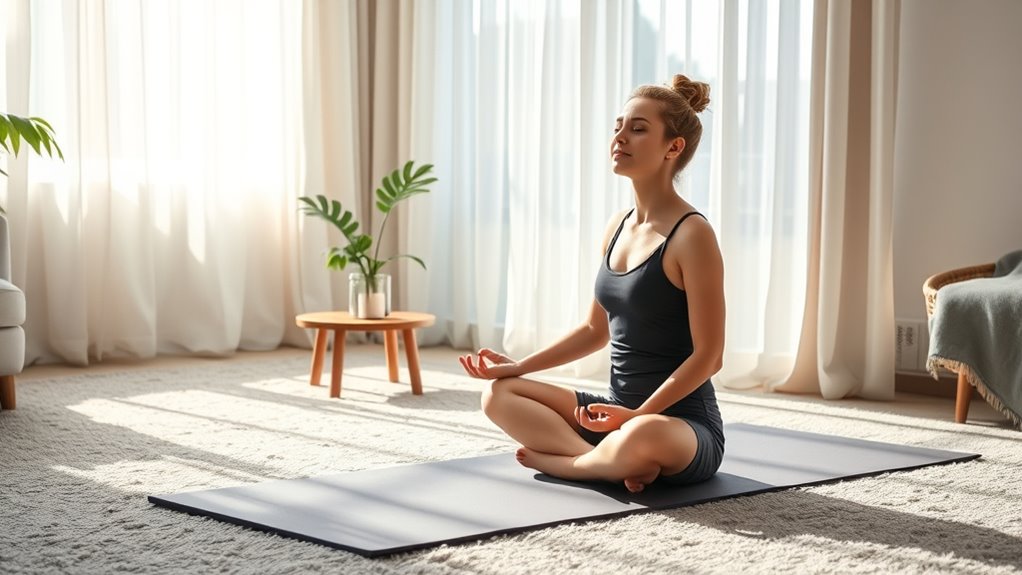

To practice pendulate to regulate at home, start by bringing your attention to your breath, taking slow, deliberate inhales and exhales to activate your calming nervous system. Next, notice physical sensations like tension or contact points without trying to change them, grounding yourself in your body. Then, shift focus to calming sensations such as your feet on the ground or warmth in your hands. Finally, sway your awareness between discomfort and safety, strengthening your emotional resilience. Continue with these steps to deepen your understanding and mastery.

Turn your quiet moments into listening time
- Thousands of audiobooks, podcasts and originals
- Listen on your phone, tablet or Echo — also offline
- Cancel anytime
Key Takeaways
- Begin by focusing on your breath with slow, deliberate inhales and exhales to activate relaxation.
- Gently observe bodily sensations, noting tension or discomfort without trying to change them.
- Shift attention to safe sensations, like contact points or warmth, to evoke calm and stability.
- Use breath to deepen connection to safety, inhaling calm and exhaling tension intentionally.
- Sway between discomfort and safety sensations, reinforcing emotional regulation and nervous system resilience.
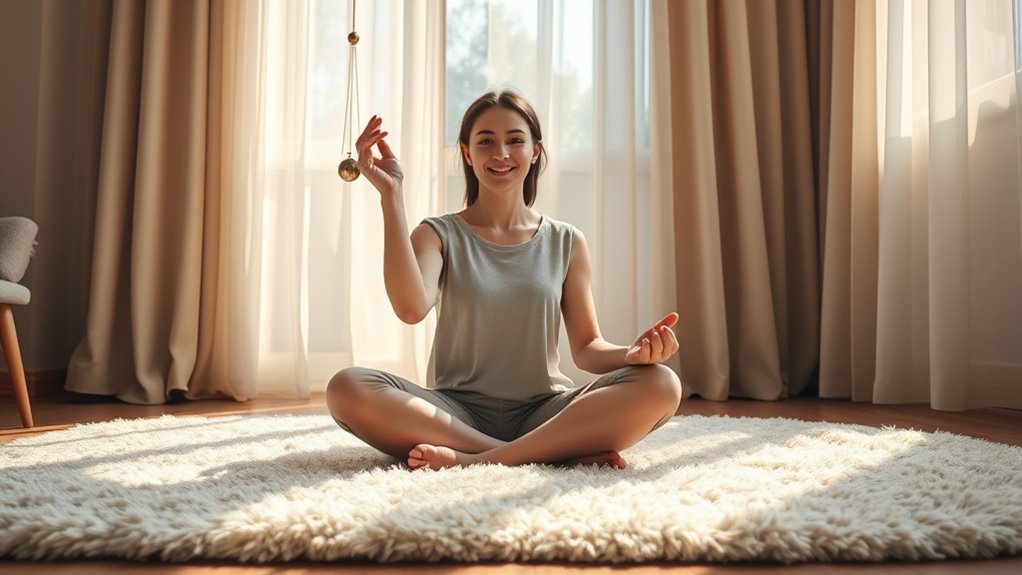
Have you ever wondered how to better manage intense emotions or stress? If so, pendulation offers a simple yet powerful way to regain balance. At its core, pendulation involves shifting your focus between feelings of discomfort and sensations of safety, helping your nervous system find calm. The process hinges on two key elements: breathing techniques and body awareness. By intentionally paying attention to your breath and bodily sensations, you can gently guide yourself through emotional turbulence and restore equilibrium.
Start by bringing your awareness to your body. Notice where you feel tension, tightness, or discomfort. Don’t try to change these sensations; simply observe them. As you do, incorporate breathing techniques to deepen your sense of control. Take slow, deliberate breaths—inhale deeply through your nose, filling your lungs, and exhale smoothly through your mouth or nose. This breath work helps activate your parasympathetic nervous system, which promotes relaxation. Focus on the rhythm of your breathing, allowing each inhale and exhale to anchor your attention. As you do this, become aware of the sensations in your body, such as the feeling of your chest rising and falling or the contact points where your body touches the chair or floor. This body awareness is essential because it creates a safe space within your body, providing a reference point when emotional waves threaten to overwhelm you. Incorporating grounding techniques like body awareness can further support emotional regulation.
Next, gently shift your attention to sensations that evoke a sense of safety or calm. These could be the feeling of your feet on the ground, the warmth of your hands, or the quiet rhythm of your breath. Use your breath to deepen this sense of safety—take a few slow, mindful breaths, imagining inhaling calm and exhaling tension. This deliberate focus on safe sensations helps you anchor yourself, creating a bridge between distress and calm. The idea is to pendulate, or sway, back and forth between feelings of discomfort and safety, helping your nervous system process emotions without becoming overwhelmed. With each cycle, you reinforce your capacity to self-regulate.
breath awareness meditation cushion
As an affiliate, we earn on qualifying purchases.
As an affiliate, we earn on qualifying purchases.
Frequently Asked Questions
How Long Should Each Pendulate Session Last?
When considering how long each pendulate session should last, it’s important to follow the duration guidelines that suit your comfort level. Typically, session length can range from a few seconds to a few minutes, depending on how you feel. Start with shorter durations, like 30 seconds to a minute, and gradually increase as you become more comfortable. Remember, the goal is to gently regulate your nervous system without overdoing it.
Can This Method Be Used for Children?
Imagine guiding a young knight through a quest—this is how you can use pendulate for children. Yes, it can work, but child engagement and parental guidance are key. Keep sessions brief, playful, and adaptable to their age. You must be patient and attentive, adjusting your approach as needed. This method helps children learn emotional regulation while feeling supported, turning a simple practice into a positive bonding experience.
Are There Any Contraindications or Risks Involved?
You should be aware of potential contraindications and risks involved with pendulate to regulate, especially for children. While generally safe, some safety precautions are necessary, such as avoiding the practice if your child has severe sensory or neurological issues, recent injuries, or emotional distress. Always consult a healthcare professional beforehand to guarantee safety, and monitor your child’s response closely to prevent any adverse effects.
How Often Should I Practice for Best Results?
Imagine gentle waves lapping at your shoreline—consistent, calming. For best results, practice pendulate to regulate daily or every other day, keeping sessions around 10-15 minutes. This frequency helps your nervous system adapt smoothly, like a steady tide. Stick with regular sessions, and over time, you’ll notice increased resilience and calm. Adjust as needed, but consistency truly anchors your progress and guarantees lasting benefits.
Does It Help With Specific Mental Health Conditions?
You might wonder if this practice helps with specific mental health conditions. It’s effective for anxiety relief and enhances mindfulness benefits by teaching you to regulate your nervous system. Regularly pendulating can reduce stress, improve emotional regulation, and support mental well-being. While it’s not a cure, it’s a valuable tool you can use alongside other treatments to manage symptoms and promote overall mental health.
As an affiliate, we earn on qualifying purchases.
Conclusion
As you pendulate through your practice, remember that each gentle sway mirrors life’s ebb and flow. Sometimes, you find yourself centered; other times, drifting. Embrace these shifts, for they’re no coincidence—they’re part of your natural rhythm. Just as pendulation brings balance, so too does your awareness bring harmony to your mind and body. Trust this subtle dance, knowing that in every movement, you’re aligning more deeply with your true self.
As an affiliate, we earn on qualifying purchases.
calming essential oils for stress relief
As an affiliate, we earn on qualifying purchases.
As an affiliate, we earn on qualifying purchases.
Fall Picks
fall essentials
As an affiliate, we earn on qualifying purchases.