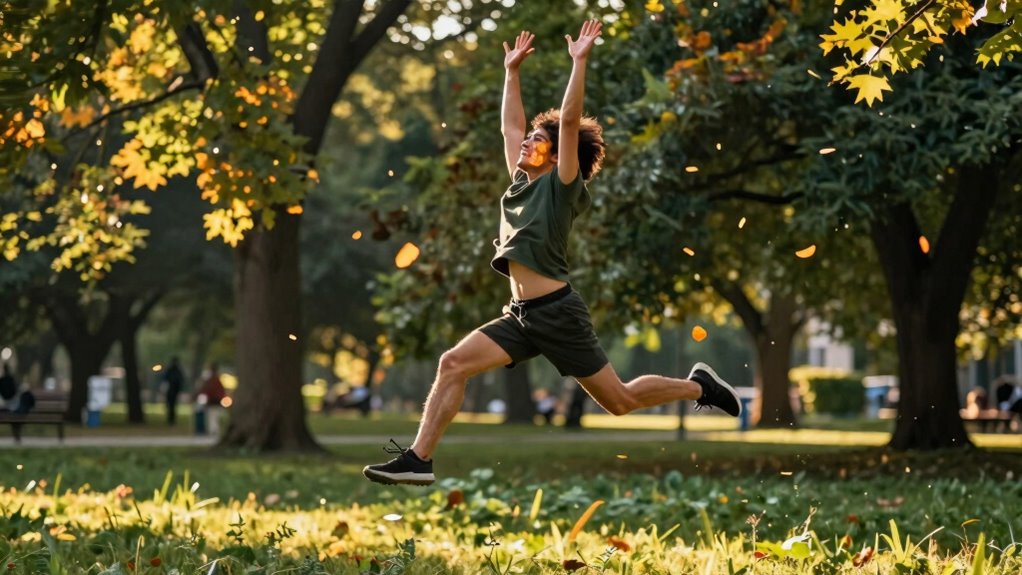

To complete a stress response and promote relaxation, engage in gentle, mindful movement like stretching, yoga, or slow dancing while focusing on deep, diaphragmatic breathing. Move intentionally, paying attention to sensations like muscle feel or breath rhythm, to help your nervous system shift from stress mode to calm. Synchronizing your breath with each movement helps release tension and signals safety to your body. Keep exploring how combining movement and breath can enhance your stress recovery.

Turn your quiet moments into listening time
- Thousands of audiobooks, podcasts and originals
- Listen on your phone, tablet or Echo — also offline
- Cancel anytime
Key Takeaways
- Engage in gentle, deliberate movements like stretching or yoga to help release muscle tension accumulated during stress.
- Incorporate slow, diaphragmatic breathing synchronized with movement to activate relaxation responses.
- Focus on sensory awareness—notice muscle sensations, breath rhythm, and ground contact to deepen relaxation.
- Use mindful movement to signal safety to the nervous system, aiding the transition from stress to calm.
- Regularly practice movement and breathing exercises to reinforce resilience and prevent chronic stress.
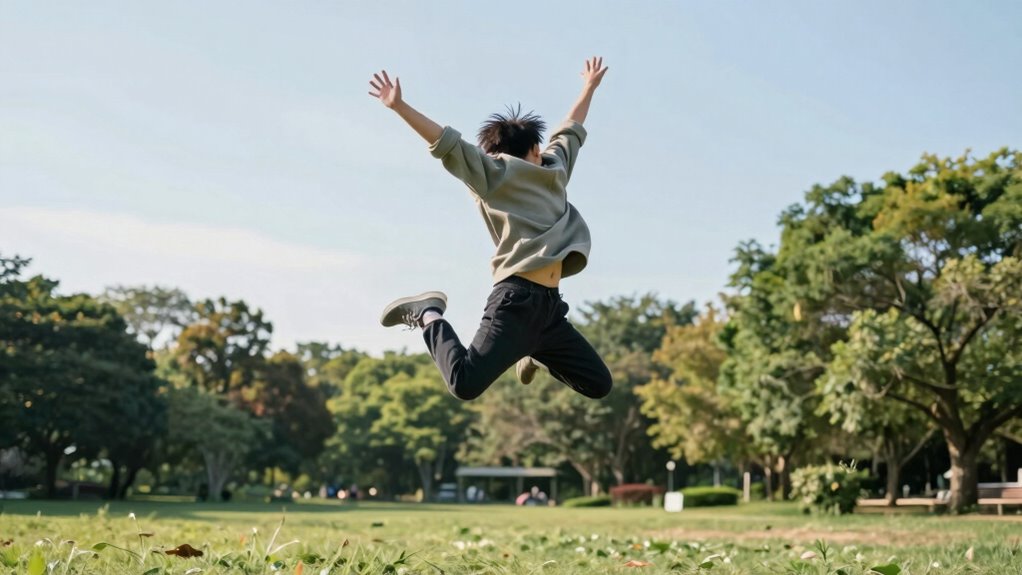
When you experience stress, your body initiates a natural response designed to prepare you to face or escape danger. This reaction, often called the fight-or-flight response, triggers a series of physiological changes: your heart rate increases, muscles tighten, and your breathing quickens. While these reactions are helpful in true emergencies, they can become problematic if they persist long after the threat has passed. To effectively complete this stress response, movement plays an essential role. Engaging in specific types of movement helps your body process the accumulated tension and signals your nervous system to return to a state of calm.
One of the most effective ways to facilitate this process is through breathing techniques. When you consciously focus on deep, diaphragmatic breathing, you activate your parasympathetic nervous system—the part responsible for relaxation. Slow, controlled breaths help lower your heart rate and reduce muscle tension, providing a calming effect on your entire body. As you breathe deeply, imagine inhaling peace and exhaling stress. This simple practice can serve as an anchor, grounding your awareness and encouraging your body to shift from the heightened stress state to a more relaxed one. Incorporating breathing techniques into movement routines, such as while walking or stretching, enhances their calming influence. For example, synchronize your breath with your steps, inhaling for a few strides, then exhaling for the same number. This rhythmic pattern not only promotes relaxation but also reinforces a sense of control over your body’s response.
Alongside breathing, relaxation exercises involving movement can help complete your stress response. Gentle activities like stretching, yoga, tai chi, or even slow dance allow your muscles to release the built-up tension from the fight-or-flight reaction. These movements should be smooth and deliberate, emphasizing mindfulness and awareness of your body. As you stretch and move, focus on sensations—how your muscles feel, the rhythm of your breath, the ground beneath your feet. This focus encourages your nervous system to switch from its stress mode to a state of calm. Additionally, natural healing practices such as mindful movement can support your overall resilience and well-being. Incorporating movement-based relaxation techniques like gentle stretching or slow walking can be particularly effective in calming the nervous system. Furthermore, understanding how to complete the stress response through movement can prevent stress from becoming chronic and improve your overall resilience.
In essence, movement—especially when paired with mindful breathing and relaxation exercises—serves as a bridge to complete your body’s stress response. It helps you process the physiological arousal, release tension, and reset your nervous system. By intentionally engaging in gentle, focused movement, you tell your body that it’s safe to relax, allowing you to recover more quickly from stressful episodes. Over time, this approach can become a fundamental part of managing stress, fostering a healthier, more balanced response to life’s inevitable challenges.
As an affiliate, we earn on qualifying purchases.
Frequently Asked Questions
Can Movement Alone Fully Resolve Chronic Stress?
Movement alone can’t fully resolve chronic stress, but it plays a crucial role in strengthening your mind-body connection and releasing tension. Incorporating varied movement intensities helps you process emotions and reduce stress more effectively. You need a holistic approach, including relaxation and mental practices, to truly manage chronic stress. Movement boosts your resilience, but it’s just one piece of the puzzle toward complete stress recovery.
Which Types of Movement Are Most Effective for Stress Release?
Mindful stretching and aerobic exercises are the most effective for stress release. When you practice mindful stretching, you focus on slow, deliberate movements that help calm your nervous system. Aerobic exercises, like running or cycling, boost endorphin levels and reduce tension quickly. Combining these two types of movement allows you to both relax and energize, helping your body complete the stress response and restore balance efficiently.
How Often Should I Incorporate Movement Into My Stress Management?
You should incorporate movement daily, but the timing matters. Imagine your breath deepening with every gentle stretch or mindful walk—this is when stress begins to melt away. Combining movement with breathing exercises and mindfulness practices intensifies this effect. Aim for at least once or twice a day, listening to your body’s cues. Regular movement turns stress into calm, making each session a essential part of your routine.
Are There Any Risks Associated With Using Movement to Complete a Stress Response?
Using movement to complete a stress response can be safe if you prioritize physical safety and injury prevention. You might risk strains or falls if you push too hard or choose high-impact activities without proper technique. To avoid injury, start with gentle movements, listen to your body, and gradually increase intensity. Always make certain your environment is safe, and consult a professional if you’re unsure about specific exercises.
Can Movement Help With Emotional or Mental Aspects of Stress?
Did you know that movement can considerably boost emotional release and mental clarity? You can use physical activity to process emotions and clear your mind, reducing stress’s mental toll. Moving intentionally helps you access feelings, release tension, and gain perspective, making it easier to cope. By incorporating movement into your routine, you support emotional well-being and achieve mental clarity, ultimately helping you manage stress more effectively.
diaphragmatic breathing exercise guide
As an affiliate, we earn on qualifying purchases.
As an affiliate, we earn on qualifying purchases.
Conclusion
By incorporating movement into your routine, you effectively complete your stress response, helping your body reset and recover. Did you know that just 20 minutes of brisk walking can markedly reduce cortisol levels? So, next time stress hits, move your body—whether it’s stretching, walking, or dancing. It’s a simple, powerful way to finish your stress cycle and restore balance, making you feel more relaxed and in control.
gentle stretching resistance bands
As an affiliate, we earn on qualifying purchases.
As an affiliate, we earn on qualifying purchases.
As an affiliate, we earn on qualifying purchases.
Fall Picks
fall essentials
As an affiliate, we earn on qualifying purchases.