

Movement and dance serve as powerful somatic healing tools that help you access, express, and release deep emotions and trauma through mindful, expressive motion. They enable you to reconnect with your body, bypassing rational defenses, and foster emotional release, stress reduction, and physical well-being. Engaging in these practices promotes body awareness and emotional balance. If you’re curious about how to incorporate movement into your healing journey, there’s more to uncover that can support your growth.
Key Takeaways
- Movement and dance facilitate emotional release and healing by enabling non-verbal expression and processing of stored trauma.
- Embodiment therapy uses mindful movement to reconnect with bodily sensations, promoting self-awareness and emotional integration.
- Expressive movement encourages authentic exploration, helping to dissolve emotional blocks and enhance body awareness.
- These practices improve physical health, resilience, and emotional balance, supporting recovery from stress, anxiety, and trauma.
- Movement and dance are accessible, active modalities that foster mind-body harmony and overall emotional well-being.
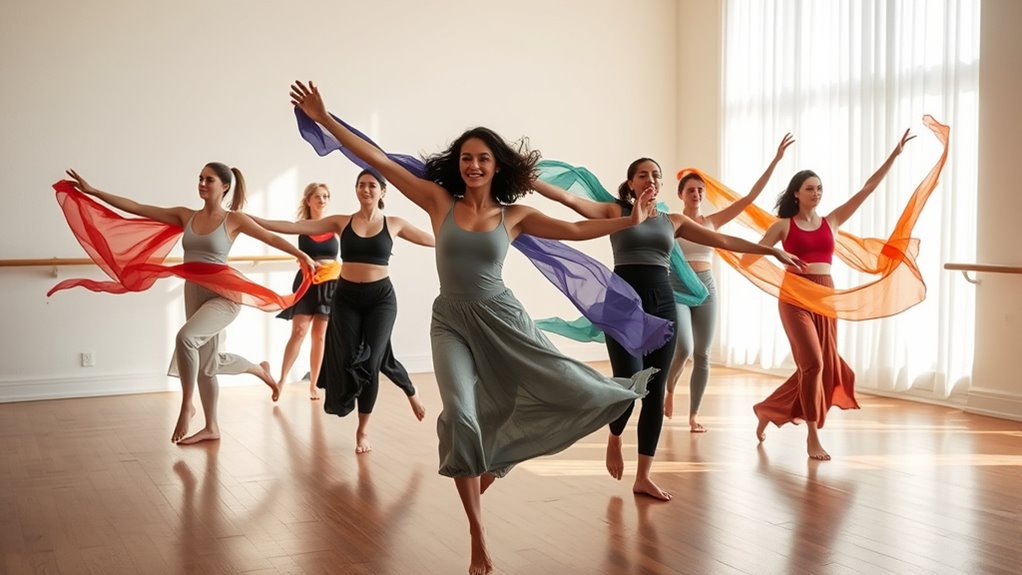
Movement and dance have long been recognized not just as forms of expression, but also as powerful tools for somatic healing. When you engage in these practices, you’re tapping into your body’s innate ability to process and release emotional and physical tension. Embodiment therapy, in particular, emphasizes reconnecting with your body’s sensations to foster healing. This approach invites you to pay close attention to how your body feels during movement, helping you access stored emotions and trauma that may be locked deep within your tissues. Through expressive movement, you can communicate non-verbally, allowing feelings that might be difficult to articulate with words to surface and be processed naturally.
In embodiment therapy, the focus is on cultivating awareness of your body’s signals—notice where tension, tightness, or discomfort reside. As you move deliberately and mindfully, you begin to establish a dialogue with your body, creating a safe space for emotional release and integration. This process can be especially beneficial for those suffering from stress, anxiety, or past trauma because it bypasses cognitive defenses and connects you directly to bodily sensations. You might find yourself shifting from simply thinking about your problems to physically embodying your feelings, which often leads to a clearer understanding of your emotional landscape.
Expressive movement plays a vital role in this healing journey. It encourages you to explore freely and authentically, without judgment or expectation. You might dance intuitively, allowing your body to lead, or follow structured movement sequences designed to access specific emotional states. As you do so, you’re not just moving your limbs—you’re engaging in a form of self-therapy that helps dissolve emotional blocks. This kind of movement helps you release stored tension, improve body awareness, and foster a sense of wholeness. It’s a process that empowers you to reconnect with your body’s wisdom, promoting resilience and emotional balance.
Additionally, engaging in movement and dance can enhance your connection with your spirituality, fostering a sense of purpose and inner peace. Ultimately, movement and dance serve as accessible, transformative tools for healing. Whether through embodiment therapy or expressive movement, you’re actively participating in your recovery. These practices help you listen to your body’s messages, process unresolved feelings, and restore harmony between your mind and body. By embracing movement as a healing modality, you harness the power of your own physicality to foster emotional well-being and overall health.
Frequently Asked Questions
Can Anyone Participate in Somatic Dance Therapy Regardless of Physical Ability?
Yes, you can participate in somatic dance therapy regardless of your physical ability. The practice encourages adaptive movement and inclusive dance techniques tailored to your needs. Instructors focus on creating a supportive environment where everyone feels comfortable, using gentle, accessible movements. Whether you have limited mobility or full range of motion, you can experience the benefits of somatic healing through personalized approaches that honor your unique abilities.
How Long Does It Typically Take to Notice Healing Benefits From Movement Practices?
You might notice healing benefits after a few sessions, but it really depends on your session duration and how consistently you practice. Usually, regular participation over several weeks helps your body and mind respond positively. The consistency benefits are key—they deepen your awareness and foster lasting change. Keep engaging in movement practices regularly, and you’ll likely see gradual improvements in your well-being and emotional resilience.
Are There Specific Types of Dance Most Effective for Somatic Healing?
Think of dance modalities and movement styles as keys to unlocking your healing potential. Certain styles like expressive dance, improvisational movement, or somatic dance are especially effective for somatic healing because they foster emotional release and body awareness. You’ll find that exploring different dance modalities can help you discover what resonates most deeply, allowing your body to heal and rebalance through the rhythmic flow of movement.
How Do Somatic Practices Differ From Traditional Psychotherapy?
Somatic practices focus on strengthening your mind-body connection, allowing you to access and process emotions through physical awareness. Unlike traditional psychotherapy, which mainly explores thoughts and feelings verbally, somatic approaches emphasize emotional release through movement and sensation. You actively engage your body to uncover stored tension or trauma, fostering healing from within. This hands-on method helps you connect deeper with your emotions, promoting holistic well-being and personal growth.
What Qualifications Should a Practitioner Have to Lead Somatic Dance Sessions?
Think of a practitioner as a guiding star, illuminating your healing journey. To lead somatic dance sessions, they should meet certification standards and possess strong therapeutic competencies, much like a seasoned conductor mastering their orchestra. They should have formal training in somatic modalities, dance therapy, or related fields, ensuring they understand body awareness and emotional regulation. Their credentials demonstrate their ability to create a safe, nurturing environment that fosters genuine healing.
Conclusion
You might think movement and dance are just for fun, but they secretly hold the power to heal your deepest wounds. Ironically, in shedding your worries through motion, you’ll find peace in chaos and strength in vulnerability. So next time you hesitate to dance it out, remember—those awkward steps could be the very therapy your soul’s been craving. Who knew that moving your body might just be the most honest form of healing you’ll ever do?