
Cultural perspectives on somatic healing emphasize holistic approaches rooted in spiritual and traditional practices. You’ll see methods that involve rituals, dancing, singing, and sacred plant use to restore balance between body, mind, and spirit. These practices often connect individuals with ancestors, natural forces, and community, viewing illness as a result of disharmony. By exploring these diverse ways, you can discover how healing extends beyond physical symptoms and touches every aspect of well-being. Keep exploring to uncover more fascinating insights.
Key Takeaways
- Indigenous somatic healing emphasizes restoring balance between mind, body, and spirit through rituals like dance, drumming, and sacred plant use.
- Cultural practices view illness as a result of spiritual or energetic disharmony, addressed via ceremonies and community participation.
- Healing methods are deeply rooted in tradition, passed through generations, and often involve symbolic objects and collective rituals.
- These practices aim to reconnect individuals with natural and spiritual forces, emphasizing holistic well-being over symptom treatment.
- Somatic healing across cultures highlights the importance of community, reverence, and spiritual guidance in restoring health and harmony.
Have you ever wondered how different cultures approach healing through the body? Across the globe, people have developed unique ways to restore health and balance, often rooted in deep traditions and spiritual beliefs. Indigenous practices, rituals, and ceremonies form a essential part of many societies’ approaches to somatic healing, emphasizing a holistic view that connects mind, body, and spirit. These practices are not just about treating symptoms but about addressing the root causes of imbalance within a person and their community. You might find that in some cultures, healing begins with rituals that invoke spiritual forces, ancestors, or natural elements, all aimed at restoring harmony.
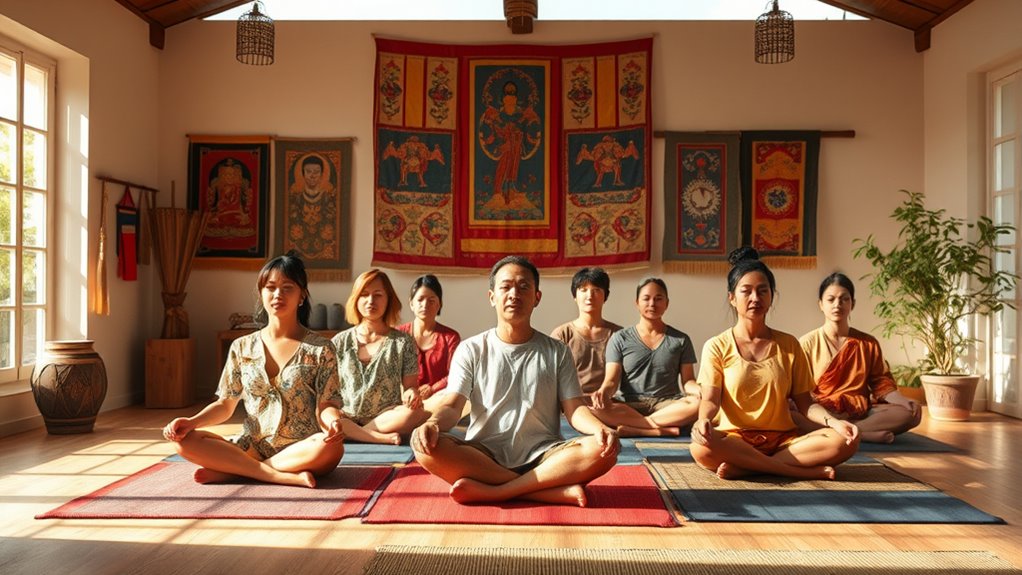
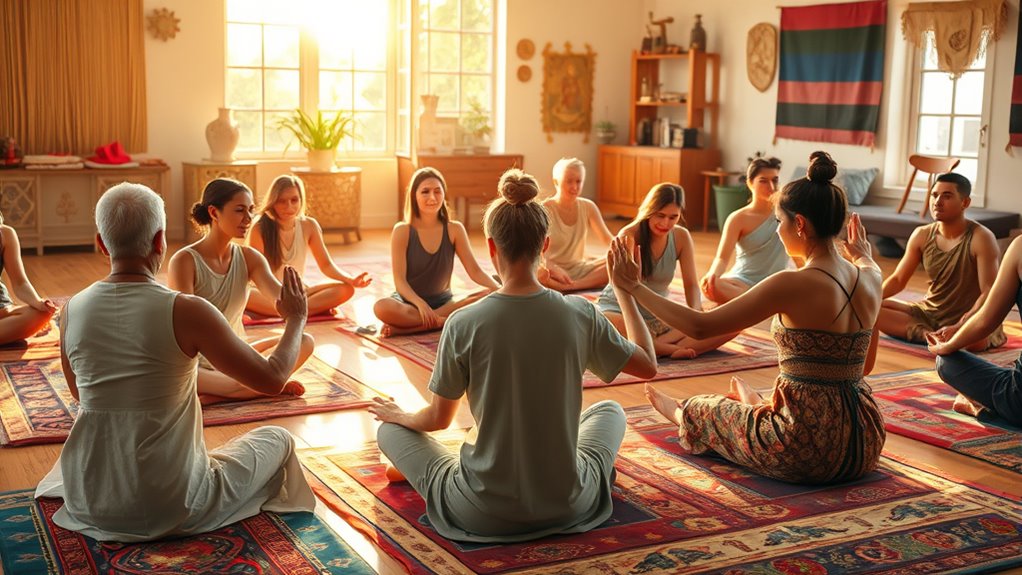
In many indigenous communities, healing rituals are performed with a profound sense of reverence and intention. For example, ceremonies may involve singing, dancing, drumming, or the use of sacred plants, all designed to create a sacred space for transformation. These rituals often serve multiple purposes: cleansing negative energies, inviting spiritual guidance, or releasing emotional burdens. The act of participating in these ceremonies is as much about community as it is about individual well-being. You might notice that the process engages the body directly—through movement, touch, or the use of symbolic objects—helping to release stored trauma and promote healing from within.
These indigenous practices often view illness as an imbalance or disharmony that can be corrected through ritual. The ceremonies are carefully crafted to realign the person’s energy with natural and spiritual forces. For example, some cultures perform healing dances that involve rhythmic movements, which are believed to activate the body’s innate healing abilities. Others might use the laying on of hands or the application of sacred medicines to facilitate physical and energetic restoration. Such rituals are deeply embedded in the cultural fabric, passed down through generations, and often involve a healer or shaman who acts as a conduit between the spiritual and physical worlds. Additionally, understanding the importance of color accuracy and visual harmony in presentations can be linked to the holistic perspective seen in these healing traditions, emphasizing balance and proper alignment.
You may also notice that these practices extend beyond the individual—integrating community participation and collective intent. This communal aspect reinforces the idea that healing is interconnected with social and spiritual well-being. By participating in these rituals, you’re not only engaging in a physical act but also reconnecting with the cultural roots and spiritual worldview that sustain the community’s health. Whether through ceremonies that honor nature, ancestors, or spiritual forces, indigenous practices remind us that healing isn’t solely about fixing what’s broken but about restoring balance in a holistic sense. They show that body, mind, and spirit are inseparable and that true healing often involves honoring that interconnectedness.
Frequently Asked Questions
How Do Different Cultures Define Somatic Healing?
Different cultures define somatic healing through cultural symbolism and healing narratives. You might see it as connecting with the body’s energy or spirit, rooted in traditions like Chinese acupuncture or Indigenous rituals. These healing stories emphasize harmony between mind, body, and environment, shaping how you approach recovery. By understanding these diverse perspectives, you can appreciate how cultural symbolism influences somatic practices, enriching your approach to holistic health.
What Traditional Practices Influence Somatic Healing Methods?
Traditional practices like acupuncture, yoga, and Ayurveda influence somatic healing by emphasizing the mind-body connection. You might engage in ritualistic therapies such as shamanic ceremonies or meditative practices that restore energetic balance. These methods focus on integrating physical sensations with mental awareness, helping you release trauma and promote healing. By incorporating these cultural practices, you deepen your understanding of how mind and body work together for holistic well-being.
Are There Cultural Taboos Related to Somatic Healing?
Did you know that in some cultures, up to 60% of people avoid somatic healing practices due to cultural stigmas? You might find ritual restrictions play a role, where certain communities see these methods as taboo or inappropriate. These cultural stigmas and ritual restrictions can prevent you from exploring somatic healing openly, making it challenging to access these beneficial practices. Overcoming these taboos requires respectful dialogue and cultural understanding.
How Do Cultural Beliefs Impact Somatic Healing Effectiveness?
Cultural beliefs substantially impact somatic healing effectiveness by shaping your attitude toward healing methods. If your culture has a strong cultural stigma around certain practices, you might feel hesitant or skeptical, which can hinder progress. Conversely, embracing traditional healing rituals can enhance your connection and trust, boosting outcomes. Recognizing and respecting these cultural influences allows you to approach somatic healing with openness, making the process more effective and meaningful.
Is Somatic Healing Accepted in Mainstream Medicine Across Cultures?
You might notice that somatic healing isn’t fully embraced everywhere in mainstream medicine, often due to medical skepticism. However, in some cultures, it’s seamlessly integrated as a valuable part of holistic care. While acceptance varies, more healthcare providers are exploring cultural integration and alternative approaches, gradually shifting perceptions. This openness helps bridge traditional practices with modern medicine, fostering a broader understanding and acceptance of somatic healing across different cultural landscapes.
Conclusion
You can see that different cultures have long recognized the power of somatic healing, often viewing the body as a gateway to emotional and spiritual well-being. While scientific evidence varies, many traditions demonstrate tangible benefits, suggesting that integrating somatic practices can enhance overall health. Embracing these diverse perspectives may not only deepen your understanding but also open new paths to healing, highlighting that the mind-body connection is a universally valuable concept worth exploring.