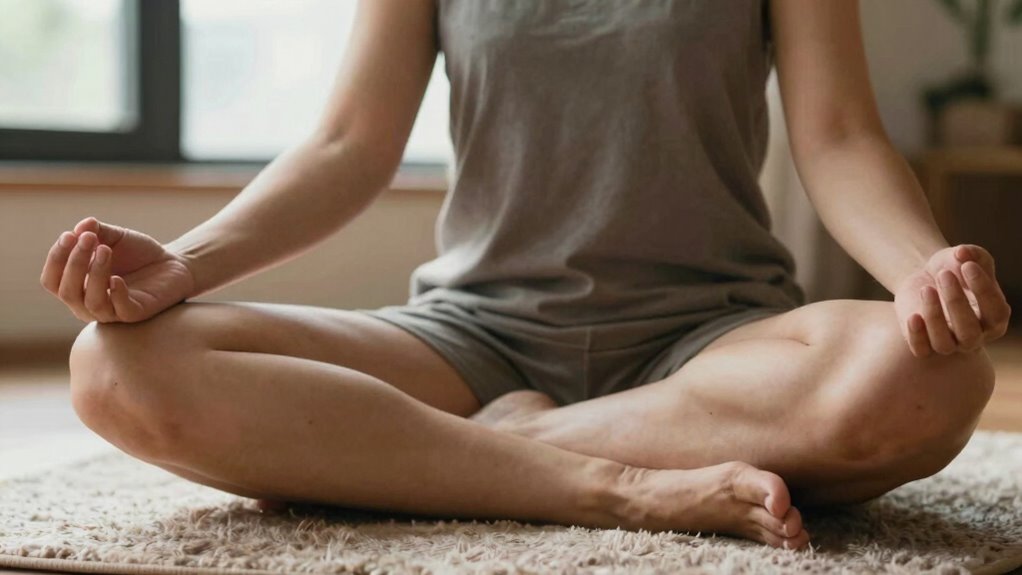

To use breathwork without forcing calm, focus on gently observing your natural breathing patterns without judgment or trying to control them. Notice whether your breath is shallow or deep, fast or slow, and accept these rhythms as they are. When your mind wanders, kindly bring your attention back to your breath, embracing curiosity instead of expectation. Practicing patience and trusting your body’s natural rhythm helps develop a peaceful state over time. Keep exploring, and you’ll discover more ways to deepen your mindfulness.

Turn your quiet moments into listening time
- Thousands of audiobooks, podcasts and originals
- Listen on your phone, tablet or Echo — also offline
- Cancel anytime
Key Takeaways
- Observe your natural breath without trying to change or control it.
- Gently redirect your attention back to your breath when your mind wanders.
- Approach breathwork with curiosity, focusing on exploration rather than achieving a specific feeling.
- Practice patience, trusting that calm develops gradually through consistent, non-judgmental awareness.
- Accept your current breath pattern without judgment, supporting a relaxed and gentle practice.
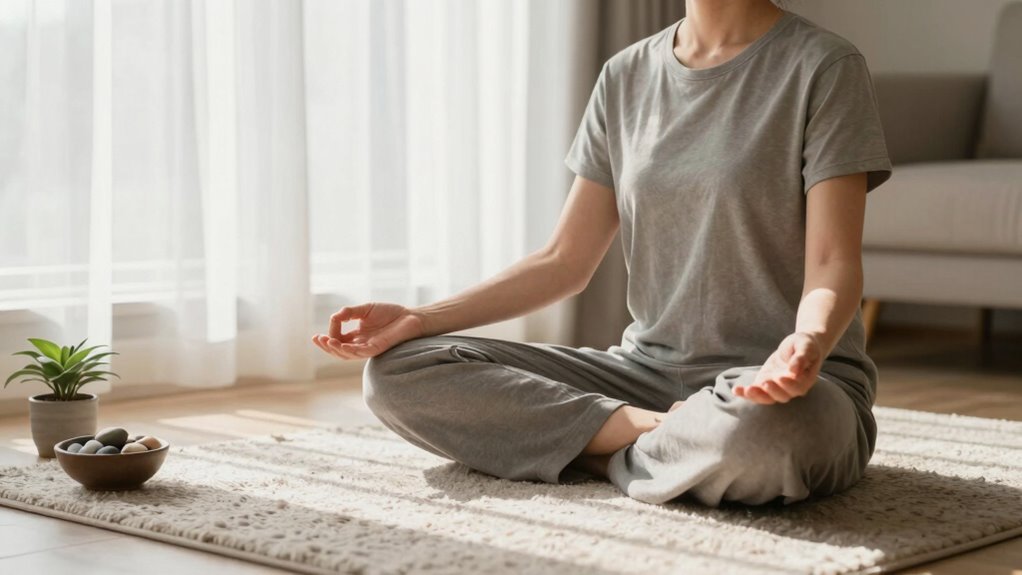
Breathwork can be a powerful tool for managing stress and anxiety, but it’s easy to fall into the trap of trying to force a sense of calm. When you approach breathwork with the goal of instant relaxation, you might find yourself feeling more tense or frustrated. Instead, focus on cultivating mindful awareness during your practice. This involves paying close attention to your breath without judgment or expectation, allowing you to observe your natural breathing patterns. By simply observing your breath, you allow yourself to become more aware of your current state without needing to change it immediately.
Focus on observing your breath without judgment to cultivate calm and awareness in your practice.
Breath awareness is the foundation of effective breathwork. Rather than trying to control or manipulate your breathing, start by noticing how you breathe naturally. Is your breath shallow or deep? Fast or slow? Do you tend to hold your breath in certain moments? Recognizing these patterns gives you a clearer picture of your body’s response to stress and helps you stay present. Remember, the goal isn’t to force a specific breathing pattern but to observe what’s happening in the moment. Incorporating a sense of mindful observation can deepen your understanding of your breathing process. Additionally, understanding the different types of home security options, like smart features and battery backups, can help you create a safe environment that supports your overall well-being.
As you practice, keep your focus on your breath without trying to alter it. If your mind wanders or you feel the urge to “fix” your breathing, gently bring your attention back to breath awareness. This act of returning your focus isn’t a failure; it’s a key part of developing mindful awareness. Over time, this non-judgmental approach supports the development of self-regulation and enhances your connection to your body. Developing a non-judgmental attitude helps you build a more compassionate relationship with your breath and your body, reducing the tendency to push for immediate calm. Recognizing the natural rhythms of your breath can also help you develop greater mindful awareness, which is essential for sustainable stress management.
It’s also helpful to approach breathwork with curiosity rather than expectation. Instead of telling yourself, “I must feel relaxed now,” try, “I’m noticing how I breathe right now.” This shift in mindset can reduce pressure and make the practice more accessible. When you release the need to force calm, breathwork becomes a gentle exploration of your inner experience, not a task to conquer.
Finally, remember that breathwork is a skill that develops over time. You won’t always experience immediate relief, and that’s okay. By practicing mindful awareness and breath awareness without judgment, you create a space where genuine calm can naturally emerge. Developing a mindful breathing practice can help you cultivate patience and trust in your body’s natural ability to find balance, without the stress of trying to force it. Through patience and gentle observation, you allow your breath to guide you toward a more centered, peaceful state—without the stress of trying to force it.
mindfulness breathwork meditation cushion
As an affiliate, we earn on qualifying purchases.
As an affiliate, we earn on qualifying purchases.
Frequently Asked Questions
Can Breathwork Be Effective During High-Stress Moments?
Yes, breathwork can be effective during high-stress moments. When you focus on deep, intentional breathing, you activate your body’s relaxation response, which aids in stress reduction and enhances mental clarity. You don’t need to force calm—just take slow, steady breaths, emphasizing inhalation and exhalation. This simple technique helps you regain control, reduces anxiety, and clears your mind, making it easier to handle stressful situations with composure.
What Are Common Mistakes to Avoid When Practicing Breathwork?
You should avoid common mistakes like forcing your breathing or rushing through techniques, which can increase tension instead of promoting relaxation. Focus on gentle, natural breathing and stay present with your sensations. Don’t hold your breath or breathe too shallowly, as this hinders relaxation strategies. Instead, practice slow, steady breaths using simple breathing techniques to help calm your mind and body without added stress.
How Long Should Each Breathwork Session Last for Best Results?
Research suggests that 10 to 20-minute sessions are most effective for beginners, balancing benefits without overwhelm. You should focus on proper breathhold timing—pausing comfortably between inhales and exhales—to deepen relaxation. Create a calming session environment with quiet, comfortable surroundings, free from distractions. Shorter, consistent sessions help your body adapt gradually, making breathwork a sustainable, calming practice that enhances your overall well-being without forcing calm prematurely.
Is Breathwork Suitable for People With Respiratory Conditions?
Breathwork can be suitable for people with respiratory conditions if you prioritize respiratory safety and adapt your practice accordingly. You should start with gentle techniques, avoid overexertion, and listen to your body’s signals. Consulting your healthcare provider is essential. Adjust your breathwork to accommodate your needs, focusing on comfort and gradual progress. Proper adaptation helps manage symptoms without risking overtaxing your respiratory system.
How Do I Know if My Breathwork Practice Is Working?
Ever wonder if your breathwork is effective? You’ll notice progress through increased breath awareness and mindful inhaling, feeling more relaxed and centered over time. Your breathing may become deeper, more natural, and less forced. Pay attention to your emotional and physical responses—if you feel calmer and more focused, your practice is working. Remember, consistency matters; with regular practice, these positive changes will become more noticeable.
natural breath awareness meditation tools
As an affiliate, we earn on qualifying purchases.
As an affiliate, we earn on qualifying purchases.
Conclusion
Remember, breathwork isn’t about forcing calm but allowing it to emerge naturally. When you let go of the pressure to control every breath, you create space for genuine relaxation. Did you know that studies show mindful breathing can reduce stress levels by up to 40%? So, be patient with yourself, breathe authentically, and trust the process. Calmness will come when you stop forcing it and simply breathe.
guided breath awareness meditation audio
As an affiliate, we earn on qualifying purchases.
As an affiliate, we earn on qualifying purchases.
As an affiliate, we earn on qualifying purchases.
Fall Picks
fall essentials
As an affiliate, we earn on qualifying purchases.