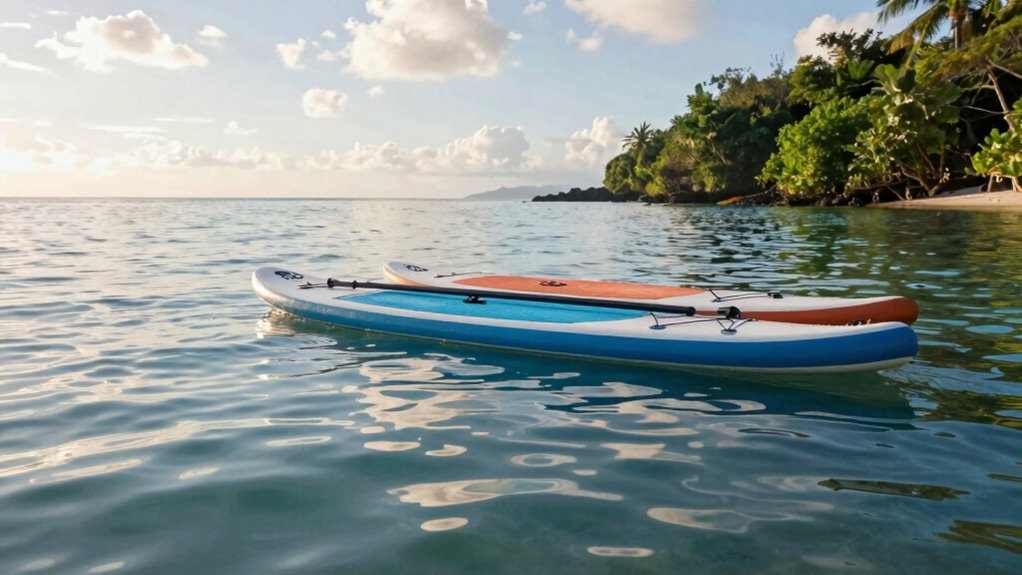

Paddleboarding on quiet waters offers a peaceful escape where you can focus on your surroundings and find mindfulness. As you glide smoothly, you’ll appreciate the gentle ripples and stillness that help you feel more connected to nature. Good balance and safety make the experience even more relaxing. If you’re curious about how water movement enhances this serenity, keep exploring—there’s more to discover about embracing these tranquil moments.

Turn your quiet moments into listening time
- Thousands of audiobooks, podcasts and originals
- Listen on your phone, tablet or Echo — also offline
- Cancel anytime
Key Takeaways
- Paddleboarding on calm water offers a peaceful, meditative experience emphasizing serenity over vigorous activity.
- The gentle movement of still water enhances mindfulness and deepens the connection with nature.
- Balance techniques on quiet waters promote stability and foster a sense of inner calm.
- Slow water movement allows for mindful observation of surroundings, including wildlife and reflections.
- The tranquility of calm waters creates an ideal environment for relaxation, stress relief, and water safety.

Have you ever wondered how paddle boarding offers a peaceful escape on calm waters? As you step onto your board and push away from the shore, you begin to realize that this activity isn’t just about physical movement—it’s about finding serenity amid gentle ripples. To fully enjoy the experience, mastering balance techniques is essential. You’ll want to keep your core engaged, look straight ahead, and distribute your weight evenly across the board. This helps you stay steady, especially when the water is perfectly still yet subtly shifting beneath you. With practice, maintaining your balance becomes second nature, allowing you to focus on the calming surroundings rather than fighting instability. It’s a mindful practice that connects you to the water and enhances your overall sense of peace. Developing good water safety habits is equally crucial for a secure and relaxing paddleboarding session.
Master your balance, stay centered, and embrace serenity on calm waters with mindful paddleboarding techniques.
Water safety plays a vital role in making your paddleboarding experience both enjoyable and secure. Before heading out, you should always check the weather and water conditions. Calm, clear days are ideal for beginners, as they reduce the risk of unexpected currents or wind disturbances. Wearing a life jacket isn’t just a legal requirement in many areas—it’s a smart safety precaution that gives you confidence, especially if you’re new to the sport. Knowing how to fall safely and get back onto your board is equally important. Practicing these safety measures ensures that your time on the water remains relaxing rather than stressful, letting you focus on the quiet beauty surrounding you. Additionally, understanding water quality can help you avoid paddling in areas with pollutants or algae blooms, further ensuring a safe experience. Being aware of local conservation efforts can also help you protect the environment and maintain the water quality for future paddlers. Maintaining awareness of water conditions can help you adapt quickly to changing environments, further enhancing your safety.
As you paddle across tranquil waters, the rhythmic motion becomes almost meditative. You notice small details—how the sunlight dances on the surface, the gentle splash of water with each stroke, and the distant call of birds. With proper balance techniques, you can glide smoothly and stay centered, even when minor waves appear. This stability allows you to breathe deeply and enjoy the stillness fully, turning your paddleboarding session into a form of active meditation. When you prioritize water safety, you’re able to relax and immerse yourself in this peaceful environment without concern. Whether you’re paddling alone or with friends, these essentials empower you to connect more deeply with both the water and yourself. Practicing responsible conservation practices ensures that these peaceful waterways remain healthy and vibrant for everyone to enjoy.
Products Worth Considering

Withings Body Scan Smart Scale with Segmental Body Composition and ECG, Black

Oral-B iO5 Rechargeable Electric Toothbrush with 5 Cleaning Modes and Travel Case, White

Philips Sonicare ProtectiveClean 5300 Rechargeable Electric Toothbrush with 3 Brush Heads, Black
As an affiliate, we earn on qualifying purchases.
Frequently Asked Questions
What Are the Best Paddle Boards for Beginners?
You should choose a beginner-friendly paddleboard like an inflatable or all-around board. These paddleboard types offer stability and are easy to handle, perfect for learning beginner techniques. Look for a board with a wide, stable shape and moderate length to improve balance. With the right board, you’ll gain confidence quickly, making your first paddling experiences enjoyable and safe. Prioritize stability and ease of use to jumpstart your paddleboarding journey.
How Do I Maintain My Paddle Board?
Imagine your paddle board resting smoothly on a rack, sunlight dancing on its surface. To maintain it, regularly clean it with fresh water and mild soap, avoiding harsh chemicals. Store your paddle board in a cool, shaded area to prevent sun damage. Proper paddle board storage and consistent cleaning keep it in top shape, ensuring smooth glides and lasting durability, so you can enjoy peaceful paddling adventures whenever you want.
Can Paddle Boards Be Used in Saltwater?
Yes, you can use paddle boards in saltwater, but you should consider saltwater durability. Rinse your board with fresh water after each use to prevent corrosion, and check for any damage. Be mindful of marine life interactions—avoid disturbing wildlife and steer clear of protected areas. Proper maintenance guarantees your paddle board remains in good condition, allowing you to enjoy saltwater adventures safely and responsibly.
What Safety Gear Is Recommended for Paddleboarding?
You should always wear a life jacket and use a leash for safety while paddleboarding. A life jacket keeps you afloat if you fall into the water, and a leash guarantees your board stays close, preventing it from drifting away. These safety gear essentials help protect you from unexpected situations, especially on quiet water where help may not be immediately available. Prioritize your safety for a fun and secure paddleboarding experience.
How Do Weather Conditions Affect Paddleboarding?
Weather impacts your paddleboarding experience considerably. Wind can make balancing tricky and cause choppy water, while storms bring dangerous conditions you should avoid. Water temperature affects your safety and comfort—cold water increases hypothermia risk if you fall in, so wear appropriate gear. Sunny, calm days are ideal, but always check forecasts and water conditions beforehand to guarantee a safe, enjoyable paddleboarding adventure.
Conclusion
Paddleboarding offers a peaceful escape, allowing you to connect with nature and enjoy the calmness of quiet waters. Studies show that over 80% of paddleboarders report reduced stress levels after their sessions. As you glide across tranquil lakes or gentle rivers, you not only experience physical benefits but also find mental clarity. Embrace the serenity and let the soothing movement of water refresh your mind and spirit, making every paddle a rejuvenating journey.