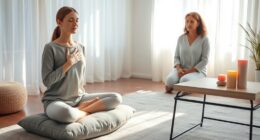
Engaging in mindful movement like yoga, dance, and walking meditation helps you stay present and regulate emotions. As you focus on your breath, sensations, and intentional actions, you’ll deepen awareness of your body and thoughts. Moving mindfully prevents rushing and fosters patience, connecting you to the moment. Incorporating these practices can enhance your overall well-being. To discover how to integrate movement into your mindfulness routine, explore further insights on these powerful approaches.
Key Takeaways
- Movement practices like yoga, dance, and walking meditation deepen present-moment awareness through mindful breathing and physical sensations.
- Coordinating breath with movement enhances flow, sensory perception, and emotional regulation during practice.
- Mindful movement fosters patience, reduces stress, and helps integrate mindfulness skills into daily life.
- Dance as moving meditation encourages expressive awareness, emotional release, and creative presence.
- Walking meditation promotes accessibility, grounding, and sustained attention to body and environment.

Have you ever wondered how movement can enhance your mindfulness practice? Engaging in activities like yoga, dance, or walking meditation can deepen your connection to the present moment in ways that sitting still might not achieve. When you incorporate mindful breathing into movement, you become more attuned to your body’s sensations and your breath’s natural rhythm. This heightened body awareness helps anchor your attention, making it easier to stay present and cultivate a sense of calm. Instead of rushing through movements, focus on each inhale and exhale, noticing how your body responds to the flow of breath. This practice not only grounds you but also sharpens your ability to observe your physical and emotional states without judgment.
Movement deepens mindfulness by enhancing body awareness and cultivating calm through focused breath and present-moment attention.
In yoga, for example, mindful breathing becomes the bridge between your mind and body. As you move through poses, you learn to coordinate your breath with your movements, fostering a sense of fluidity and ease. Each stretch, twist, or balance pose is an opportunity to tune into how your body feels in that moment. You might notice tension in your shoulders or a gentle stretch in your hamstrings, but instead of resisting or rushing, you simply observe these sensations. This awareness cultivates a non-reactive attitude that extends beyond your practice, helping you approach daily life with greater presence and patience.
Dance offers another powerful way to cultivate mindfulness through movement. When you dance mindfully, you allow your body to express freely, paying close attention to how each movement feels. You might focus on the sensation of your feet hitting the ground or the way your arms move through space. By staying present with these sensations, you create a meditative experience that releases mental clutter and encourages creativity. Moving with awareness in dance can also help you process emotions, as your body naturally releases tension and stored feelings. It becomes a form of moving meditation, where your attention remains rooted in body awareness and mindful breathing, making each dance session both a physical and mental practice.
Walking meditation is perhaps the simplest yet most accessible way to incorporate mindfulness into movement. As you walk slowly and deliberately, pay attention to the sensation of your feet making contact with the ground, the rhythm of your breath, and the environment around you. With each step, you cultivate a gentle focus on your body’s motion and the present moment. This practice encourages you to slow down, observe your surroundings, and connect with your body’s natural rhythm. Over time, walking meditation helps you develop a steady awareness that can be carried into everyday activities, fostering a sense of mindfulness that extends beyond your practice sessions.
Frequently Asked Questions
How Do I Choose the Right Movement Practice for My Needs?
To choose the right movement practice, assess your movement compatibility by considering your physical abilities and personal preferences. Think about what energizes or relaxes you, and how much time you can dedicate. Practice customization is key—try different activities like yoga, dance, or walking meditations to see what feels best. Listen to your body, and select a practice that aligns with your goals, ensuring it’s enjoyable and sustainable.
Can Beginners Easily Incorporate Mindfulness Into Physical Activities?
Can beginners easily incorporate mindfulness into physical activities? Absolutely, but it can be tricky at first. You might face mindfulness challenges like staying present or avoiding distractions. Start small with beginner tips like focusing on your breath, observing sensations without judgment, and practicing patience. As you gradually build awareness, you’ll find it becomes natural to blend mindfulness into your movement, transforming exercise into a calming, enriching experience.
What Are the Mental Health Benefits of Combining Movement and Mindfulness?
By combining movement and mindfulness, you can experience significant mental health benefits like stress reduction and increased emotional resilience. As you focus on your breath and body sensations during activities like yoga or walking meditations, you’ll find it easier to manage daily stress and stay calm under pressure. This practice helps you build emotional strength, stay present, and improve overall mood, making it easier to navigate life’s challenges.
How Long Should I Practice Each Movement or Meditation Session?
You should aim for session lengths that fit your schedule and comfort level, typically 10 to 30 minutes per movement or meditation. Follow duration guidelines that suggest starting with shorter sessions and gradually increasing as you become more experienced. Consistency matters more than length, so prioritize regular practice. If you’re new, even 5-minute sessions can be beneficial, eventually building up to longer, more focused practice times.
Are There Specific Times of Day Best Suited for Mindfulness Movement Practices?
Think of your day as a garden, and timing optimization as the watering schedule. The best times for mindfulness movement practices are early mornings or late evenings when your mind is calm and routines are steady. Integrate these sessions into your daily routines to nurture consistency. Whether dawn or dusk, choosing a time when your mind is most receptive helps deepen your practice and enhances overall well-being.
Conclusion
By embracing movement and mindfulness, you open yourself to a world where each step, stretch, or breath becomes a chance to reconnect. Whether you’re flowing through yoga, dancing freely, or walking with purpose, you’re planting seeds of presence that flourish over time. Remember, it’s not just about the destination but enjoying the journey along the way. So, take the leap—sometimes, you’ve got to dance in the rain to find your own sunshine.