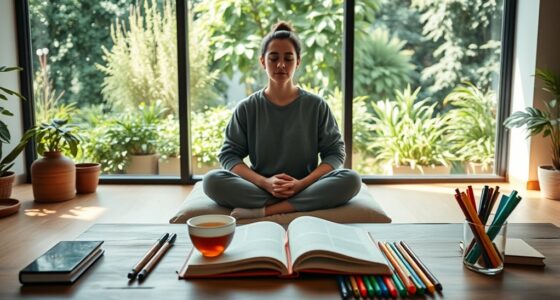
To reduce anxiety, try incorporating mindfulness meditation and breathing exercises into your daily routine. Focus on your breath, sensations, or sounds in your environment to stay present and grounded. Use slow, deliberate breaths—inhale for four seconds, hold, then exhale for six seconds—to calm your nervous system. Consistent practice helps you handle stress with more ease and build resilience. Keep exploring these techniques to discover their full benefits for your mental well-being.
Key Takeaways
- Mindfulness meditation enhances awareness of thoughts and feelings, helping reduce anxiety by promoting non-judgmental present-moment focus.
- Breathing exercises, like slow inhalation and prolonged exhalation, activate the relaxation response to lower stress levels.
- Regular practice of mindfulness and breathing techniques builds resilience, making it easier to manage daily anxiety triggers.
- Incorporating these techniques into daily routines fosters emotional regulation and long-term mental well-being.
- Consistent application of mindfulness and breathing strategies provides portable tools for immediate anxiety relief anytime.

Have you ever wondered how to better handle the daily stresses of life? If so, you’re not alone. Stress can feel overwhelming at times, but simple techniques like mindfulness meditation and breathing exercises can make a big difference. These tools help you stay present and grounded, reducing anxiety and improving your overall well-being. The key is learning how to incorporate them into your daily routine effectively. Incorporating evidence-based insights can further enhance your stress management strategies.
Struggling with daily stress? Simple mindfulness and breathing techniques can help you stay calm and centered.
Mindfulness meditation is a powerful way to cultivate awareness of your thoughts and feelings without judgment. When you practice mindfulness, you intentionally focus on the present moment—whether it’s your breath, sensations in your body, or sounds around you. This practice trains your mind to become more resilient to stress, preventing worries about the past or future from taking over. To start, find a quiet space where you won’t be disturbed. Sit comfortably, close your eyes if you prefer, and simply pay attention to your breath. Notice the sensation of air entering and leaving your body. If your mind wanders, gently bring your focus back to your breath. Even just five minutes a day can help you feel calmer and more centered.
Breathing exercises are another effective way to manage stress quickly. When you feel overwhelmed, taking slow, deliberate breaths can send signals to your nervous system that it’s safe to relax. Try inhaling deeply through your nose for a count of four, holding your breath for a count of four, then exhaling slowly through your mouth for a count of six. Repeat this cycle several times. This type of controlled breathing activates your parasympathetic nervous system, which promotes relaxation. You can do breathing exercises anytime—whether you’re at work, stuck in traffic, or before bed. They’re simple, portable, and can be incredibly effective in calming your mind and reducing anxiety.
The beauty of these techniques is that they don’t require special equipment or significant time investment. With consistent practice, mindfulness meditation and breathing exercises become powerful tools that you carry with you throughout the day. Over time, you’ll notice an increased ability to handle stressful situations with greater ease and clarity. You’ll also develop a deeper understanding of your emotional responses, which allows you to respond more thoughtfully rather than react impulsively. By making these practices part of your routine, you’ll create a foundation for managing stress more effectively, leading to a healthier, more balanced life.
Top picks for "mindfulnes stres management"
Open Amazon search results for this keyword.
As an affiliate, we earn on qualifying purchases.
Frequently Asked Questions
Can Mindfulness Practices Replace Medication for Anxiety?
Meditation versus medication isn’t a one-size-fits-all answer; mindfulness can considerably reduce anxiety, but it may not fully replace pharmaceuticals for everyone. You might find that mindfulness vs pharmaceuticals works best when used together, especially for severe anxiety. While mindfulness practices help manage stress, medication can provide quicker relief for some. Always consult a healthcare professional to determine whether mindfulness alone suffices or if medication is necessary for your situation.
How Long Does It Take to See Stress Reduction Results?
You might start noticing stress reduction within a few days to a few weeks, but timing expectations vary based on your consistency and practice. Progress indicators include feeling calmer, less overwhelmed, and more present during daily activities. Keep in mind that regular mindfulness exercises build over time, so patience is key. As you stick with it, you’ll likely experience steady improvements, with noticeable benefits emerging as your practice becomes routine.
Are There Specific Mindfulness Techniques for Severe Anxiety?
You can definitely use specific mindfulness techniques like breathing exercises and a body scan to manage severe anxiety. These methods help calm your nervous system and increase awareness of your physical sensations. Breathing exercises focus on slow, deep breaths to reduce panic, while a body scan guides you through relaxing each muscle group. Practicing regularly can build resilience, making it easier to handle intense moments of anxiety.
Can Children Benefit From Mindfulness for Stress Management?
Yes, children can benefit from mindfulness for stress management. It supports their child development by helping them regulate emotions and improve focus. You play a crucial role by practicing mindfulness with your child and providing a supportive environment. Engaging in simple activities like breathing exercises or guided imagery can reduce their anxiety, strengthen emotional resilience, and promote overall well-being. Your involvement makes mindfulness more effective and accessible for your child’s growth.
Is Mindfulness Effective for Long-Term Stress Prevention?
Think of mindfulness as planting seeds in your mental garden; with sustained practice, those seeds grow into strong, resilient trees that guard you against future storms. Yes, mindfulness is effective for long-term stress prevention, but only with consistent effort. Its long-term benefits blossom when you nurture your practice daily, helping you build a calm, steady foundation that withstands life’s inevitable turbulence, turning stress into a passing shadow.
Conclusion
Practicing mindfulness can markedly reduce your stress levels, helping you feel calmer and more focused. Did you know that studies show mindfulness can decrease anxiety by up to 30%? By incorporating simple techniques like deep breathing and meditation into your daily routine, you can manage stress more effectively. Start today—you’ll notice a difference in your mood and overall well-being. Remember, small consistent steps lead to lasting change.