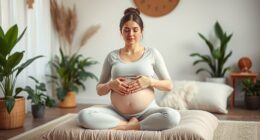

To find calm through mindful breathing, start by sitting comfortably and taking slow, deep breaths through your nose. Focus on the rhythm and sensation of each inhale and exhale, maybe using a pattern like inhaling for four counts, holding for four, then exhaling for four. Try placing a hand on your belly to feel it rise and fall. Regular practice sharpens your ability to relax during stressful moments, and if you keep exploring, you’ll discover even more calming techniques.
Key Takeaways
- Practice rhythmic breathing: inhale, hold, exhale for four counts to promote calmness.
- Use diaphragmatic breathing by focusing on belly expansion to activate relaxation responses.
- Find a comfortable position, close eyes if preferred, and pay attention to breath sensations.
- Gently redirect focus if the mind wanders, maintaining non-judgmental awareness.
- Incorporate regular mindful breathing to build resilience and manage stress effectively.

Mindful breathing exercises are simple yet powerful tools you can use to reduce stress and improve mental clarity. When you focus on your breathing patterns, you create an anchor that helps you stay present and centered, even during hectic moments. These exercises are a form of relaxation techniques that require nothing more than your attention and breath, making them accessible anytime and anywhere. By intentionally controlling how you breathe, you can influence your nervous system, shifting from a state of tension to one of calm.
Practicing mindful breathing helps you stay present, reduce stress, and foster calmness anywhere through simple, attention-focused techniques.
As you begin practicing mindful breathing, start by finding a comfortable position—sit upright with your shoulders relaxed or lie down if preferred. Close your eyes if you like, and take a slow, deliberate inhale through your nose. Feel the air fill your lungs, expanding your chest and abdomen. Then, exhale gently through your mouth or nose, releasing tension with each breath. Pay close attention to your breathing patterns—notice the rhythm, the depth, and the sensation of air moving in and out of your body. This awareness is key to the effectiveness of relaxation techniques that involve mindful breathing.
One effective breathing pattern involves inhaling for a count of four, holding the breath for a count of four, then exhaling for a count of four. This rhythmic pattern encourages your body to relax and helps regulate your nervous system. As you repeat this cycle, focus on the sensation of air entering and leaving your body. If your mind wanders, gently bring your focus back to your breath without judgment. Over time, these structured breathing patterns can become a go-to relaxation technique, helping you manage stress more effectively.
Another technique is to practice diaphragmatic or belly breathing, which emphasizes deep breaths that expand your diaphragm. Place one hand on your chest and the other on your abdomen. Breathe in slowly through your nose, allowing your belly to rise as you fill your lungs completely. Exhale slowly, feeling your belly fall. This type of breathing promotes relaxation by activating your parasympathetic nervous system, which counters the effects of stress hormones. Incorporating such breathing techniques into your daily routine can remarkably improve your overall sense of well-being.
In essence, mindful breathing exercises are about harnessing your breath to cultivate calmness and clarity. By paying close attention to your breathing patterns and employing simple relaxation techniques, you can create a peaceful space within yourself, no matter what’s happening around you. Controlling your breath is a fundamental aspect of cultivating calm. With regular practice, these techniques become natural tools you can turn to whenever stress starts to mount, helping you maintain balance and mental resilience.
Frequently Asked Questions
Can Mindful Breathing Help With Anxiety Disorders?
Yes, mindful breathing can help with anxiety disorders by improving your breathing patterns and reducing stress. When you focus on slow, deliberate breaths, you activate your relaxation response, which aids in anxiety management. Practicing regularly helps you stay centered during anxious moments, making it easier to regain calm. Incorporate mindful breathing into your daily routine to build resilience and better handle anxiety triggers.
How Long Should Each Breathing Session Last?
Imagine your breath as a gentle tide—how long should each wave last? For calming mindful breathing, aim for a session length of 5 to 10 minutes. Focus on your breathing duration, inhaling and exhaling slowly and steadily. You can start with shorter sessions and gradually extend them as you become more comfortable. Consistency matters more than duration—regular practice helps you achieve greater calm and clarity over time.
Is Mindful Breathing Effective During Stressful Situations?
Yes, mindful breathing is highly effective during stressful situations. When you practice breathing techniques, you activate your body’s relaxation response, helping you manage stress more effectively. By focusing on your breath, you can lower your heart rate and reduce anxiety. Incorporate mindful breathing into your stress management routine, especially in tense moments, to regain composure and clarity quickly. It’s a simple yet powerful tool to help you stay calm under pressure.
Can Children Practice Mindful Breathing Exercises?
Children can definitely practice mindful breathing exercises, especially with child-friendly techniques and playful breathing exercises that make it fun. These activities help them manage emotions and stay calm. Think of it as giving kids a toolkit for life’s ups and downs. Keep it simple and playful, and they’ll enjoy learning to breathe mindfully, turning it into a game rather than a chore.
Are There Any Contraindications for Certain Health Conditions?
You should be aware of health condition considerations before starting mindful breathing exercises. Certain contraindications overview indicates that individuals with severe respiratory issues, cardiovascular problems, or anxiety disorders might need to consult a healthcare professional first. These conditions could be affected by specific breathing techniques. Always check with a doctor if you’re unsure about contraindications, and tailor your practice to suit your health needs for safe, effective calming.
Conclusion
Practicing mindful breathing can markedly reduce stress and improve your overall well-being. Did you know that just 10 minutes of mindful breathing daily can lower cortisol levels by up to 30%? Incorporate these simple techniques into your routine to find calm amidst chaos. Remember, consistency is key—each breath brings you closer to a more relaxed, centered you. Start today, and experience the transformative power of mindful breathing firsthand.