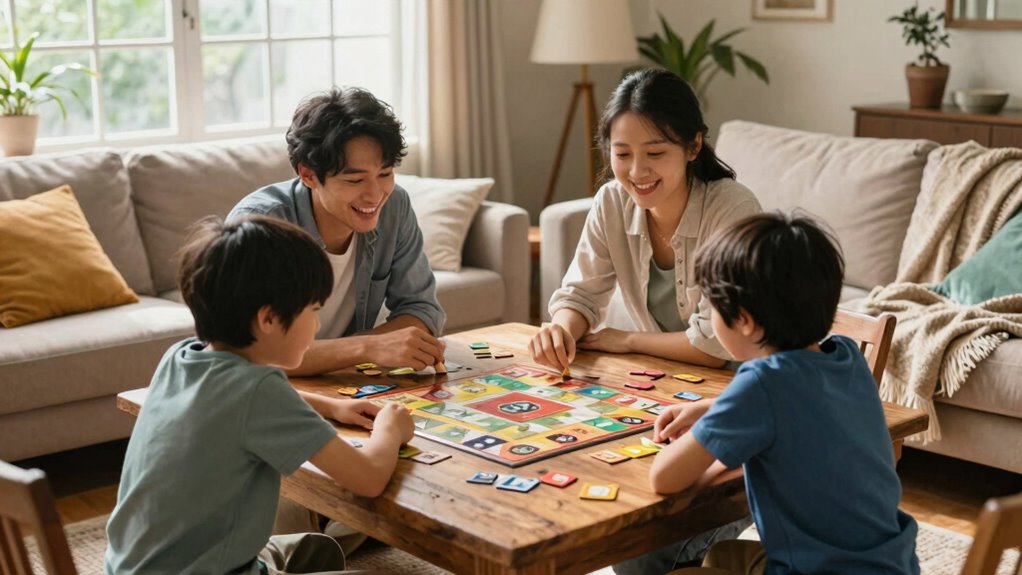

To build more awareness in family life, focus on creating shared routines like meals or walks that foster connection and comfort. Practice mindfulness during these activities by paying attention to responses and checking in with open questions. Design a calming environment using visual and sensory cues that promote relaxation. Engage in honest conversations and be present with your own emotions, which strengthens trust and emotional security. Keep exploring these strategies to deepen your understanding of fostering mindful, connected family relationships.

Turn your quiet moments into listening time
- Thousands of audiobooks, podcasts and originals
- Listen on your phone, tablet or Echo — also offline
- Cancel anytime
Key Takeaways
- Incorporate regular mindful check-ins and open-ended questions during family routines to foster awareness and emotional connection.
- Practice active listening and present-focused attention to deepen understanding of each family member’s feelings.
- Create a calm environment using sensory cues and visual harmony to promote relaxation and awareness.
- Reflect briefly on personal emotions during routines to enhance self-awareness and empathetic responses.
- Establish consistent routines that promote familiarity, open communication, and shared emotional experiences.

Have you ever wondered how to create a more mindful and connected family environment? Building awareness into family life starts with intentionally fostering emotional connection. When you prioritize genuine interactions, you create a space where everyone feels seen and understood. One effective way to do this is through shared routines—simple, everyday activities that bring your family together regularly. These routines serve as touchpoints that reinforce your bond and make each member feel valued. For example, dedicating a few minutes each evening for a family conversation or sharing a meal together creates natural opportunities for connection.
Creating daily routines fosters connection and helps everyone feel seen and valued.
Shared routines don’t have to be elaborate; they just need consistency. When you sit down for dinner without distractions or set aside time for a family walk, you signal that your relationships matter. Over time, these moments become familiar and comforting, encouraging open communication and emotional expression. You might find that these routines help everyone become more aware of each other’s feelings and needs, promoting empathy and understanding. As you engage in these activities, pay attention to both your own responses and those of your family members. This mindfulness deepens emotional connection because it encourages active listening and genuine presence. Incorporating intentional check-ins into your routines can further enhance awareness. For instance, during your shared meal or walk, ask open-ended questions that invite others to share their thoughts and feelings. This practice helps you stay attuned to their emotional states and shows that you care about their experiences. Research shows that sound vibrations can influence brainwave patterns and promote relaxation, which can be beneficial during family interactions. Additionally, understanding the importance of contrast ratio in visual experiences highlights how different elements can impact perception and mood, emphasizing the value of creating a balanced and harmonious environment. Developing an awareness of visual perception can help you design spaces that foster calmness and positive interactions within your home. Recognizing how sensory input influences mood can help tailor your environment to promote a peaceful and mindful family life. Over time, these conversations build a foundation of trust and openness, making it easier for family members to express themselves authentically. Remember, the goal isn’t to fix every issue but to create a safe environment where everyone feels comfortable being themselves.
You also want to be mindful of your own emotional state. When you’re present and aware of your feelings, it’s easier to connect genuinely with your family. Practice brief moments of reflection during your routines—pause and notice how you’re feeling and how your loved ones are reacting. This mindfulness can help you respond more thoughtfully, fostering a sense of safety and emotional security. As you consistently incorporate these small yet meaningful practices, you’ll notice a gradual shift towards a more aware, empathetic, and connected family life. It’s about creating a rhythm that encourages presence, understanding, and shared joy—making your family relationships stronger and more fulfilling every day.
family conversation starter cards
As an affiliate, we earn on qualifying purchases.
As an affiliate, we earn on qualifying purchases.
Frequently Asked Questions
How Can Parents Model Awareness Effectively for Children?
You can model awareness effectively by practicing parent mindfulness, showing your children how to stay present and attentive. When you manage your emotional regulation, you teach them healthy ways to handle feelings. Speak openly about your experiences with mindfulness and emotions, demonstrating your commitment to self-awareness. This consistent behavior encourages your children to develop their own awareness, making emotional regulation and mindfulness natural parts of family life.
What Are Simple Daily Practices to Increase Family Mindfulness?
Think of your family life as a garden that needs daily tending. To nurture mindfulness, practice mindful communication during meals or conversations, giving your full attention. Incorporate shared gratitude by pausing each day to thank each other for little moments. Simple practices like mindful breathing before bedtime or a gratitude circle foster awareness, strengthening bonds and creating a peaceful, intentional family environment that blossoms with understanding and love.
How Do Cultural Differences Impact Family Awareness Strategies?
Cultural differences shape how you approach family awareness strategies through varying values and communication styles. In some cultures, collective values foster open dialogue and shared experiences, boosting awareness. In others, indirect communication may require you to read between the lines. Recognizing these differences helps you adapt your approach, ensuring that your efforts to increase awareness resonate across diverse cultural backgrounds, strengthening family bonds and understanding.
What Are Common Challenges in Maintaining Awareness Routines?
Maintaining mindfulness routines can be challenging due to common obstacles like attention lapses and distraction difficulties. You might find yourself forgetting to pause or losing focus amid daily demands. These mindfulness obstacles hinder consistent awareness, making it tough to stay present with family members. To overcome these hurdles, you need patience, persistence, and practical strategies, like setting reminders or creating simple rituals, that reinforce your commitment to cultivating family awareness.
How Can Technology Support or Hinder Family Awareness Efforts?
Technology can support your family awareness efforts by helping set digital boundaries, ensuring screen time doesn’t overshadow quality interactions. Apps can facilitate shared calendars or communication, fostering emotional intelligence and understanding. However, it can also hinder if devices become distractions or barriers to face-to-face connection. To succeed, encourage mindful tech use, prioritize open conversations, and model healthy digital habits, strengthening your family’s emotional awareness and presence.
mindfulness activity kits for families
As an affiliate, we earn on qualifying purchases.
As an affiliate, we earn on qualifying purchases.
Conclusion
So, next time you’re juggling dinner, homework, and a mountain of laundry, remember: the secret isn’t in perfect harmony but in pretending you’re totally aware of the chaos. Embrace the art of mindful oversight—because nothing says “family unity” like knowing exactly how long the kids’ screens have been on. After all, who needs peace when you can master the delicate dance of being “consciously” oblivious? Happy awareness-building!
As an affiliate, we earn on qualifying purchases.
As an affiliate, we earn on qualifying purchases.
Halloween Picks
halloween
As an affiliate, we earn on qualifying purchases.