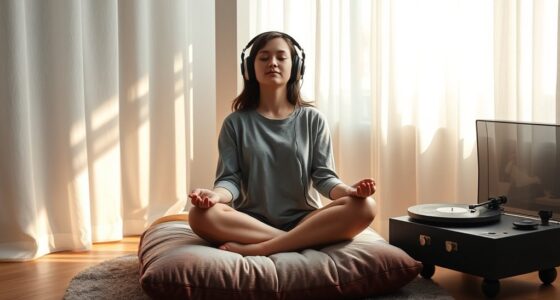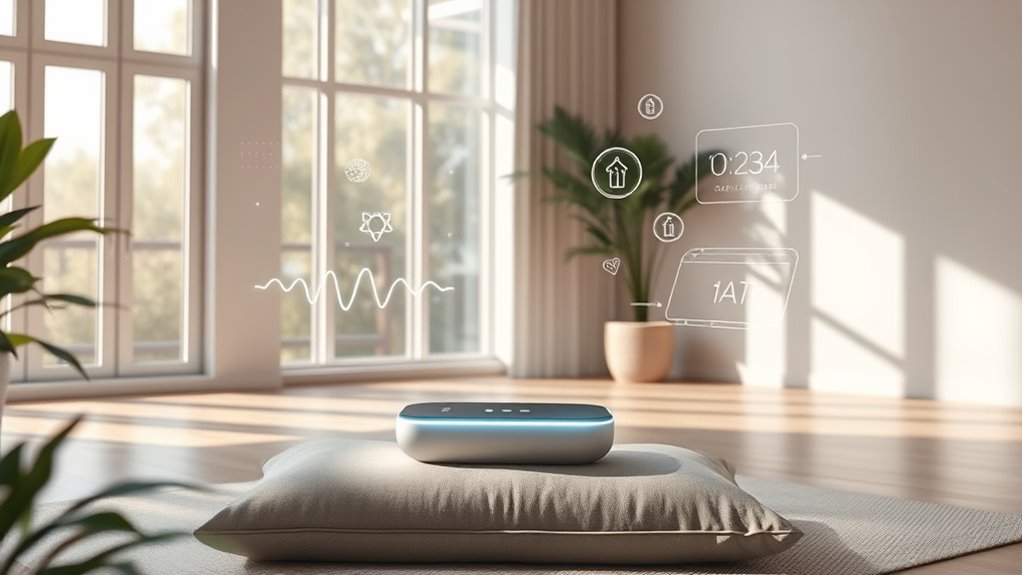

AI is reshaping your mindfulness practice by offering personalized meditation experiences tailored to your mental state, preferences, and goals. It analyzes your behavior and emotions in real-time, suggesting techniques that fit your unique needs, making it easier to stay engaged and consistent. AI also helps integrate mindfulness into your daily routine, adapting to your schedule and mood. If you want to discover how this technology makes mindfulness more accessible and effective, there’s much more to explore.
Key Takeaways
- AI personalizes mindfulness experiences by analyzing user behavior and preferences to suggest tailored techniques.
- Ethical considerations ensure user privacy, transparency, and autonomy in AI-driven meditation tools.
- Adaptive AI maintains user engagement by modifying guidance and introducing gamification or varied styles.
- AI fosters social connections through community features, enhancing motivation and accountability.
- It integrates mindfulness into daily routines by offering flexible, context-aware practice suggestions.

Artificial intelligence is transforming how we practice mindfulness and meditation, making these ancient techniques more accessible and personalized than ever before. With AI-powered apps and devices, you now have tailored experiences designed to meet your unique mental state, preferences, and goals. These tools analyze your behavior, responses, and feedback in real-time, enabling them to suggest specific meditation techniques or mindfulness exercises that resonate with you. This level of personalization not only enhances engagement but also encourages consistent practice, which is essential for reaping long-term benefits.
AI personalizes mindfulness practices, boosting engagement and consistency for long-term well-being.
However, as AI becomes more integrated into your mindfulness journey, issues surrounding AI ethics come into play. Developers must guarantee that data collection respects your privacy and that algorithms don’t inadvertently reinforce biases or create dependency. Transparency about how your data is used and providing you with control over your information are fundamental steps toward building trust. When AI tools are ethically designed, they support your well-being without compromising your rights or autonomy. This ethical framework fosters a safe environment where you can confidently explore mindfulness practices without fear of exploitation or misuse.
User engagement is another vital aspect that AI is revolutionizing. Traditional meditation apps often rely on static content, but AI adapts dynamically to keep you interested and motivated. If you’re feeling distracted or disengaged, the system might suggest different meditation styles or incorporate gamification elements to make your practice more enjoyable. Some platforms even use AI to recognize emotional cues, adjusting prompts or guidance accordingly to help you work through stress or anxiety more effectively. This interactive approach keeps you actively involved in your mindfulness journey, helping you develop habits that stick.
Moreover, AI facilitates community-building by connecting you with others who share similar goals or struggles, fostering a sense of belonging that can boost your commitment. You’re more likely to stay engaged when the experience feels relevant and personalized, rather than generic or one-size-fits-all. These innovations also make mindfulness practices more flexible; whether you have five minutes or half an hour, AI can suggest the most suitable exercises based on your schedule and emotional state, making it easier to integrate mindfulness into your daily routine.
Frequently Asked Questions
How Does AI Personalize Meditation Experiences for Individuals?
AI personalizes meditation experiences by analyzing your responses through virtual coaching and tracking your progress. It adapts guided imagery and meditation techniques based on your mood, preferences, and goals. As you engage, AI learns what works best for you, adjusting sessions in real-time to enhance relaxation and focus. This tailored approach helps you stay motivated and deepens your mindfulness practice, making meditation more effective and enjoyable.
Can AI Accurately Measure Mindfulness Levels?
Think of AI as a skilled lighthouse guiding your inner calm. While AI can provide insightful mindfulness measurement, its accuracy isn’t foolproof. It uses data like heart rate, breathing, and facial cues to gauge your mindfulness levels, but these signals can sometimes be misleading. So, you can trust AI as a helpful guide, but remember, true mindfulness comes from within, not just data points.
Are Ai-Driven Mindfulness Apps Secure and Private?
Yes, AI-driven mindfulness apps can be secure and protect your privacy if they prioritize data security and user privacy. Look for apps that use encryption and transparent privacy policies, so your personal information stays safe. Always review their data handling practices and permissions before you start. Trustworthy apps ensure your mindfulness journey remains private, giving you peace of mind while benefiting from personalized meditation experiences.
How Does AI Adapt to Changing Emotional States During Meditation?
AI adapts to your changing emotional states during meditation through emotional recognition technology. It continuously monitors your biometric and vocal cues, identifying shifts in your mood. Then, it uses adaptive feedback to guide you back to a calm state or deepen your relaxation. This real-time adjustment helps personalize your meditation experience, making it more effective and responsive to your unique emotional journey.
What Are the Limitations of AI in Teaching Mindfulness Techniques?
Think of AI as a guiding star, but it has its limits. It can’t fully grasp your unique emotional nuances or the depth of human experience. Ethical concerns like privacy and bias, along with technological barriers, restrict AI’s ability to teach mindfulness authentically. You might find it helpful, but AI can’t replace genuine human understanding or adapt as flexibly as a skilled instructor, leaving some gaps in truly personalized guidance.
Conclusion
As AI transforms mindfulness and meditation, you find guidance tailored to your needs, insights that deepen your practice, and tools that adapt to your journey. You experience personalized support, real-time feedback, and evolving techniques—all working together to enhance your well-being. With AI shaping your mindfulness path, you embrace clarity, focus, and calm. You step into a future where technology and inner peace unite, creating a mindful life that’s more accessible, more meaningful, and more uniquely yours.