
To use voice notes for dream journaling, keep your recording device nearby as soon as you wake up. Describe your dreams vividly, including scenes, feelings, and symbols, while the details are fresh. Use calming music or visualization techniques to boost recall. Regularly listen back to your recordings to spot patterns and deepen your understanding of your subconscious. If you keep practicing, you’ll discover more about yourself and your dreams than you might expect.

Turn your quiet moments into listening time
- Thousands of audiobooks, podcasts and originals
- Listen on your phone, tablet or Echo — also offline
- Cancel anytime
Key Takeaways
- Keep your recording device nearby to capture dreams immediately upon waking.
- Describe scenes, emotions, symbols, and characters clearly to preserve details.
- Use calming music and mindfulness techniques to enhance dream recall and focus.
- Regularly review voice notes to identify recurring themes and deepen insights.
- Maintain a consistent routine to improve dream recall and strengthen your journaling practice.
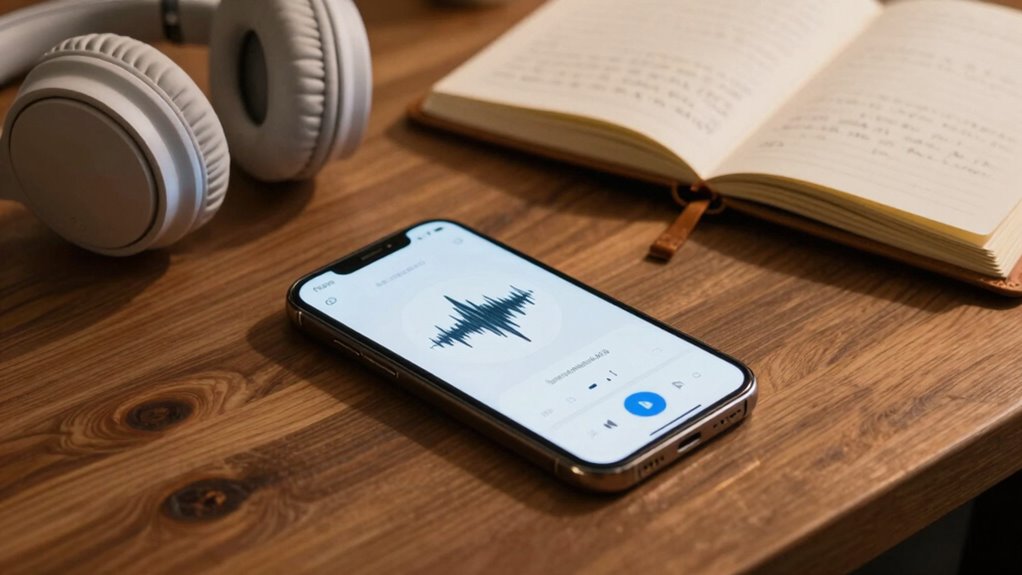
Dream journaling can be a powerful tool for understanding your subconscious, and using voice notes makes the process even easier. Instead of writing long entries by hand or tapping away on your phone, you can simply record your dreams as soon as you wake up. This method captures the raw emotion and details that might fade if you delay. Plus, voice notes allow you to express your dreams more naturally, preserving the tone and nuances that can be lost in written form.
Voice notes simplify dream journaling, capturing emotions and details more naturally right after waking.
To start, keep your phone or recording device nearby your bed. When you wake up, don’t rush to grab a pen—speak your dream aloud. Describe the scenes, the feelings, and any symbols or characters that stood out. You might find that your subconscious reveals more when you speak freely, especially if you’re familiar with meditation techniques that promote mindfulness. These techniques can help you relax and become more aware of your inner thoughts, making it easier to recall dreams vividly. As you practice, try to set an intention before sleeping—focusing on remembering your dreams can improve recall and deepen your insights.
Incorporating music therapy into your wake-up routine can also enhance your dream recall. Gentle, calming music can create a peaceful environment that encourages your subconscious to open up. When combined with meditation techniques such as deep breathing or visualization, music therapy can help you wake up more alert and aware, making your voice notes richer with detail. During your recordings, don’t censor yourself or worry about being perfect. Just speak naturally, describing everything you remember, no matter how trivial it seems. Over time, you may notice patterns or recurring symbols that shed light on your subconscious mind.
Listening back to your voice notes can be revealing. You might pick up on emotional undercurrents or themes you didn’t consciously notice at first. This process can be a form of active reflection, similar to meditation techniques that focus on mindfulness and self-awareness. Regularly reviewing your recordings helps you identify recurring motifs or emotional states, giving you insight into your inner world. Additionally, understanding sound healing science can deepen your appreciation for how specific frequencies influence your mental states, enriching your dream exploration. Exploring sound frequencies might also help you enhance your dream recall and emotional processing. Incorporating visualization techniques into your routine can further enhance dream recall by engaging your subconscious more deeply. Engaging in practices like mindfulness meditation can also improve your ability to remember and interpret dreams more accurately. Research indicates that consistent practice can lead to more vivid and memorable dreams. As you get more comfortable, you can even combine voice journaling with music therapy or meditation to deepen your understanding. The key is consistency—by making this a routine, you’ll develop a richer, more detailed dream journal that offers valuable glimpses into your subconscious mind.
voice recorder for dream journaling
As an affiliate, we earn on qualifying purchases.
As an affiliate, we earn on qualifying purchases.
Frequently Asked Questions
Can I Use Voice Notes Across Different Devices?
Yes, you can use voice notes across different devices. Many apps support device synchronization, allowing you to access your dream recordings anytime, anywhere. Keep in mind that voice note quality might vary depending on the device’s microphone and audio settings. To guarantee smooth device synchronization, choose an app with cloud storage or seamless syncing features. This way, your dream journal stays updated, no matter which device you’re using.
How Do I Organize Voice Notes for Easy Retrieval?
Did you know that organized note categorization can boost retrieval speed by up to 50%? To organize your voice notes effectively, implement a tagging system that labels each dream with themes or emotions. Use a consistent structure for your categories, like dream type or date, making it easier to find specific entries later. Regularly review and update your tags to keep your dream journal neat and accessible.
What Privacy Measures Are Recommended for Dream Recordings?
To protect your dream recordings, prioritize privacy concerns by choosing apps that offer strong encryption methods to secure your voice notes. Use password protection and enable two-factor authentication for added security. Avoid sharing recordings over unsecured networks, and regularly update your app and device software to fix vulnerabilities. By taking these steps, you guarantee your personal dream journal remains confidential and safe from unauthorized access.
How Long Should Each Voice Note Be?
For effective dream journaling, aim for voice note duration of about 1 to 3 minutes per recording. This aligns with recording length guidelines and guarantees you capture enough detail without becoming overwhelming. If your dream is complex, break it into multiple shorter notes. Keep recordings concise and focused, so you can easily review and analyze your dreams later. Consistent, manageable recording lengths help maintain your journaling habit.
Are There Specific Apps Best for Dream Voice Journaling?
Like a skilled conductor leading an orchestra, choosing the right app amplifies your dream journaling. Apps like Evernote, Notion, or Otter.ai are ideal, offering clear voice note recording and easy organization. Focus on dream symbolism and voice note etiquette, ensuring your recordings are concise and well-labeled. These apps help you capture vivid dreams, making it easier to analyze recurring themes and interpret your subconscious mind effectively.
As an affiliate, we earn on qualifying purchases.
Conclusion
Using voice notes for dream journaling makes capturing your dreams quick and effortless, helping you remember details better. Plus, studies show that people who record their dreams are 30% more likely to recall vivid details the next morning. So, don’t hesitate—grab your phone and start speaking your dreams into existence. Over time, you’ll notice patterns and insights, deepening your understanding of your subconscious. Happy recording!
calming music for sleep and meditation
As an affiliate, we earn on qualifying purchases.
As an affiliate, we earn on qualifying purchases.
dream journal voice recording device
As an affiliate, we earn on qualifying purchases.
As an affiliate, we earn on qualifying purchases.
Fall Picks
fall essentials
As an affiliate, we earn on qualifying purchases.