Your ability to recall dreams depends heavily on sleep stages. REM sleep, which occurs in cycles throughout the night, is when most vivid and memorable dreams happen. Waking during or right after REM increases your chances of remembering these dreams, as your brain consolidates memories best during this stage. In contrast, dreams during deep non-REM sleep are harder to recall. To learn more about how sleep stages influence dream memories, keep exploring this fascinating connection.
Key Takeaways
- REM sleep is primarily associated with vivid, memorable dreams, increasing the likelihood of dream recall.
- Waking during or immediately after REM enhances the ability to remember dreams.
- Non-REM stages, especially deep sleep, are less conducive to dream recall.
- Sleep cycles with multiple REM periods lead to more opportunities for dream memory retention.
- Techniques like keeping a dream journal and intentional focus improve dream recall linked to sleep stages.
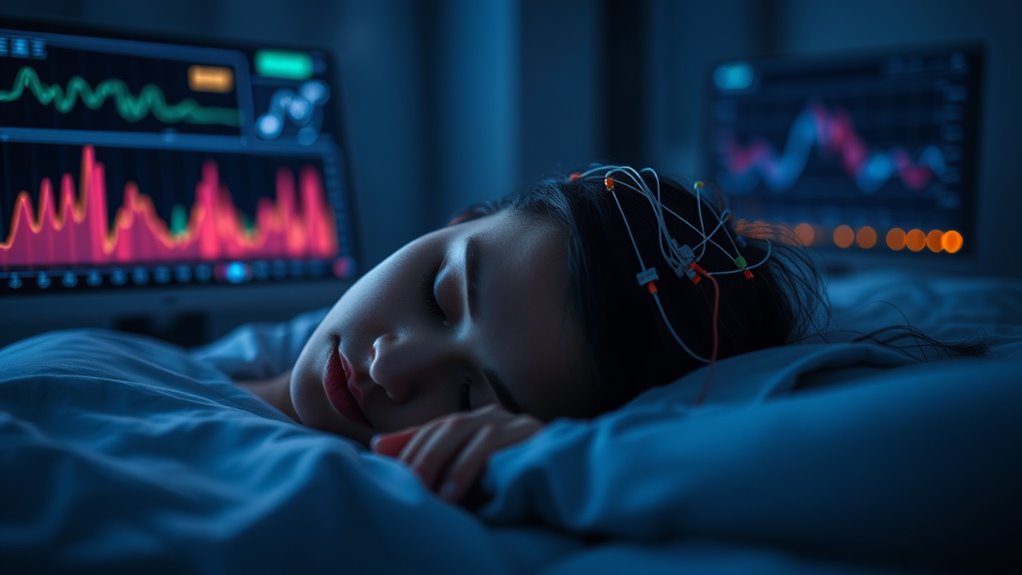
Understanding how sleep stages influence your ability to recall dreams can shed light on a fascinating aspect of your nightly rest. During sleep, your brain cycles through different stages, each playing a unique role in how vividly you remember your dreams. The most noteworthy stage for dream recall is REM sleep, which occurs in cycles throughout the night. These REM cycles are when your brain is most active, and vivid, often bizarre dreams are most likely to happen. When you wake up during or immediately after REM, you’re more likely to remember what you dreamed. That’s why dreams recalled in the morning tend to be more detailed and memorable if you wake up during a REM period.
Lucid dreaming, where you become aware that you’re dreaming while still in the dream, often occurs during REM sleep. This state of consciousness can make dreams more memorable because you’re actively aware of the dream experience. If you practice lucid dreaming techniques, you might find it easier to recall your dreams regularly, especially if you wake during or shortly after a lucid dream. The key is that during REM, your brain consolidates memories, which can make dream recall more accessible. However, if you wake up during non-REM stages, especially deep sleep stages like slow-wave sleep, your chances of remembering dreams diminish considerably. These stages are characterized by reduced brain activity related to dreaming, so dreams that occur here are often forgotten by morning.
Your ability to recall dreams is also influenced by how quickly you wake up after a REM cycle. Waking up naturally during REM increases the likelihood of remembering your dreams, but if you wake after a deep non-REM stage, your dream memories might fade rapidly. That’s why keeping a dream journal or setting an intention to remember dreams can help improve recall. When you’re more aware of the importance of dreams and actively focus on remembering them, your brain becomes more receptive to storing those memories. Although dream recall varies from person to person, understanding the relationship between sleep stages, REM cycles, and consciousness can help you optimize your chances of remembering your dreams. Additionally, sleep hygiene practices can influence the quality and timing of your sleep cycles, further affecting dream recall.
Top picks for "relationship between sleep"
Open Amazon search results for this keyword.
As an affiliate, we earn on qualifying purchases.
Frequently Asked Questions
Can Dream Recall Improve With Specific Sleep Stage Manipulation?
Yes, you can improve dream recall by targeting specific sleep stages through lucid dreaming and REM enhancement techniques. Practicing wake-back-to-bed or using sleep masks can increase your chances of entering REM sleep, where most vivid dreams occur. When you focus on REM and develop skills for lucid dreaming, you become more aware during dreams, making recall easier. Consistent practice boosts your ability to remember dreams more clearly over time.
Does Age Affect the Likelihood of Recalling Dreams From Certain Stages?
As you age, your ability to recall dreams from specific sleep stages declines due to age-related memory decline and changes in developmental sleep patterns. You might notice fewer vivid dreams or struggle to remember them, especially from REM sleep. These shifts can make dream recall less frequent and less detailed, highlighting how aging affects your brain’s capacity to retain and retrieve dream memories across different sleep stages.
How Do Sleep Disorders Influence Dream Recall Across Different Stages?
Sleep disorders often disrupt your sleep quality, making it harder to remember dreams across different stages. You might experience fragmented sleep, reducing REM periods where vivid dreams occur, which lowers dream recall. Conversely, some disorders can increase dream intensity, making dreams more memorable, but overall, poor sleep quality hampers consistent recall. Addressing sleep issues can improve your ability to remember dreams, especially those with higher dream intensity during specific sleep stages.
Are There Individual Differences in Dream Recall Linked to Sleep Architecture?
Imagine a tapestry woven with your unique sleep architecture, where genetic predispositions and cultural influences shape your dream recall. You might find yourself vividly remembering dreams if your sleep cycles include more REM stages, while others may recall less due to different patterns. These individual differences are influenced by your genetics and cultural habits, making your dream experiences as unique as your fingerprint, reflecting how your brain processes sleep and memory.
Can Supplements or Medications Enhance Dream Recall During Specific Sleep Stages?
Yes, supplements like vitamin B6 and certain medications can boost dream recall, especially when taken at specific times. Taking these supplements before sleep or during REM-rich periods may enhance your ability to remember dreams. However, always consider supplement effects and medication timing carefully, as they influence sleep stages differently. Consult with a healthcare professional to guarantee safe use and ideal results for improving dream recall.
Conclusion
You might be surprised to learn that nearly 80% of people recall dreams from REM sleep, yet only about 10% remember dreams from non-REM stages. This highlights how vital REM sleep is for vivid dream recall. Understanding this link can help you improve your dream memory. So, next time you wake up, pay attention—your brain’s most active dreaming phase might just hold the key to unforgettable dreams.