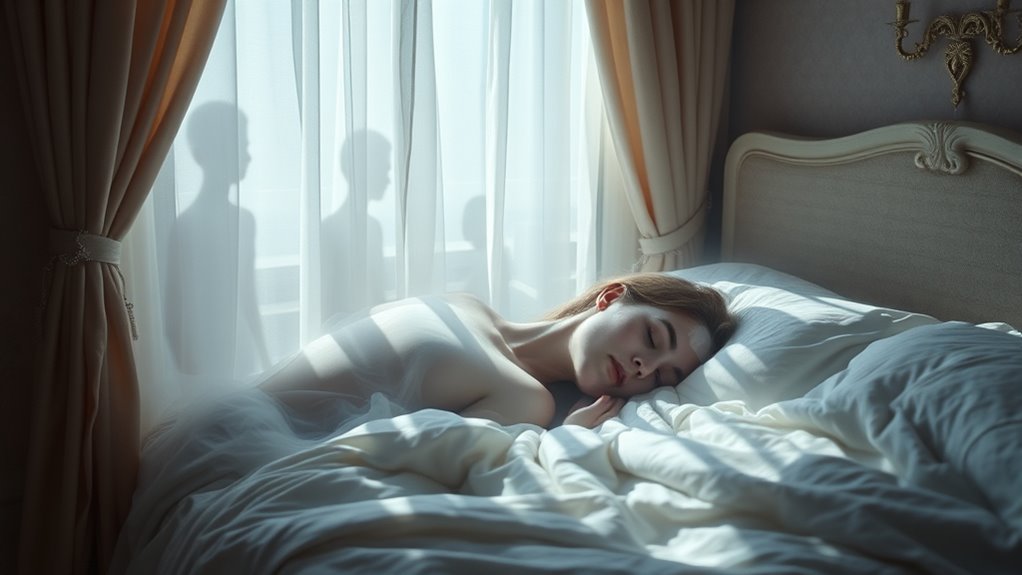

When you wake up and see or sense things that aren’t really there, it’s likely a hypnopompic hallucination. These vivid experiences happen as your brain shifts from sleep to wakefulness, sometimes causing visual, auditory, or tactile sensations that feel startling or real. They’re linked to sleep paralysis, dreams, and irregular sleep patterns. If you want to understand why these episodes occur and how to manage them, there’s more to explore about your sleep and dreams.

Turn your quiet moments into listening time
- Thousands of audiobooks, podcasts and originals
- Listen on your phone, tablet or Echo — also offline
- Cancel anytime
Key Takeaways
- Hypnopompic hallucinations are vivid sensory experiences occurring as you wake, blending dream elements with reality.
- They often involve seeing or feeling presences, shadowy figures, or muffled sounds at the edge of consciousness.
- These hallucinations are linked to sleep paralysis and the transitional phase between sleep and wakefulness.
- Factors like sleep deprivation, stress, and irregular sleep schedules can increase their frequency.
- Managing sleep habits and understanding their connection to REM sleep can help reduce fear and confusion during episodes.

Hypnopompic hallucinations are vivid, often unsettling sensory experiences that occur as you wake up from sleep. You might find yourself seeing, hearing, or even feeling things that aren’t really there, and these sensations can be quite startling. For many, these hallucinations are closely linked to sleep paralysis, a state where your muscles are temporarily paralyzed as you shift between sleep and wakefulness. During sleep paralysis, your brain remains partially in the dream state, which can lead to vivid dreams bleeding into waking consciousness. When this happens, you may wake up feeling as though you’re still trapped in a dream or that shadowy figures are lingering at the edge of your vision.
You might notice that these hallucinations occur more often after a restless night or during irregular sleep schedules. The line between dreams and reality blurs, making it feel as if your mind is playing tricks on you. When you’re in this state, your senses can be heightened, and the vivid dreams you experience during sleep can spill over into your waking moments. It’s common to see shapes or figures, hear muffled voices, or feel a presence in the room, even though you know logically that nothing is there. These experiences are deeply rooted in your brain’s shift phases, where the boundary between sleep and wakefulness becomes thin. Understanding REM sleep and its role in dreaming can help clarify why these hallucinations happen.
Hallucinations often increase after restless nights, blurring dreams and reality with vivid shapes, voices, and eerie presences.
The sensation can be incredibly intense, and some people find themselves unable to move or speak, which adds to the fear and confusion. It’s important to remember that these hallucinations, while frightening, are harmless and temporary. They occur because your brain is caught between states, and your body is still in a sleep-like state of paralysis. Recognizing the connection between sleep paralysis and vivid dreams can help you understand that these hallucinations are a natural, if unsettling, part of the sleep-wake cycle.
You can take steps to reduce their frequency by maintaining a regular sleep schedule, avoiding sleep deprivation, and managing stress. Creating a relaxing bedtime routine can also help ease the transition between sleep stages. If these hallucinations become frequent or particularly distressing, consulting a sleep specialist can provide further insights and strategies for coping. Ultimately, understanding that these experiences are part of your brain’s complex process of transitioning out of sleep can help you face them with less fear and more confidence.
As an affiliate, we earn on qualifying purchases.
Frequently Asked Questions
Can Hypnopompic Hallucinations Indicate a Serious Mental Health Condition?
You might wonder if hypnopompic hallucinations signal a serious mental health issue. Usually, these experiences are benign and linked to sleep shifts. However, if they’re frequent or distressing, it’s worth doing a mental health assessment and sleep disorder diagnosis. You should consult a healthcare professional to determine if underlying conditions like sleep disorders or mental health concerns need treatment, ensuring your well-being and peace of mind.
Are There Specific Triggers That Increase the Likelihood of Hypnopompic Hallucinations?
You might notice that certain triggers, like sleep disturbances, stress, and anxiety, increase the chance of experiencing hypnopompic hallucinations. When your sleep isn’t regular or you’re overwhelmed with worries, your brain can produce these vivid, sometimes unsettling images or sounds as you wake. Managing stress, establishing a consistent sleep schedule, and reducing anxiety can help lower the likelihood of these hallucinations occurring.
How Can One Differentiate Between Hypnopompic Hallucinations and Nightmares?
You might wonder if you can tell a dream from reality during hypnopompic states. Research suggests that sensory confusion makes hallucinations vivid, yet they often occur as you’re waking, unlike nightmares, which usually happen during deep sleep. To differentiate, notice if the experience involves realistic details and occurs upon waking, indicating hypnopompic hallucinations. Nightmares tend to be more emotional and remembered as part of a dream, not reality.
Do Hypnopompic Hallucinations Occur During Naps or Only Upon Awakening?
You might wonder if hypnopompic hallucinations only happen when you wake up or also during naps. They can occur in both situations, especially during sleep paralysis, when your body is temporarily unable to move. During these episodes, vivid dream imagery blends with reality, making you see or hear things. So, if you’re napping and experience strange visuals or sounds, it could be hypnopompic hallucinations, not just upon awakening.
Is There a Medication That Can Prevent or Reduce Hypnopompic Hallucinations?
You might wonder if any medication options can prevent or reduce hypnopompic hallucinations. While sleep aids or certain medications like antidepressants or antipsychotics can sometimes help by stabilizing sleep patterns, they aren’t specifically approved for this purpose. It’s best to consult a healthcare professional, as they can recommend tailored treatments and evaluate if underlying issues like sleep disorders are contributing to these hallucinations.
hypnopompic hallucinations sleep mask
As an affiliate, we earn on qualifying purchases.
As an affiliate, we earn on qualifying purchases.
Conclusion
Remember, seeing is not always believing. Hypnopompic hallucinations remind you that your mind can craft vivid realities even as you wake. By understanding these experiences, you gain insight into the mysterious bridge between sleep and wakefulness. Don’t dismiss what you see or feel—sometimes, the mind plays tricks to reveal hidden truths. Keep an open mind, for in the domain of dreams and waking life, perception isn’t always reality.
As an affiliate, we earn on qualifying purchases.
As an affiliate, we earn on qualifying purchases.
Halloween Picks
halloween
As an affiliate, we earn on qualifying purchases.