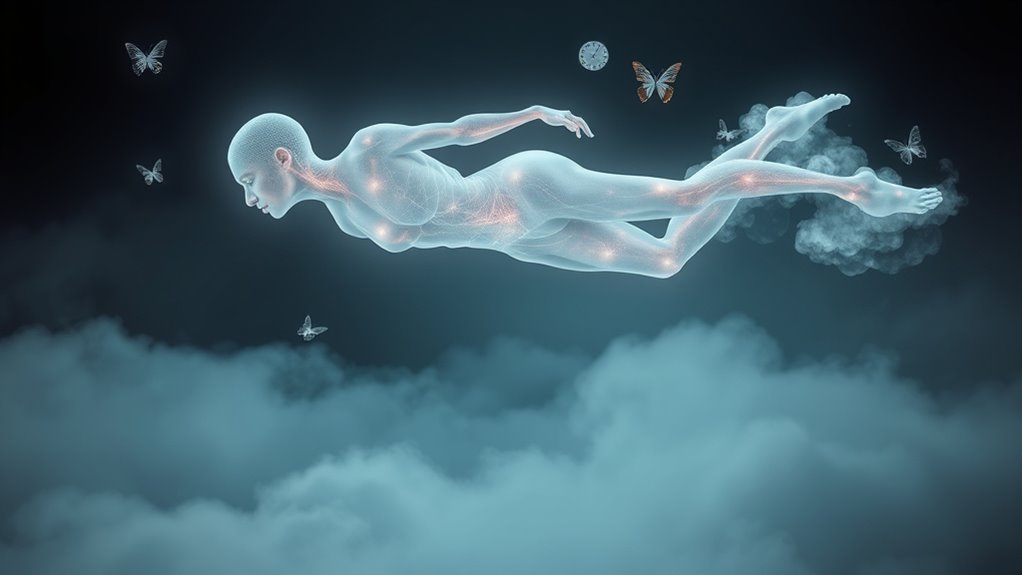

During dreaming, your body involuntarily moves, tenses, or reacts with sensations like warmth, pressure, or falling, reflecting brain activity and emotions. These somatic elements mirror what’s happening in your dream, making the experience more vivid and immersive. Muscle tense up when you’re scared, or you feel warmth when happy. These physical responses influence how you recall dreams and how real they feel. Keep exploring to discover more about how your body influences your dreams.

Get books, candles and calm essentials delivered free — and shop member deals
- Fast, free delivery on millions of items
- Access to Prime Big Deal Days deals on October 6–7
- Prime Video, Amazon Music and more included
Key Takeaways
- Physical reactions like muscle tension and rapid heartbeat often mirror emotional intensity in dreams.
- Sensory experiences such as warmth, pressure, or pain enhance the immersive quality of dream imagery.
- Movements in dreams, including running or flying, are linked to activation of motor regions in the brain.
- Somatic responses influence dream recall and the emotional impact upon waking.
- Body language and physical sensations deepen the realism and emotional resonance of dream experiences.
Have you ever wondered how your body reacts during dreaming? When you’re deep in a dream, your body doesn’t stay completely still, even though you’re unaware of your physical surroundings. Instead, your body language and physical sensations often mirror the emotions and scenarios playing out in your mind. For example, if you’re experiencing fear or tension, you might notice your muscles tense up or your breathing quickens, even though you’re lying perfectly still in bed. These physical sensations are a direct reflection of your brain’s activity, creating an invisible link between your mind and body that’s especially vivid during REM sleep.
Your body language in dreams can be surprisingly expressive, mimicking real-world gestures or exaggerated actions. You might find yourself running, fighting, or even flying, with your limbs moving as if you’re physically performing those actions. This isn’t just a visual image; your brain activates motor regions that cause your muscles to respond as if you’re actually engaging in these activities. Sometimes, you might even feel the sensation of falling or being pushed, with your body reacting instinctively to the perceived threat or situation. These physical sensations are often so intense that they can wake you up, especially if the sensation is startling or uncomfortable.
Dreams vividly mimic real gestures, activating muscles and creating sensations that can wake you unexpectedly.
In dreams, physical sensations like temperature, pain, or pressure also play a essential role in shaping the experience. You might feel the warmth of sunlight on your skin, the chill of a breeze, or the rough texture of an object in your hand. These sensations feel real because your brain processes sensory information similarly to how it does when you’re awake. The vividness of these sensations can intensify emotional reactions, making your dream experience more immersive and emotionally charged. For instance, feeling a sudden cold or a heavy weight can induce feelings of fear or anxiety, while the sensation of softness or warmth might evoke comfort or happiness.
Your body’s physical reactions during dreaming aren’t random; they are closely tied to your emotional state and the content of your dreams. If you’re dreaming about danger, your body might respond with rapid heartbeat, clenched fists, or tense muscles. If the dream is peaceful or joyous, your body might relax, and you could even experience a sense of warmth or lightness. These somatic elements are integral to how you experience dreams—they make the imagery more real and emotionally impactful. So next time you wake up feeling a certain way after a dream, remember that your body’s language and sensations played a fundamental role in shaping that experience, even if you weren’t consciously aware of it.
As an affiliate, we earn on qualifying purchases.
Frequently Asked Questions
How Do Cultural Differences Influence Dream Body Symbolism?
You’ll find that cultural differences shape dream body symbolism through cross-cultural symbolism and cultural healing practices. In some cultures, specific body parts in dreams represent spiritual or emotional states, while others see them as messages from ancestors. These symbols reflect diverse beliefs and healing traditions, influencing how you interpret your dreams. Understanding these cultural nuances allows you to connect more deeply with your dreams and their potential healing or guidance roles.
Can Somatic Elements in Dreams Predict Physical Health Issues?
You might find somatic elements in your dreams hint at physical health issues. These dreams often reveal psychosomatic connections, where your subconscious processes bodily sensations and emotional stress. By paying attention to dream body awareness, you could notice recurring symptoms or discomforts that signal underlying health concerns. While not definitive, these dreams can serve as early warnings, prompting you to consult healthcare professionals and address potential issues proactively.
Are There Specific Techniques to Enhance Somatic Awareness During Dreaming?
To enhance somatic awareness during dreaming, you can practice mindfulness techniques like body scans before sleep, which help you tune into physical sensations. During lucid dreams, engage in somatic tracking by consciously observing your body’s sensations and movements within the dream. These practices boost your ability to recognize somatic elements, making your dream experiences more vivid and insightful. Consistent effort improves your connection to your body’s signals even in sleep.
How Do Age and Gender Affect Bodily Themes in Dreams?
Age and gender influence bodily themes in your dreams through age-related symbolism and gendered body themes. As you age, you might see symbols of energy or decline, reflecting your life stage. Gender can shape dream imagery, emphasizing traits associated with masculinity or femininity. Pay attention to these themes, as they reveal subconscious feelings about your body, identity, and societal roles, helping you understand how your age and gender shape your inner world.
What Role Does Trauma Play in Somatic Dream Imagery?
Trauma shapes your dreams by embedding somatic memory, where your body processes what your mind can’t fully handle. You might find yourself reliving sensations, feeling pain, or experiencing physical responses that mirror trauma processing. These somatic dream images serve as a bridge between your emotional and physical states, helping you confront unresolved issues. By recognizing these bodily cues, you can begin to understand how trauma manifests and work towards healing.
dream journal with sensory prompts
As an affiliate, we earn on qualifying purchases.
As an affiliate, we earn on qualifying purchases.
Conclusion
As you wake from your dreams, remember that your body quietly whispers its truths through vivid imagery. Like a mirror reflecting your deepest sensations, dreams reveal the somatic elements that shape your inner world. Embrace these signals, for they’re the bridge connecting your mind and body. When you listen closely, you’ll find that your dreams aren’t just fleeting shadows—they’re the compass guiding you back to yourself.
As an affiliate, we earn on qualifying purchases.
sleep aid with calming sensations
As an affiliate, we earn on qualifying purchases.
As an affiliate, we earn on qualifying purchases.
Fall Picks
fall essentials
As an affiliate, we earn on qualifying purchases.