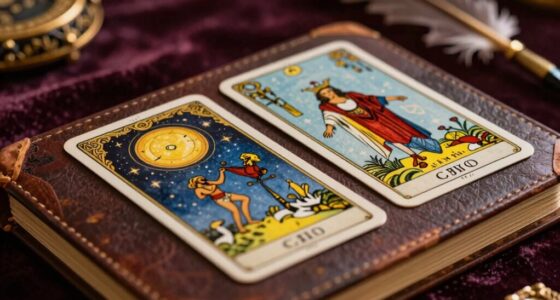

Cultural symbolism plays a essential role in how you interpret dreams, as the meaning of symbols like snakes, lions, or dragons can vary widely depending on your background and history. In Western cultures, a snake might symbolize danger, while in Indigenous traditions, it represents transformation. Understanding these differences helps you find more personalized and accurate insights into your subconscious. Keep exploring to uncover how your cultural lens shapes your dream world.

Get books, candles and calm essentials delivered free — and shop member deals
- Fast, free delivery on millions of items
- Access to Prime Big Deal Days deals on October 6–7
- Prime Video, Amazon Music and more included
Key Takeaways
- Dream symbols vary across cultures, influencing their meanings and interpretations.
- Historical origins of symbols enrich understanding of their significance in dreams.
- Cultural backgrounds shape recurring dream themes and the symbolism associated with them.
- Recognizing cultural differences prevents generic interpretations and offers personalized insights.
- Understanding a symbol’s cultural and historical context deepens the interpretation of subconscious messages.

Have you ever wondered what your dreams are trying to tell you? When you wake up, those vivid images and feelings can leave you puzzled. But understanding dream symbols often depends on recognizing the cultural variations in symbolism. What a snake means in one culture might differ vastly in another. For example, in Western societies, snakes might symbolize danger or temptation, stemming from biblical stories. Meanwhile, in some Indigenous cultures, they’re seen as symbols of transformation and healing. These differences highlight how cultural backgrounds shape our interpretation of symbols, making dream analysis a deeply personal and cultural experience. Recognizing these variations helps you avoid applying a one-size-fits-all meaning to your dreams, giving you a richer, more accurate insight into your subconscious.
Understanding dream symbols varies across cultures, enriching personal interpretations and avoiding one-size-fits-all assumptions.
The roots of dream symbols stretch back through history, weaving into the fabric of human culture. Ancient civilizations, like the Egyptians and Greeks, assigned specific meanings to animals, objects, and even colors in dreams. Egyptian hieroglyphs often depicted animals as divine symbols, while Greek mythology associated certain creatures with gods and mystical forces. Over centuries, these symbols evolved, accumulating layers of meaning based on religious beliefs, societal norms, and personal experiences. This historical foundation means that even today, certain symbols carry centuries-old significance. When you see a particular image in your dream, understanding its historical roots can deepen your interpretation. It’s like tracing the symbol’s story through time, revealing how collective human consciousness has shaped its meaning. Historical symbolism also influences modern interpretations, connecting your personal dreams to a larger cultural narrative.
Cultural differences in dream symbolism can also influence how you interpret recurring themes. If you dream of a lion, for instance, it might symbolize strength and courage in many Western cultures. But in some African traditions, lions are also protectors and symbols of leadership. Conversely, in East Asian cultures, a dragon might represent power and good fortune, while in Western contexts, it might evoke fear or danger. Recognizing these cultural nuances allows you to personalize your dream analysis, considering your background and beliefs. It reminds you that symbols are not fixed but fluid, shaped by the stories and values your culture upholds. By exploring these cultural variations, you can *uncover* a more meaningful understanding of your dreams, rooted in your unique cultural experience and historical context.
Dream interpretation cultural symbolism book
As an affiliate, we earn on qualifying purchases.
As an affiliate, we earn on qualifying purchases.
Frequently Asked Questions
How Do Cultural Differences Influence Dream Symbolism?
You notice that cultural differences shape how you interpret dreams through cross-cultural symbolism and dream language nuances. Your background influences which symbols hold meaning, making some images more significant in certain cultures. By understanding these variations, you can better grasp your dreams’ messages and avoid misinterpretations. Recognizing these influences helps you appreciate the diverse ways cultures express subconscious thoughts, enriching your overall dream analysis.
Can Personal Experiences Alter the Meaning of Symbols?
Yes, your personal experiences can definitely alter the meaning of symbols in your dreams. Your personal memories and emotional associations give unique significance to symbols that might differ from general interpretations. For example, a certain animal or object might symbolize safety for you but represent fear for someone else. By reflecting on your feelings and memories, you can better understand what your dreams are trying to tell you personally.
Are There Universal Symbols Recognized Across All Cultures?
Yes, there are universal symbols recognized across all cultures, rooted in archetypal symbols and cross-cultural myths. You’ll find that certain images like the sun, moon, or water often carry similar meanings worldwide—representing life, emotion, or renewal. These symbols resonate because they tap into shared human experiences, making them powerful tools in dream interpretation regardless of your cultural background.
How Do Historical Contexts Shape Dream Interpretations?
Thinking about how historical contexts shape dream interpretations is like piecing together a complex puzzle. You see, historical myths and societal norms act as filters, influencing what symbols mean in your dreams. When societies change, so do interpretations, reflecting new values and fears. By understanding these shifts, you can better grasp the deeper messages your dreams hold, revealing insights rooted in your cultural and historical background.
What Role Does Language Play in Symbolic Dream Understanding?
Language shapes your symbolic dream understanding by providing linguistic nuances that influence how you interpret symbols. Your interpretive frameworks are built on these nuances, which can vary across cultures and individual experiences. When you pay attention to language, you gain deeper insight into your dreams, as words and symbols carry layered meanings. This helps you decode your dreams more accurately, making your interpretations richer and more personalized.
Dream symbols guide cultural meanings
As an affiliate, we earn on qualifying purchases.
As an affiliate, we earn on qualifying purchases.
Conclusion
So, next time you find yourself dreaming of a snake or a flying bird, remember—your subconscious might just be speaking in a secret code rooted in centuries of cultural symbolism. Ironically, while these symbols seem so universal, their meanings can wildly differ depending on your background. Perhaps the real mystery isn’t what your dreams reveal, but how they remind us that understanding ourselves is just as complex and layered as interpreting ancient symbols—an art, after all, that’s never truly complete.
Personalized dream analysis journal
As an affiliate, we earn on qualifying purchases.
As an affiliate, we earn on qualifying purchases.
Dream interpretation symbols card deck
As an affiliate, we earn on qualifying purchases.
As an affiliate, we earn on qualifying purchases.
Fall Picks
fall essentials
As an affiliate, we earn on qualifying purchases.