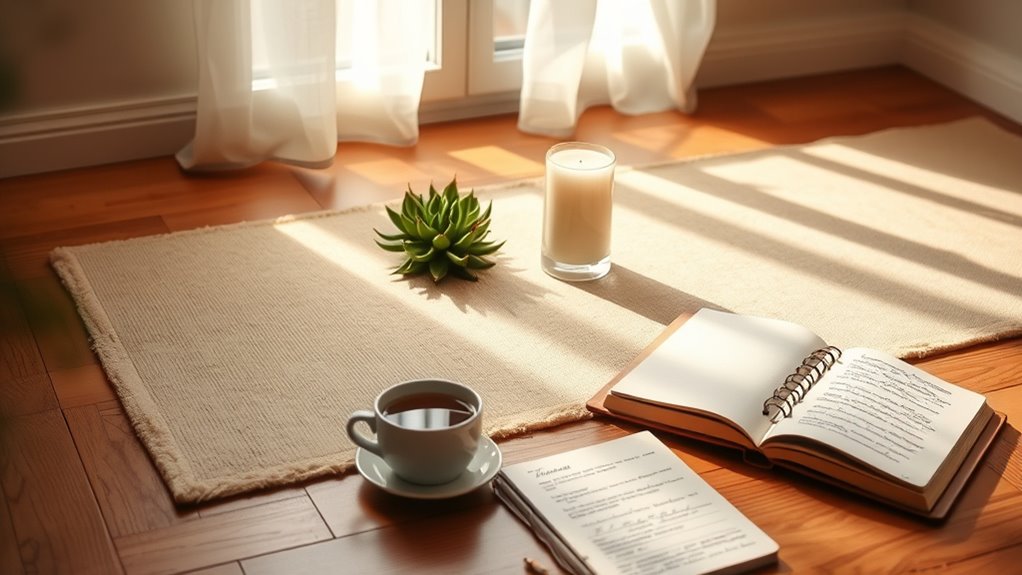

To create balance through mindful self-care routines, focus on simple practices like intentional breathing, gentle stretching, or journaling for just a few minutes each day. These small habits help you stay present, manage stress better, and strengthen your emotional resilience. Incorporating routines that connect with your body and mind makes it easier to navigate life’s challenges calmly. Keep exploring ways to integrate mindfulness into your daily life to access even deeper well-being.

Turn your quiet moments into listening time
- Thousands of audiobooks, podcasts and originals
- Listen on your phone, tablet or Echo — also offline
- Cancel anytime
Key Takeaways
- Incorporate small, consistent habits like mindful breathing and journaling to foster emotional resilience.
- Use intentional pauses and deep breaths during busy moments to create mental space and reduce stress.
- Integrate mindful activities such as stretching or walking into daily routines for enhanced self-awareness.
- Focus on regular awareness of thoughts and feelings to manage reactions and build inner calm.
- Recognize that small, daily self-care practices accumulate to promote long-term balance and well-being.

Have you ever wondered how small daily habits can markedly boost your well-being? Incorporating mindful self-care routines into your day can do just that, creating a sense of balance amidst life’s chaos. When you focus on your mental and emotional health, you’re effectively strengthening your stress management skills and building emotional resilience. These habits don’t require much time but can lead to profound improvements in how you handle daily pressures. By tuning into your mind and body regularly, you develop a greater awareness of your needs and reactions, which makes it easier to navigate challenges with calm and clarity.
One of the simplest ways to cultivate mindfulness is by paying attention to your breath. Taking a few deep, intentional breaths during busy moments helps to anchor you in the present and reduces stress levels. As you become more aware of your breathing, you create a natural pause that allows you to respond thoughtfully rather than react impulsively. Over time, this practice enhances your stress management by calming your nervous system and preventing overwhelm. It also boosts your emotional resilience because you learn to stay centered even when things don’t go as planned. This mental resilience becomes a foundation for handling future setbacks with a more balanced outlook.
Creating space for mindfulness doesn’t have to be complicated. You can start with just five minutes a day—perhaps during your morning routine or before bed—where you sit quietly, focus on your breath, or observe your surroundings without judgment. This simple act trains your mind to stay present and reduces the tendency to ruminate on worries or past mistakes. Developing mindfulness skills like these can also improve your overall mental health by reducing anxiety and promoting a sense of calm. As your awareness grows, so does your capacity to manage stress more effectively. You’re less likely to get caught up in negative thought patterns and more equipped to respond thoughtfully to external stressors, rather than reacting emotionally.
Start with five minutes daily to focus on your breath and surroundings, fostering calm and present-moment awareness.
In addition to breathing exercises, engaging in mindful activities like gentle stretching, walking, or journaling can further reinforce your self-care routine. These practices help you connect with your body and emotions, fostering a sense of inner calm. By consistently incorporating these habits, you’re not just managing stress—you’re actively building emotional resilience, making it easier to bounce back from setbacks. Over time, this integrated approach to mindfulness becomes a natural part of your life, enabling you to face daily challenges with greater ease and stability. Ultimately, small, intentional acts of self-care cultivate a resilient, balanced mindset that supports your overall well-being and helps you thrive amid life’s ups and downs.
mindful breathing exercises for stress relief
As an affiliate, we earn on qualifying purchases.
As an affiliate, we earn on qualifying purchases.
Frequently Asked Questions
How Can I Adapt Self-Care Routines During Busy Periods?
During busy periods, you can adapt self-care routines by prioritizing tasks with effective time management and setting clear boundaries. Shorten your routines to fit into tight schedules, like quick meditation or stretching breaks. Say no to non-essential commitments to protect your well-being. Remember, even small, intentional acts of self-care, when managed well and boundaries are maintained, help you stay balanced and resilient amidst a hectic workload.
What Are Quick Self-Care Practices for Daily Balance?
You might think you don’t have time for self-care, but even quick stress management and relaxation techniques can make a big difference. Try deep breathing for a few minutes, stretch at your desk, or practice mindful pauses during your day. These small actions help you stay centered, reduce anxiety, and maintain balance, proving that even busy days need brief self-care moments to keep you energized and focused.
How Do I Stay Consistent With Self-Care Over Time?
To stay consistent with self-care over time, focus on habit formation by setting small, achievable goals. Use motivation strategies like tracking your progress and rewarding yourself for consistency. Create routines that fit seamlessly into your daily schedule, making self-care a non-negotiable part of your day. Reminding yourself of the benefits and staying flexible can help you maintain your habits, ensuring you prioritize your well-being consistently.
Can Self-Care Routines Improve Mental Health Long-Term?
Yes, self-care routines can improve your mental health long-term. When you commit to regular practices, you build emotional resilience and experience therapy benefits like reduced stress and better mood regulation. These routines help you manage daily challenges more effectively, fostering a stronger, more balanced mindset. Over time, consistent self-care becomes a foundation for sustained mental well-being, making it easier to navigate life’s ups and downs.
How Do I Personalize Routines to Fit My Lifestyle?
You can personalize routines by starting with a lifestyle assessment to identify what truly fits your daily schedule and preferences. Explore customization options like adjusting the timing, activities, and intensity of your self-care practices. Experiment with different approaches, listen to your body’s signals, and refine your routine over time. This way, your self-care becomes sustainable and meaningful, seamlessly integrating into your lifestyle for lasting mental and emotional well-being.
journaling for emotional resilience
As an affiliate, we earn on qualifying purchases.
As an affiliate, we earn on qualifying purchases.
Conclusion
By incorporating mindful self-care routines into your daily life, you’re investing in your overall well-being. Studies show that practicing mindfulness can reduce stress by up to 30%, making it easier to find balance. Remember, small daily steps create lasting change. So, take a moment for yourself today—your mental and physical health will thank you. Embrace these routines, and enjoy a healthier, more centered life.
As an affiliate, we earn on qualifying purchases.
As an affiliate, we earn on qualifying purchases.
Fall Picks
fall essentials
As an affiliate, we earn on qualifying purchases.