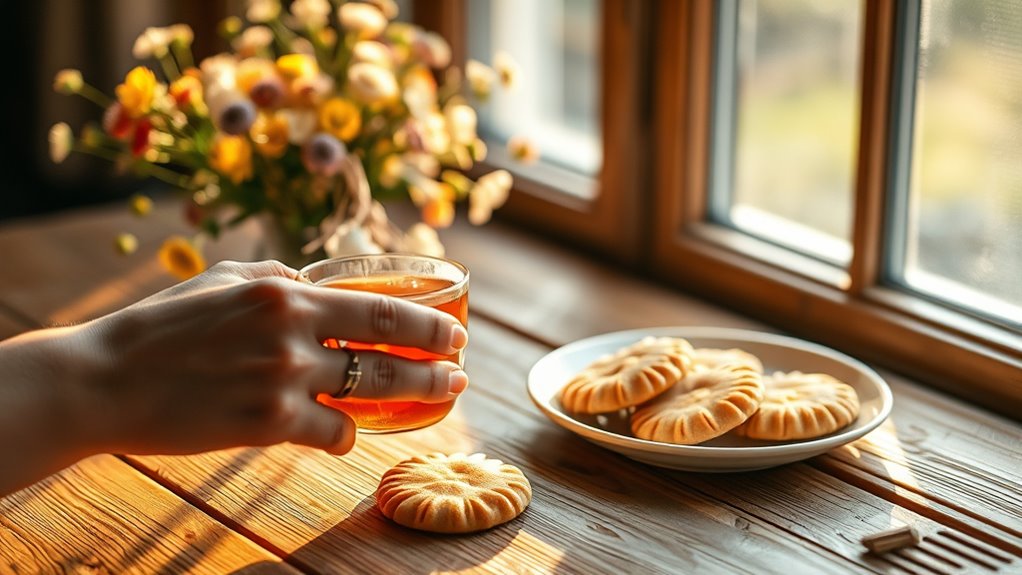

Savoring is a powerful skill that helps you appreciate the everyday moments you might overlook. By engaging your senses fully—listening closely, savoring flavors, noticing textures—you can transform simple experiences into sources of joy. Slowing down and intentionally pausing allows you to notice beauty and gratitude in your routine. Cultivating this mindful habit rewires your brain to find happiness in what’s already present. If you continue exploring, you’ll discover simple ways to bring more joy into your daily life.

Turn your quiet moments into listening time
- Thousands of audiobooks, podcasts and originals
- Listen on your phone, tablet or Echo — also offline
- Cancel anytime
Key Takeaways
- Savoring involves mindful appreciation of everyday moments, transforming routine experiences into sources of joy and gratitude.
- Engaging all senses during activities deepens enjoyment and helps anchor attention in the present.
- Pausing and practicing deep breathing enhance awareness, allowing you to fully immerse in simple pleasures.
- Slowing down and truly experiencing moments increases emotional richness and fosters deeper connections.
- Cultivating a mindset that values the present encourages happiness and reveals the beauty in what you already have.

Have you ever paused to fully enjoy a moment and truly feel its richness? Often, life pulls us forward so quickly that we forget to slow down and savor what’s right in front of us. Savoring isn’t just about indulging in food or special occasions; it’s about cultivating mindful appreciation for everyday moments. When you practice savoring, you tune into your senses and engage fully with your surroundings, transforming ordinary experiences into meaningful, enriching ones.
To begin, you need to focus on sensory engagement. This means paying attention to what you see, hear, smell, touch, and taste. For example, when you take a sip of your favorite coffee, don’t just drink it mindlessly. Instead, notice the warmth of the mug in your hands, the aroma wafting up, the subtle bitterness or sweetness on your tongue. Feel the textures—perhaps the smoothness of the cup or the softness of your blanket if you’re wrapped in one. Engage all your senses, and you’ll find that even simple moments become more vivid and satisfying. It’s about anchoring yourself in the present, fully experiencing each detail, rather than rushing through or letting your mind wander elsewhere.
Practicing mindful appreciation helps you develop a habit of savoring. It’s easy to overlook the beauty in everyday life when your attention is elsewhere—on your phone, worries, or future plans. Pause intentionally, breathe deeply, and recognize the value of what’s happening now. Whether it’s the sound of birds outside, the warmth of sunlight on your skin, or the taste of a home-cooked meal, acknowledging these moments boosts your overall happiness and gratitude. Over time, this mindful approach rewires your brain to find joy in what you already have, rather than constantly seeking more or fixating on what’s missing.
Pause, breathe, and embrace the present to cultivate gratitude and find joy in everyday moments.
Savoring also means resisting the urge to rush through experiences just to move on to the next thing. Instead, slow down and immerse yourself in the present. For instance, if you’re listening to music, really listen. Notice the layers of sound, the rhythm, the lyrics, and how they make you feel. If you’re walking in nature, feel the textures of the ground beneath your feet, smell the fresh air, and observe the colors around you. These small acts of mindful appreciation deepen your connection to the here and now, making your everyday life more fulfilling. Incorporating mindfulness practices like yoga can further enhance your ability to stay present and fully enjoy each moment.
Ultimately, savoring is about cultivating a mindset that values the present moment. By intentionally engaging your senses and appreciating what you already have, you create a richer, more joyful life. It’s a simple yet powerful way to reconnect with yourself and find happiness in the ordinary. When you master the art of savoring, you discover that life’s greatest pleasures often come from the simplest experiences—if only you take the time to truly enjoy them.
mindful sensory engagement tools
As an affiliate, we earn on qualifying purchases.
As an affiliate, we earn on qualifying purchases.
Frequently Asked Questions
How Can I Start Practicing Savoring Daily?
To start practicing savoring daily, you can focus on mindful gratitude and sensory awareness. Take a moment each day to pause and fully experience simple pleasures, like your morning coffee or a walk outside. Notice the sights, sounds, and smells around you. By intentionally slowing down and appreciating these moments, you cultivate gratitude and deepen your enjoyment, making everyday experiences more meaningful and fulfilling.
Does Savoring Improve Mental Health?
Think of your mind as a garden; savoring is like watering your favorite flowers. It boosts mental health by enhancing mindfulness benefits, helping you stay present and appreciate small joys. Regular savoring strengthens emotional resilience, making it easier to handle stress and setbacks. When you truly enjoy what you have, you cultivate positivity, which improves overall well-being and fosters a calmer, more resilient mindset.
What Are Common Obstacles to Savoring?
You might find it hard to savor because you’re often distracted or rushing through moments. Obstacles include stress, multitasking, and negative thoughts, which make it tough to focus. Practicing gratitude journaling helps shift your mindset, while mindful breathing encourages you to stay present. These tools help you overcome barriers, allowing you to truly enjoy and appreciate what you already have.
Can Savoring Enhance Relationships?
Imagine weaving a tapestry of emotional connection—savoring does just that. By practicing gratitude, you deepen your appreciation for shared moments, making your relationships more meaningful. When you truly enjoy and acknowledge what you have, you foster trust and closeness. Savoring transforms ordinary interactions into cherished memories, strengthening bonds. So yes, taking time to savor enhances your relationships, turning fleeting moments into lasting emotional treasures.
How Does Savoring Differ Across Cultures?
You’ll notice that savoring differs across cultures through unique expressions and rituals. In some societies, people emphasize communal savoring with shared meals or celebrations, while others focus on individual reflection. Cultural expressions shape how you appreciate moments, and savoring rituals like toastings or mindfulness practices enhance your experience. By understanding these differences, you can learn new ways to fully enjoy and connect with moments, enriching your appreciation of life’s simple pleasures.
As an affiliate, we earn on qualifying purchases.
Conclusion
Remember, savoring can boost your happiness—studies show it can increase your well-being by up to 25%. By truly appreciating what you already have, you turn ordinary moments into lasting memories. Don’t let life’s simple pleasures slip away unnoticed; instead, pause and enjoy them fully. Embrace the lost art of savoring, and you’ll find more joy in your everyday life. After all, the best things often come when you slow down and truly appreciate them.
As an affiliate, we earn on qualifying purchases.
relaxing deep breathing accessories
As an affiliate, we earn on qualifying purchases.
As an affiliate, we earn on qualifying purchases.
Fall Picks
fall essentials
As an affiliate, we earn on qualifying purchases.